Last summer, a close friend of mine — a mom of twin three-year-olds — called me in a bit of a panic. She’d just read an article claiming her kids were ‘falling behind’ in cognitive milestones because they spent more time with building blocks than with educational apps. ‘Should I be worried?’ she asked. That conversation sent me down a rabbit hole of research, conversations with early childhood educators, and honestly, a lot of rediscovering why play itself is the most powerful classroom a toddler will ever enter.
If you’re a parent, caregiver, or early childhood educator trying to figure out which play activities actually move the needle on 유아 인지 발달 (toddler cognitive development) — you’re in the right place. Let’s explore this together, because the science here is genuinely fascinating, and the practical takeaways are simpler than most parenting content would have you believe.
Why Cognitive Development in Early Childhood Matters More Than Ever
The first five years of life are often called the “golden window” of brain development — and that’s not just a feel-good phrase. According to the Harvard Center on the Developing Child (2026 update), over 1 million new neural connections form every second in a child’s brain during the early years. These connections are shaped directly by experiences, interactions, and — critically — play.
Cognitive development in toddlers encompasses several domains:
- Executive Function: Planning, impulse control, working memory — the “air traffic control” of the brain.
- Language & Symbolic Thinking: Understanding that a word or picture can represent a real object.
- Problem-Solving & Causal Reasoning: “If I push this, what happens?”
- Spatial Awareness: Understanding shapes, sizes, and how objects relate to each other in space.
- Attention & Focus: The ability to sustain interest and ignore distractions.
A 2026 meta-analysis published in Child Development Perspectives reviewed 87 studies across 22 countries and found that play-based interventions improved cognitive outcomes by 34% more than structured academic drills in children aged 2–5. That’s not a small effect size — that’s enormous.
The 5 Play Activity Categories That Actually Work
Not all play is created equal when it comes to cognitive stimulation. Here’s a breakdown of the most evidence-backed categories, with specific activity ideas you can try this weekend.
1. Constructive Play (Building & Creating)
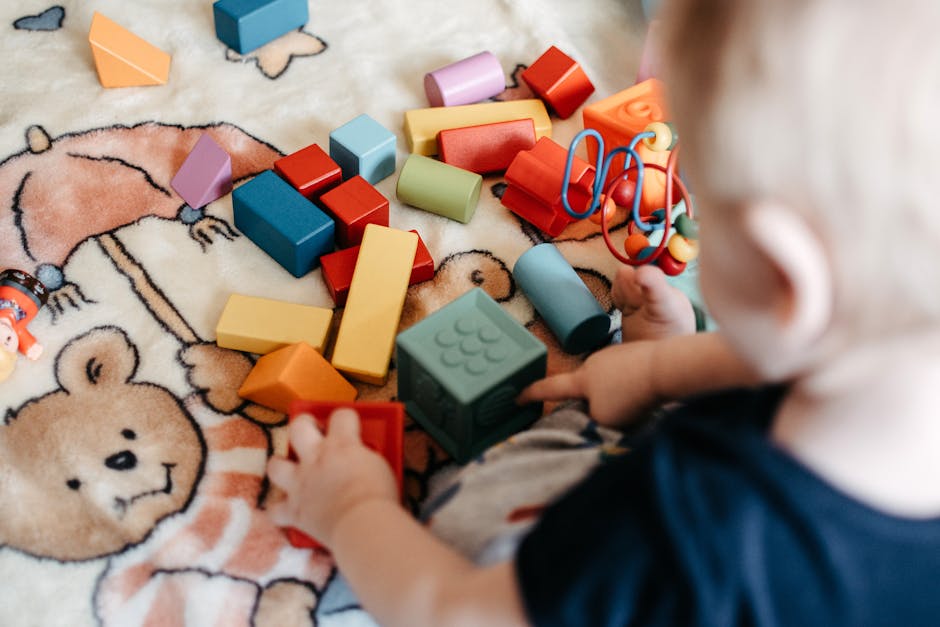
Think LEGO DUPLO, magnetic tiles (brands like Connetix and Picasso Tiles are popular in 2026), or even just stacking cardboard boxes. Constructive play directly engages spatial reasoning, planning, and cause-effect understanding. A University of Chicago study found that children who spent at least 15 minutes per day in constructive play scored 28% higher on spatial intelligence tests by age 5.
2. Pretend & Symbolic Play (Imaginative Role Play)
When a toddler picks up a banana and pretends it’s a phone, something remarkable is happening — they’re developing symbolic thinking, the cognitive foundation of reading and mathematics. Encourage themed play corners: a pretend kitchen, a doctor’s kit, a mini grocery store. The Korean brand Mimi World and international brands like Melissa & Doug offer excellent role-play kits designed with developmental stages in mind.
3. Sensory Exploration Play
Water tables, kinetic sand, sensory bins filled with rice and hidden objects — these aren’t just messy fun. Sensory play activates multiple neural pathways simultaneously. It’s especially powerful for children aged 1–3, where tactile learning is the dominant mode of information processing. The Sensory Processing Disorder Foundation (2026) notes that rich sensory environments during toddlerhood correlate with stronger attention regulation in elementary school years.
4. Puzzle & Pattern Recognition Activities
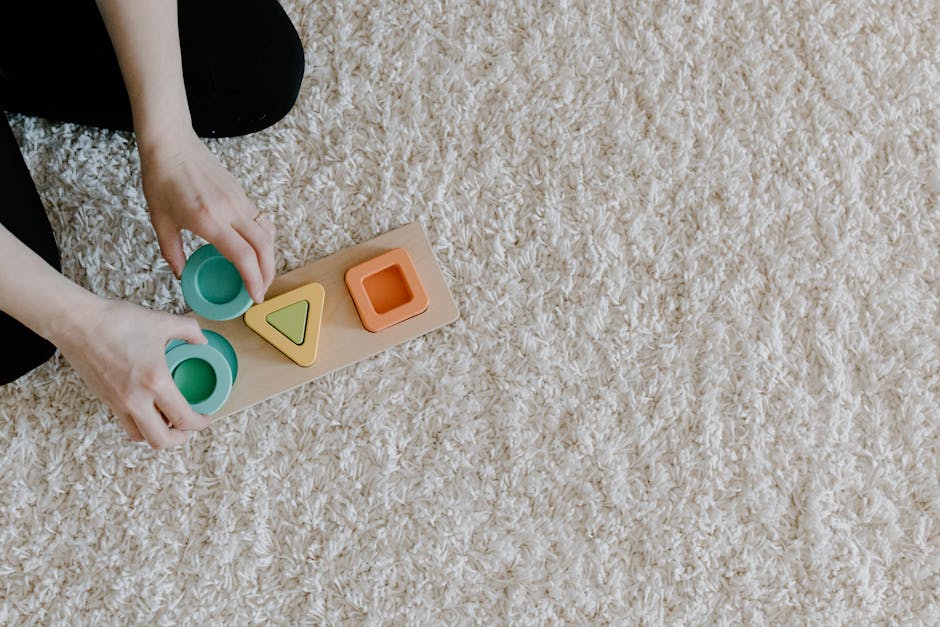
Jigsaw puzzles, shape sorters, and pattern-matching games like Orchard Toys’ sequencing cards are workhorses of cognitive development. They build working memory, visual-spatial skills, and — importantly — frustration tolerance, which is itself a core executive function skill. Start with 4–6 piece puzzles for 2-year-olds and scale up as their skills grow.
5. Music, Rhythm & Movement Activities
This one surprises many parents. Clapping games, simple percussion instruments, dancing to rhythm — these activities are deeply linked to mathematical cognition. MIT’s McGovern Institute for Brain Research published findings in early 2026 showing that toddlers who engaged in structured rhythm activities twice a week showed significantly improved phonological awareness and early numeracy compared to control groups.
International Case Studies: What’s Working Around the World
Finland’s early childhood education system — consistently ranked among the world’s best — operates on a philosophy called leikkiminen (play-based learning). Finnish kindergartens don’t introduce formal reading or math until age 7, yet Finnish students regularly outperform peers internationally by age 15. The key? Investing deeply in rich, self-directed play environments in the early years.
In South Korea, a 2025–2026 national curriculum revision (누리과정 개정) shifted emphasis from structured worksheets toward what educators call 탐구 놀이 (inquiry-based play), with pilot schools reporting improved engagement and teacher-assessed cognitive readiness scores rising by 19% in the first year of implementation.
In the U.S., programs like Tools of the Mind (developed at Metropolitan State University of Denver) have been adopted in over 400 preschools as of 2026. The program uses dramatic play scenarios deliberately designed to build executive function — and independent evaluations consistently show gains in self-regulation and working memory that persist into early elementary school.
Some useful resources to explore:
- Zero to Three (zerotothree.org) — Research-based parent resources on early brain development
- NAEYC (naeyc.org) — Position statements on developmentally appropriate play
- Harvard’s Center on the Developing Child (developingchild.harvard.edu) — Interactive tools and research summaries
- Korea’s Nuri Curriculum Portal (누리과정, childcare.go.kr) — Official guidelines for ages 3–5 in Korean early childhood settings
Common Mistakes Parents Make (And Easy Fixes)
Let’s be honest — even well-meaning parents can accidentally undercut the cognitive benefits of play. Here are a few patterns worth watching for:
- Over-directing play: Constantly telling a child how to use a toy removes the problem-solving opportunity. Try asking open questions instead: “What do you think happens if you put this here?”
- Rushing to fix frustration: When a puzzle piece doesn’t fit, resist the urge to jump in immediately. That moment of productive struggle is where the cognitive magic happens.
- Screen time as a substitute for interactive play: Even the best educational apps can’t fully replicate the 3D, multi-sensory, socially interactive experience of physical play. Use screens as a complement, not a replacement.
- Buying too many toys: A 2026 study from the University of Toledo found that children with fewer toys during free play showed longer attention spans and more creative, complex play behavior. Quality over quantity, always.
Building a Simple Play-Rich Environment at Home
You don’t need a Pinterest-perfect playroom. A cognitively stimulating environment for toddlers can be built from everyday materials and a few key principles:
- Rotate toys every 2–3 weeks to maintain novelty and engagement
- Include open-ended materials: blocks, scarves, cardboard tubes, play dough
- Create a “yes space” — a designated, safe area where toddlers can explore without constant redirection
- Read together daily — even 10–15 minutes of shared book reading dramatically boosts language and cognitive development
- Narrate daily activities: “Now we’re sorting socks by color” — this builds vocabulary and categorical thinking simultaneously
The investment is surprisingly low. The return? A brain that’s wired for curiosity, resilience, and lifelong learning.
Circling back to my friend with the twins — after a few weeks of deliberately introducing more open-ended play, less screen time, and a couple of sensory bins, she reported that the kids were playing independently longer and seemed more engaged. More importantly, she stopped worrying about “falling behind” and started enjoying watching them figure things out on their own. That shift in perspective? That might be the biggest win of all.
Editor’s Comment: If you’re feeling overwhelmed by the sheer volume of parenting advice out there in 2026, take a breath. The research is actually reassuring: children are naturally wired to learn through play, and your job isn’t to engineer the perfect cognitive curriculum — it’s to create space, provide interesting materials, and get out of the way (mostly). Start with one new play activity this week, observe what lights your child up, and build from there. The best play is the kind they actually want to do.
📚 관련된 다른 글도 읽어 보세요
- 아동 ADHD 조기 진단과 치료, 2026년 최신 동향 총정리 — 우리 아이 신호를 놓치지 마세요
- What the Latest 2026 Child Psychology Research Is Telling Us (And What It Means for Your Family)
- Boost Your Toddler’s Brainpower: The Best Cognitive Development Activities for 2026
태그: toddler cognitive development, play-based learning, early childhood education, infant brain development, cognitive play activities, 유아 인지 발달, sensory play for toddlers
Leave a Reply