Picture this: A 10-year-old confidently types a prompt into an AI tool, gets a polished essay in seconds, and hands it in — proud as can be. Sound familiar? If you’re a parent, educator, or anyone who cares about the next generation, this scene probably makes your stomach drop a little. Not because the kid did something wrong, but because we’re suddenly staring at a genuinely hard question: if AI can do the thinking, what exactly are we teaching children to do?
Here in 2026, that question isn’t hypothetical anymore — it’s the defining challenge of modern education. Let’s think through it together, because the answer is more nuanced (and more hopeful) than most panic headlines suggest.
Why Creativity and Problem-Solving Are Now the Real Curriculum
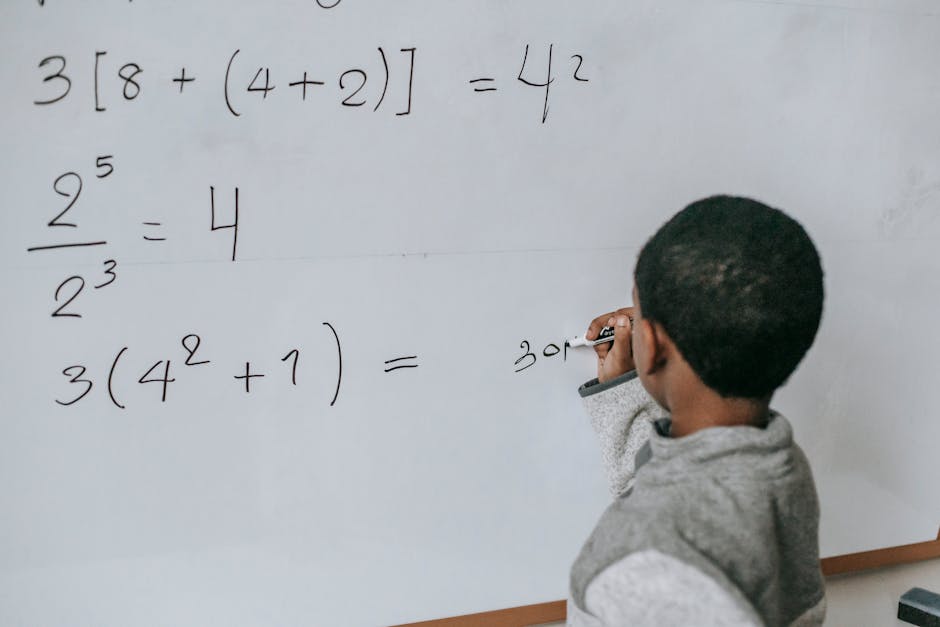
A 2026 report from the World Economic Forum’s Future of Jobs series ranks creative thinking, analytical reasoning, and socio-emotional skills as the top three competencies employers expect through the next decade — and notably, they’re also the three that current generative AI systems replicate least reliably. Meanwhile, rote memorization, basic coding, and formulaic writing have quietly moved down the list, because, well… AI handles those now.
The implication for education is stark: schools that still reward regurgitation are, unintentionally, training kids for jobs that no longer exist. Schools that teach how to think — how to frame problems, challenge assumptions, iterate on ideas, and communicate original perspectives — are training kids for a world that’s just getting started.
What the Data Actually Tells Us About Creative Learning
Let’s ground this in some concrete findings:
- Project-Based Learning (PBL) outcomes: A Stanford Research Institute study tracking students across six countries found that students in structured PBL environments scored 28% higher on open-ended problem-solving assessments compared to peers in lecture-only classrooms — and the gap widened in the presence of AI tools.
- The AI-augmented creativity gap: A 2025–2026 longitudinal study from MIT’s Media Lab observed that students who were taught to question AI outputs critically generated measurably more original solutions in design challenges than those who simply used AI without critical scaffolding.
- South Korea’s curriculum pivot: Since the 2025 national education reform, South Korean middle schools have replaced 30% of standardized test prep hours with “convergence thinking” labs — early metrics show a 19% improvement in student self-reported creative confidence.
- Finland’s continuous evolution: Finland’s schools, long a benchmark, introduced “AI co-creation ethics” as a compulsory module in 2026, asking students not just to use AI but to debate its outputs — essentially building critical thinking into the tool itself.
Real-World Examples Worth Paying Attention To
🇰🇷 South Korea — The Convergence Thinking Lab Model: In Seoul’s Mapo-gu district, middle school students spend two hours weekly in labs where they’re given real civic problems (think: local traffic flow, elderly loneliness in apartment complexes) and asked to design solutions using a mix of analog brainstorming and AI-assisted research. The key rule? The AI can find data; only the student can propose the idea. Teachers report that students who initially struggled to separate “AI’s answer” from “my answer” develop a much sharper sense of personal intellectual ownership over just one semester.
🇫🇮 Finland — Structured Questioning Protocols: Finnish educators introduced what they call the “But Why? But How? But Who?” framework — a simple three-question loop students apply to any AI-generated output before accepting it. It sounds almost too simple, but it’s producing students who instinctively interrogate information rather than absorb it passively. That habit? Wildly valuable in 2026’s information-dense environment.
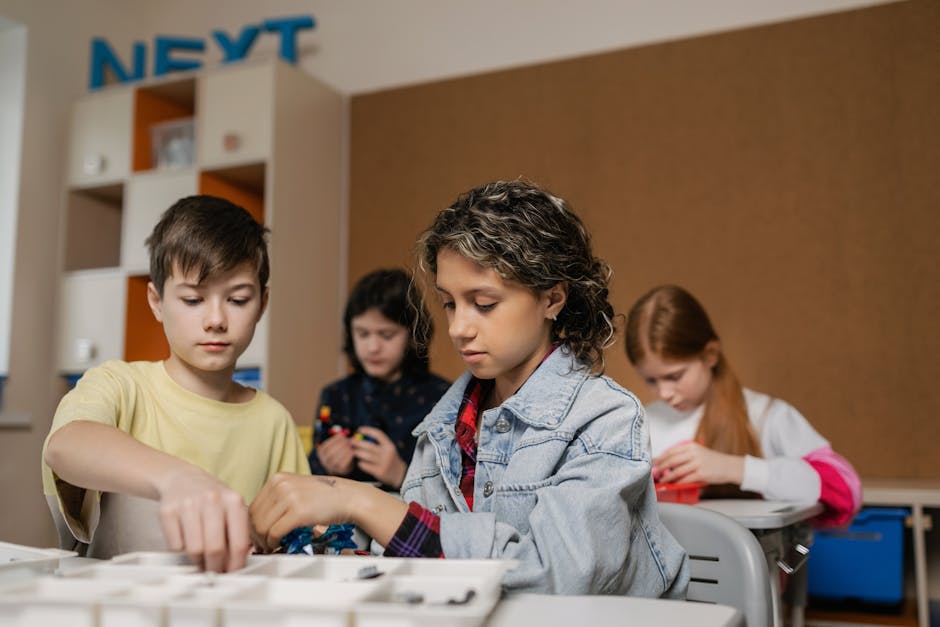
🇺🇸 United States — The Maker Movement Meets AI: Schools affiliated with the Fab Foundation network have expanded their maker spaces to include “AI + Hands” stations, where students prototype physical objects based on AI-generated concepts — then reverse-engineer why the AI’s suggestions were or weren’t practical. This loop of digital ideation and physical reality-testing is proving to be one of the richest creativity training grounds available right now.
Practical Methods Parents and Educators Can Start Using Today
Here’s where I want to be direct with you, because a lot of advice in this space is either too abstract or too tech-heavy. The most effective creativity and problem-solving education in 2026 doesn’t require expensive tools — it requires intentional friction.
- Introduce “productive struggle” deliberately: Resist the urge to hand over AI tools the moment a child faces difficulty. A 10-minute struggle before using AI produces dramatically better learning outcomes than immediate AI assistance. Think of it like resistance training — the muscle builds in the struggle, not the solution.
- Teach prompt engineering as a literacy: Rather than banning AI, teach children that how you ask a question determines the quality of the answer. Crafting a precise, creative prompt is itself a higher-order cognitive skill that builds analytical thinking.
- Use the “Remix Challenge” technique: Give students an AI-generated solution and ask them to improve it, challenge it, or apply it to a completely different context. This builds divergent thinking — the ability to see multiple possibilities — which remains distinctly human.
- Prioritize open-ended questions over closed answers: Replace “What is the capital of France?” with “If you were redesigning Paris for 2050, what would you change and why?” The AI can answer the first question in 0.3 seconds. The second requires a child to bring their own perspective, values, and imagination.
- Create “no AI zones” strategically: Not as punishment, but as practice. Just like athletes train without equipment to build raw skill, children benefit from regular periods of unaided creative work — journaling, sketching, debating, building with their hands.
- Model metacognition out loud: Adults thinking aloud about their own problem-solving process — “I’m not sure about this, let me think about what I actually know versus what I’m assuming” — teaches children the internal dialogue that underlies all creative work.
The Realistic Middle Ground: AI as a Thinking Partner, Not a Thinking Replacement
Here’s my honest take after exploring all of this: the goal isn’t to protect children from AI — that ship has sailed, and frankly, it was never the right destination. The goal is to raise children who use AI the way a master chef uses a sharp knife: as a powerful tool that amplifies skill, not a shortcut that replaces it.
A child who learns to ask better questions, tolerate uncertainty, challenge assumptions, and find joy in the messy process of creating something original — that child will thrive with AI or without it. A child who learns only to prompt and accept? They’re one better model update away from irrelevance.
The education methods we choose in 2026 will echo for decades. The good news is that the principles — curiosity, iteration, collaboration, critical thinking — are ancient. We’re not inventing a new pedagogy. We’re just finally being forced to take the old wisdom seriously.
Editor’s Comment : The most powerful thing we can do for children right now isn’t choosing between AI and traditional education — it’s designing learning experiences where the struggle is the point. Every time a student wrestles with a problem before reaching for an AI tool, they’re building the one thing no model can replicate: a genuinely original mind. That’s the curriculum worth fighting for in 2026.
태그: [‘AI education 2026’, ‘creative problem solving’, ‘future learning skills’, ‘project based learning’, ‘AI literacy for kids’, ‘creativity in education’, ‘critical thinking methods’]
Leave a Reply