Picture this: It’s a Tuesday morning in 2026, and a 14-year-old student in Seoul isn’t sitting in a traditional classroom. She’s wearing lightweight AR glasses, collaborating in real-time with peers in Helsinki and São Paulo on a climate modeling project — all while her AI learning companion quietly notes that she’s struggling with statistical interpretation and gently nudges her toward a personalized micro-lesson. This isn’t science fiction anymore. This is the educational reality millions of students are beginning to experience right now.
I’ve spent the past few months talking to educators, ed-tech founders, and students across three continents, and what I’ve discovered is both exciting and a little humbling: the classroom as we knew it is not just evolving — it’s being fundamentally reimagined. So let’s think through this together, because the trends unfolding in 2026 have massive implications for every parent, learner, and teacher reading this.

1. Hyper-Personalized Learning Paths Are No Longer a Luxury
For decades, personalized learning was a buzzword with little practical backbone. In 2026, that’s changed dramatically. According to the Global EdTech Investment Report 2026 released by HolonIQ, AI-driven adaptive learning platforms now serve over 400 million learners globally — a 3x increase from just three years ago. Platforms like Khanmigo (Khan Academy’s AI tutor), Synthesis, and South Korea’s own Classting AI are demonstrating that students using personalized AI pathways show an average of 35–40% improvement in knowledge retention compared to traditional lecture-based models.
What makes this genuinely different now? Earlier AI tutors were essentially fancy quiz apps. Today’s systems analyze not just what a student gets wrong, but why — tracking cognitive load patterns, time-of-day performance, emotional signals via camera (opt-in, of course), and learning style consistency. The result is a learning experience that genuinely meets each student where they are.
2. The Teacher’s Role Has Shifted from Instructor to “Learning Architect”
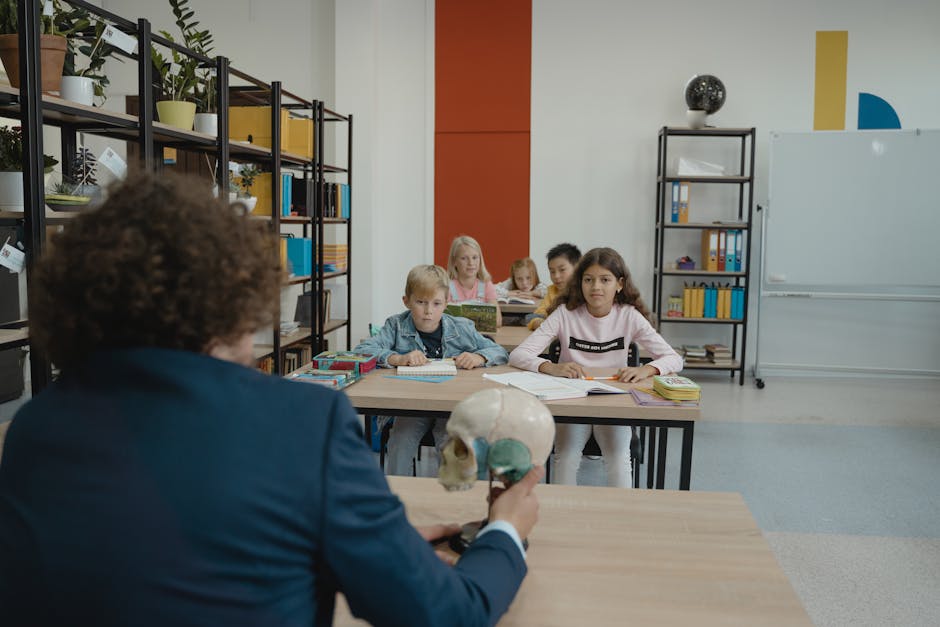
Here’s where I want to push back against the fear-mongering: AI is not replacing teachers. But it is absolutely redefining what great teaching looks like. In Finland — long the gold standard of progressive education — the 2026 national curriculum explicitly reframes the teacher’s role as a “learning environment designer.” Teachers are now expected to curate AI tools, design collaborative challenges that machines can’t replicate, and focus their human energy on socio-emotional coaching.
A teacher in Espoo, Finland, shared with me: “I used to spend 60% of my week grading. Now AI handles formative assessment. I spend that time actually talking to my students about what they’re curious about.” That’s a profound shift — and honestly, it’s what most passionate educators signed up for in the first place.
3. Micro-Credentials and Competency Stacking Are Disrupting Degrees
The traditional four-year university degree is facing its most serious credibility challenge yet. In 2026, major employers including Google, IBM, Microsoft, and — notably — South Korea’s Samsung Electronics officially updated their hiring frameworks to treat verified micro-credentials and competency portfolios on equal footing with bachelor’s degrees for a wide range of technical and creative roles.
- Micro-credentials are short, verifiable learning achievements (think: 6–12 weeks) issued by universities, companies, or platforms like Coursera and edX — now backed by blockchain verification.
- Competency stacking means learners build modular skill sets over time, rather than committing to one rigid academic path.
- Portfolio-based hiring is growing in fields like UX design, data science, AI engineering, and digital marketing.
- The World Economic Forum’s Future of Jobs Report 2026 estimates that by 2030, 40% of core job skills will require continuous upskilling cycles of under 18 months — making lifelong micro-learning not optional, but essential.
- Platforms like Credly and Korea’s NAVER Boost Course are seeing record enrollment, particularly among adults 30–50 seeking career pivots.
4. AI Literacy Is the New Core Curriculum
Think back to when “computer class” was a specialized elective. Today, we’d find it absurd if a student couldn’t use basic software. In 2026, AI literacy is following exactly that trajectory. The EU’s Digital Education Action Plan 2025–2030 mandates AI literacy components across all member-state curricula by 2027. Similarly, Japan’s Ministry of Education introduced mandatory AI ethics and prompt engineering units starting in 7th grade this academic year.
What does AI literacy actually mean for a 12-year-old? It’s not about coding neural networks. It’s about understanding: How does this recommendation algorithm decide what I see? What does it mean for a source to be AI-generated? How do I use AI tools effectively without letting them do my thinking for me? These are the critical thinking muscles that will define cognitive independence in this decade.
5. Global Collaborative Learning Is Becoming Mainstream
One of the most underreported trends of 2026 is the normalization of cross-border project-based learning. Programs like iEARN (International Education and Resource Network) have scaled dramatically, and newer platforms like Globally Grounded use AI matchmaking to connect classrooms across different countries working on shared real-world problems — from local food security to urban planning simulations.
What’s fascinating here is the knock-on effect: students developing not just academic knowledge, but genuine intercultural fluency and global empathy. A study from MIT’s Education Lab published in early 2026 found that students engaged in cross-cultural collaborative projects scored 28% higher on creative problem-solving assessments than peers in standard settings.
6. Mental Health and Well-Being Are Now Designed Into the Learning Experience
This one doesn’t get enough credit. As academic pressure has intensified — paradoxically, even alongside more personalized tools — schools and platforms are building mental health support directly into the learning architecture. South Korea’s EduMinds platform, launched in late 2025, integrates mood check-ins, breathing exercises, and AI-flagged wellbeing alerts for school counselors. Early data shows a 22% reduction in reported burnout symptoms among middle school users.
Meanwhile, several progressive school districts in the U.S. are experimenting with “cognitive load scheduling” — using AI to analyze when students are mentally fresh vs. fatigued and scheduling demanding content accordingly. It sounds almost obvious when you say it out loud, but it represents a genuine philosophical shift: optimizing for sustainable learning, not just throughput.
7. Equity Gaps Are Both Narrowing and Widening — Simultaneously
Let’s be honest about the tension here, because thinking through realistic outcomes means acknowledging complexity. On one hand, AI-powered tools are democratizing access to high-quality instruction in ways that were unimaginable a decade ago. A student in rural Indonesia can now access the same adaptive physics curriculum as a student in Singapore. The UNESCO Global Education Monitoring Report 2026 highlights this as a genuine breakthrough in low-resource settings.
On the other hand, the “AI access gap” is real and growing. Students in households without stable internet, devices, or parental tech-literacy are being left further behind as their more advantaged peers compound gains. This isn’t a reason to slow down AI integration — it’s a reason to make equitable infrastructure investment non-negotiable alongside curriculum innovation.
Realistic Alternatives: What Should You Actually Do With This?
Whether you’re a parent, student, or educator, here’s how to engage with these trends practically rather than feeling overwhelmed:
- If you’re a parent: Don’t panic about AI replacing your child’s critical thinking. Instead, actively discuss AI-generated content at home — question it together. This builds the most important skill of the decade: discernment.
- If you’re a student (or adult learner): Start exploring micro-credential platforms now. Even one verified certificate in a high-demand area — AI prompting, data visualization, UX research — adds real signal to your profile. Try Coursera’s Google AI Essentials or Khan Academy’s AI literacy pathway.
- If you’re an educator: Reframe your role before someone else reframes it for you. Identify one administrative or assessment task you can hand to an AI tool this semester, and redirect that time toward mentorship or creative curriculum design.
- If you’re a school administrator: Wellbeing infrastructure is not a “soft” investment — it’s directly tied to learning outcomes. Consider piloting cognitive load scheduling or mood-aware check-ins before mandating more screen time.
The future of education in 2026 is not a single destination — it’s a constantly shifting landscape that rewards flexibility, curiosity, and the willingness to keep learning how to learn. The most exciting thing? That’s always been the point of education. AI just makes it harder to ignore.
Editor’s Comment : What strikes me most after diving deep into these trends is that the schools and systems thriving right now aren’t the ones with the most sophisticated technology — they’re the ones that got really clear on their human purpose first, then asked how technology could serve it. That sequencing matters enormously. If your school or learning environment feels chaotic or unclear about its direction in the AI era, the first conversation to have isn’t about platforms or tools — it’s about values. What kind of humans are we trying to help flourish? Answer that honestly, and the rest becomes much more navigable.
태그: [‘AI education trends 2026’, ‘future of learning’, ‘personalized learning AI’, ‘EdTech 2026’, ‘AI literacy curriculum’, ‘micro-credentials’, ‘classroom technology’]
Leave a Reply