A few weeks ago, a close friend called me in a mild panic. Her 18-month-old had just started showing a huge interest in stacking, sorting, and — let’s be honest — flinging things across the room. She’d spent hours scrolling through toy recommendations online, only to end up more confused than when she started. Sound familiar? You’re definitely not alone.
Here’s the thing: not every colorful, battery-powered gadget marketed as “educational” is actually doing anything meaningful for your toddler’s developing brain. In 2026, the toy market is more saturated than ever, and the gap between genuinely stimulating toys and flashy noise-makers is wider than most parents realize. So let’s think through this together — logically, practically, and with a little science on our side.
What Does “Cognitive Development” Actually Mean for Toddlers?
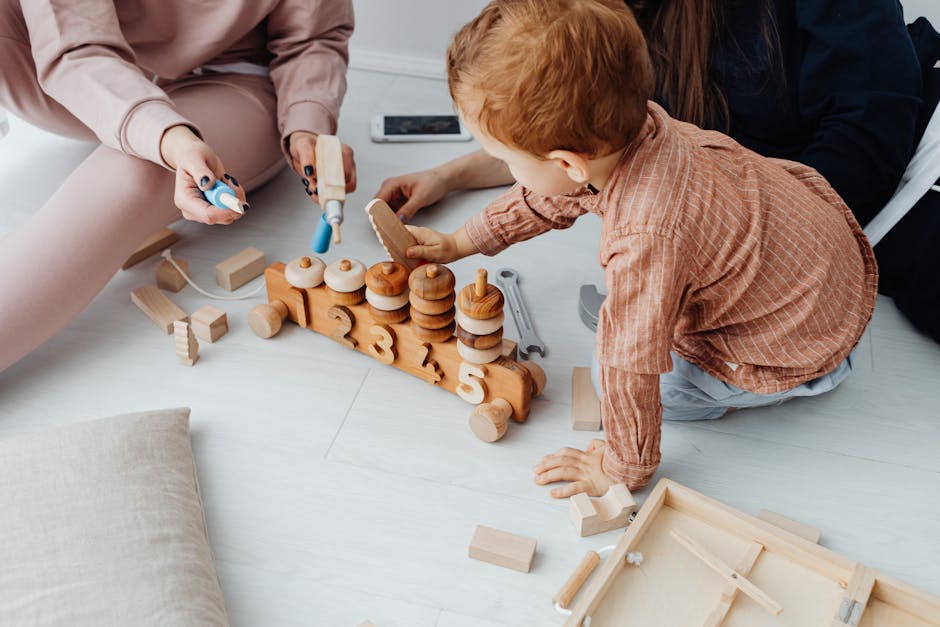
Before we jump into specific recommendations, it helps to know what we’re actually targeting. Cognitive development in toddlers (roughly ages 1–4) covers a wide landscape: object permanence, cause-and-effect understanding, spatial reasoning, language acquisition, memory formation, and early problem-solving. According to the American Academy of Pediatrics’ updated 2025 developmental guidelines, open-ended play — where the child drives the activity — remains the gold standard for stimulating these skills. Structured, passive entertainment? Not so much.
Research from the Harvard Center on the Developing Child (data updated through 2025) consistently shows that “serve and return” interactions — where a child does something, a caregiver responds, and the child reacts again — build more neural connections than solo screen time or toys with single, predetermined outcomes. This doesn’t mean all tech toys are bad, but it does tell us what to look for.
The 2026 Toy Landscape: What’s Changed?
The global educational toy market hit an estimated $96 billion in 2025, with projections pushing past $110 billion by the end of 2026 (Grand View Research). Korean domestic brands like Educo Korea and Happyland have significantly expanded their open-ended STEM toy lines this year, competing directly with international giants. Meanwhile, Scandinavian brands like HABA (Germany) and Djeco (France) continue to dominate the premium wooden toy segment globally, and Montessori-aligned brands have seen a 34% increase in sales across Southeast Asia and East Asia in the past 18 months.
What’s driving this? Parents are doing more research. The post-pandemic generation of caregivers is actively seeking toys that grow with their child, rather than novelty items that lose interest in a week.
Toy Categories That Genuinely Support Cognitive Growth
Let’s break this down by developmental function, because that’s really the most useful lens here:
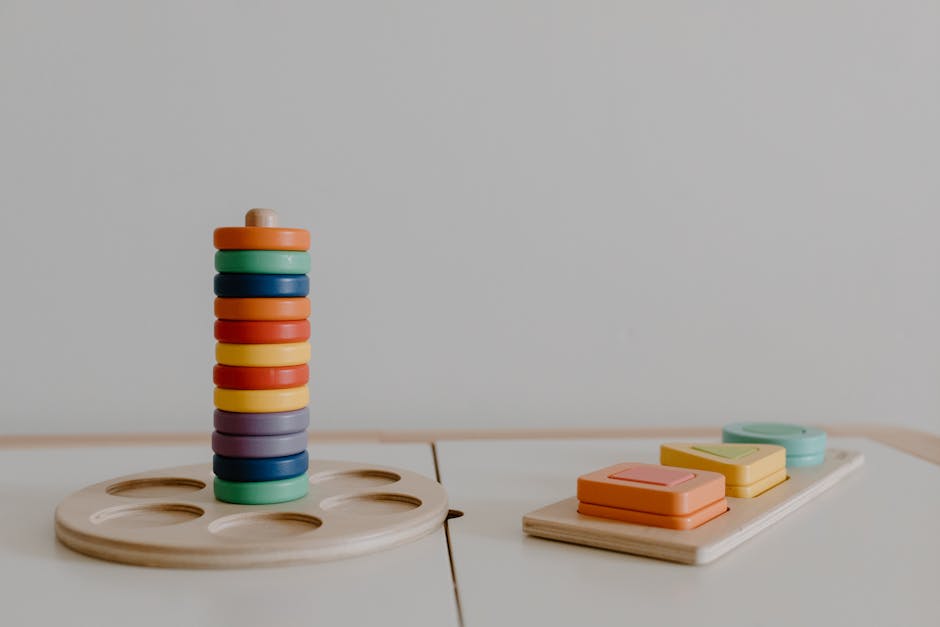
- Stacking & Nesting Toys (Ages 12–30 months): Classics like HABA’s Rainbow Stacker or Plan Toys’ Stacking Ring develop spatial reasoning and hand-eye coordination. The key is variable difficulty — toys that offer multiple ways to “win.”
- Shape Sorters & Puzzle Boxes (Ages 18–36 months): Melissa & Doug’s Shape Sorting Cube remains a benchmark. In 2026, newer versions from Korean brand Educo integrate tactile textures to stimulate sensory processing alongside visual matching.
- Open-Ended Building Blocks (Ages 2–4): LEGO DUPLO, Mega Bloks, and the newer magnetic tile sets (like Connetix or Picasso Tiles) encourage divergent thinking. There’s no “right” answer, which is neurologically powerful.
- Pretend Play Sets (Ages 2–4): A simple kitchen set, doctor kit, or farm animal collection builds narrative thinking, empathy, and early language scaffolding. IKEA’s DUKTIG kitchen series remains a budget-friendly global favorite.
- Simple Cause-and-Effect Toys (Ages 12–24 months): Push-button pop-up toys, activity cubes, and even basic xylophone hammering sets help toddlers build predictive reasoning — “if I do THIS, THAT happens.”
- Board Books & Interactive Story Sets (All toddler ages): Often overlooked as “toys,” books with lift-the-flap elements, textured pages, or paired figurine sets (like the Gruffalo Story Stones sets) are among the highest-ROI cognitive tools available.
- Water & Sand Play Tools (Ages 2+): Messy, yes. But pouring, filling, and measuring with simple cups and funnels builds early math concepts (volume, weight) in a way no flashcard ever could.
Real-World Examples: What Families Are Actually Using
In South Korea, the Nuri Curriculum (누리과정), the national early childhood education framework updated in 2024–2025, explicitly emphasizes play-based learning with manipulative objects over screen-based instruction for ages 3–5. Major Korean toy retailers like Toysrus Korea and SmartStore-based Montessori shops report that wooden sorting and building toys are their fastest-growing category in 2026.
In the United States, the nonprofit Zero to Three published updated toy guidance in early 2026 that specifically called out “flashy electronic toys with limited interactivity” as developmentally inferior to simple open-ended options, even when priced far lower. Their recommendation list prominently features brands like Fat Brain Toys, Green Toys, and PlanToys — all focused on open-ended, tactile engagement.
In Japan, the philosophy of te-saguri (手探り) — literally “searching with hands” — continues to influence toy design. Brands like People Toys (ピープル) have developed a 2026 line of sensory exploration kits specifically designed for 6-month to 3-year developmental windows, which have been well-received by child development researchers at Osaka University.
What to Avoid (Or At Least Question)
Here’s where I want to be honest with you, because the marketing can be genuinely misleading. Watch out for:
- Toys that do everything for the child — if it plays music, lights up, and gives the answer automatically, your toddler is a passive observer, not an active learner.
- “AI-powered” baby toys that claim to adapt to your child’s intelligence level — the research on these is still very thin, and the interaction quality rarely matches the price tag.
- Age labels that are wildly optimistic — a toy marked “12 months+” that requires fine motor precision more typical of a 3-year-old will only frustrate both child and parent.
Realistic Alternatives for Every Budget
Not everyone can spend $80 on a Grimm’s Rainbow. And that’s genuinely okay — because some of the most cognitively stimulating “toys” aren’t toys at all:
- Tupperware and kitchen containers: Stacking, nesting, filling — free, and endlessly fascinating for toddlers under 2.
- Cardboard boxes: Crawling through, building with, painting on. Spatial reasoning and imaginative play, zero cost.
- Natural materials: Pinecones, smooth stones (supervised), leaves — sensory richness that no plastic can replicate.
- Library toy-lending programs: Many public libraries in South Korea, the US, Canada, and the UK now offer toy-lending alongside books. A completely free way to rotate your toddler’s play environment.
- Secondhand quality toys: A used DUPLO set from a local secondhand shop or online marketplace is neurologically identical to a new one. Prioritize quality over newness.
The goal, ultimately, is to give your child an environment where their curiosity leads the way and your presence amplifies the learning. No single toy — no matter how well-designed or how much it costs — replaces a caregiver who asks “what happens if we try it this way?”
So next time you’re standing in a toy aisle or scrolling through a product page in 2026, ask yourself one simple question: Is my child doing the thinking here, or is the toy? That answer will guide you better than any algorithm.
Editor’s Comment : The most powerful cognitive development tool your toddler has access to isn’t on any store shelf — it’s you. Toys are wonderful scaffolding, but a curious, engaged caregiver who narrates, questions, and plays alongside their child will always outperform even the most thoughtfully designed product. Think of great toys as conversation starters, not substitutes for conversation itself.
태그: [‘cognitive development toys 2026’, ‘toddler learning toys’, ‘best educational toys for toddlers’, ‘Montessori toys 2026’, ‘early childhood development’, ‘유아 인지 발달 장난감’, ‘open-ended play toys’]
Leave a Reply