Picture this: It’s 7:45 AM on a Tuesday, and a 10-year-old in Seoul is already 20 minutes into a personalized math lesson — not with a human teacher, but with an AI tutor that has already identified three specific gaps in her understanding of fractions and adjusted today’s entire lesson plan accordingly. Meanwhile, her classroom teacher is reviewing the overnight analytics dashboard, preparing to have a nuanced conversation about why she’s struggling, not just that she is.
This isn’t science fiction. This is happening right now, in 2026, in classrooms across South Korea, Finland, Singapore, and increasingly, the United States. And it’s igniting one of the most passionate, high-stakes debates in modern education: Can artificial intelligence truly replace teachers? Or is that even the right question to be asking?
Let’s think through this together — because the answer is far more nuanced, and honestly more interesting, than a simple yes or no.
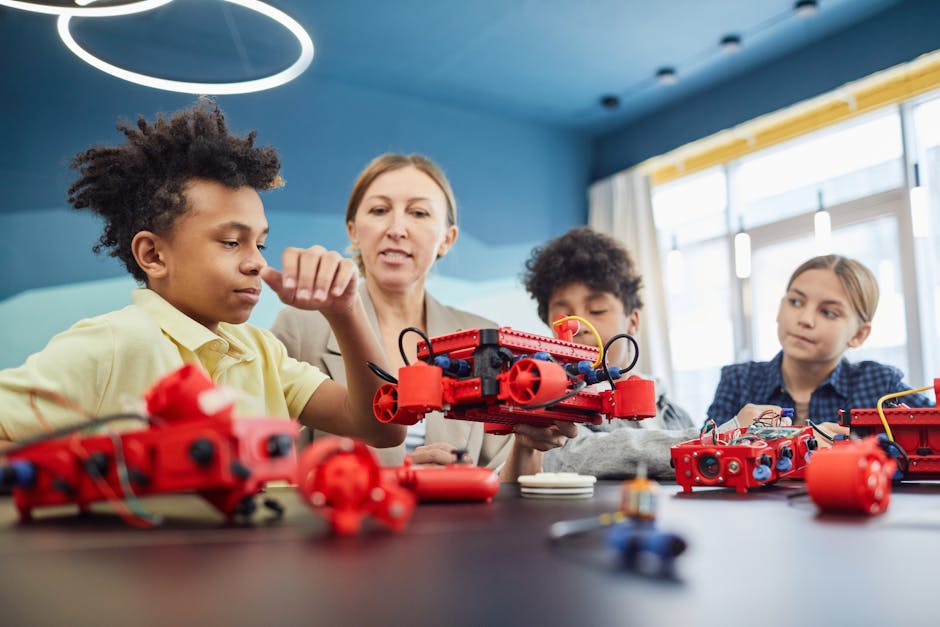
📊 What the Data Actually Tells Us in 2026
First, let’s ground ourselves in some hard numbers, because the hype around AI in education can sometimes outpace the reality.
According to the Global EdTech Intelligence Report 2026, AI-powered learning platforms now serve over 850 million students worldwide — a staggering 340% increase from just four years ago. Companies like Khan Academy (with its Khanmigo AI tutor), Carnegie Learning, and Asia-based platforms like Mathpresso’s Qanda have collectively logged over 12 billion AI-student interaction hours in the past year alone.
But here’s where it gets genuinely fascinating: a longitudinal study conducted by MIT’s Education Lab, released in early 2026, tracked 40,000 students across 12 countries over three years. Their findings?
- Students using AI tutoring supplementally showed a 31% improvement in standardized test scores compared to control groups.
- Students in fully AI-led learning environments (without consistent human teacher interaction) showed strong academic gains in measurable skills but demonstrated a 22% decline in collaborative problem-solving abilities and socio-emotional development metrics.
- Hybrid models — where AI handles personalized instruction and human teachers focus on mentorship, critical thinking facilitation, and emotional guidance — produced the highest overall outcomes across both academic and developmental measures.
- Teacher satisfaction in hybrid-model schools increased by 18%, largely because educators reported spending less time on rote instruction and more time on the work they found most meaningful.
So the data isn’t saying AI replaces teachers. It’s saying AI changes what teachers do — dramatically.
🌍 Real-World Examples: From Seoul to Helsinki to Detroit
Let’s look at what’s actually being implemented around the world right now, because the experiments happening in 2026 are genuinely illuminating.
South Korea’s “AI Co-Teacher” Initiative: The Korean Ministry of Education launched its nationwide AI Co-Teacher program in late 2024, and by early 2026, it covers over 4,200 public schools. The system uses an AI platform called CLOVA EduBot (developed in partnership with NAVER) to handle initial instruction delivery, real-time comprehension checks, and homework feedback. Human teachers then receive detailed learning profiles for each student every morning. Early results show a 28% reduction in learning gaps between high- and low-income students — which is arguably AI’s most powerful social justice argument.
Finland’s “Teacher as Coach” Redesign: Finland — already celebrated for its progressive education model — took a different philosophical approach. Rather than deploying AI as an instructor, Finnish schools have reframed the teacher’s entire role. AI handles the “what” of learning (content delivery, assessment, progress tracking), while teachers are now formally trained and titled as Learning Coaches. The national curriculum was redesigned in 2025 to reflect this, and Finland’s PISA-equivalent scores remain among the world’s highest.
Detroit Public Schools’ Equity Experiment: In one of the more socially significant pilots in the U.S., Detroit’s struggling public school system partnered with a nonprofit AI education consortium in 2025. In schools where chronic teacher shortages had left classrooms with substitute teachers for months, AI platforms stepped in as primary instructors. The results were controversial but telling: academic performance improved compared to unstaffed classrooms, but school counselors reported a measurable increase in student anxiety and behavioral issues — reinforcing that AI cannot replicate the human relational dynamic that keeps vulnerable kids emotionally anchored to school.

🤔 The Core Tension: What Are Teachers Actually For?
Here’s the question that cuts to the heart of this debate — and it’s one worth sitting with for a moment. When we argue about whether AI can replace teachers, we’re implicitly revealing our assumptions about what teaching is.
If teaching is primarily about information transfer and skill instruction, then AI is already doing significant parts of that job better than many human teachers can — with infinite patience, 24/7 availability, and hyper-personalized pacing. An AI tutor never has a bad day, never plays favorites, and never unconsciously steers a student away from STEM because of implicit gender bias.
But if teaching is fundamentally about human development — helping young people discover who they are, navigate failure with resilience, learn to disagree respectfully, find mentors who believe in them before they believe in themselves — then AI isn’t a replacement. It’s a tool. A powerful one, but a tool nonetheless.
Dr. Linda Darling-Hammond, whose work on teaching quality has influenced education policy globally, argued in her 2026 keynote at the World Education Forum: “We’ve been so focused on asking what AI can do that we’ve forgotten to ask what only humans can do. The answer to that second question should define the future of the teaching profession.”
⚖️ The Realistic Alternatives: A Path Forward That Actually Makes Sense
Rather than framing this as “AI vs. Teachers,” let’s think about what a genuinely smart restructuring of education could look like — one that uses AI’s strengths without abandoning what makes human teaching irreplaceable.
- Invest in teacher retraining, not teacher replacement: Schools and governments should fund robust AI literacy programs for existing teachers, helping them transition from “primary content deliverers” to “learning architects and human mentors.” This is happening in Singapore and South Korea — it needs to scale globally.
- Use AI to address the teacher shortage crisis first: There are currently over 55 million teacher vacancies worldwide (UNESCO, 2026). AI can serve as a first-responder solution in under-resourced areas while human teacher pipelines are rebuilt — not as a permanent replacement, but as a bridge.
- Mandate socio-emotional learning (SEL) as non-negotiable human territory: Policymakers should explicitly protect human-led SEL, counseling, arts, and collaborative project-based learning from being “AI-ified.” These are the domains where human presence isn’t just nice to have — it’s developmentally essential.
- Create transparent AI governance in schools: Parents and students deserve to know exactly how AI tools are collecting data, making decisions, and influencing learning paths. Regulatory frameworks (like the EU’s AI in Education Act, passed in 2025) should be adopted and enforced broadly.
- Redefine teacher evaluation metrics: If AI handles routine instruction, teachers should no longer be evaluated primarily on test score outcomes. New metrics around student engagement, wellbeing, critical thinking development, and equity outcomes would better reflect the evolved role.
The bottom line? The most dangerous thing we could do right now is let this debate stay binary. “AI replaces teachers” is a headline. “AI and teachers co-evolve to create better education outcomes for every child” is a strategy. One sells clicks; the other actually serves kids.
The schools and systems that will win in this new landscape aren’t the ones that adopted AI fastest, or the ones that resisted it most stubbornly. They’re the ones that asked the hardest question — what is school actually for? — and let the answer guide their technology decisions, not the other way around.
Editor’s Comment : What genuinely excites me about this moment in education is that the AI debate is forcing us to have a conversation we probably should have had decades ago: What do we actually value in education beyond test scores? If AI pressure finally gets us to invest in teachers as mentors, prioritize emotional development, and close equity gaps, then maybe the disruption is worth it. The goal was never to build better test-takers. It was always to raise better humans — and that job still has a very human heart at its center.
태그: [‘AI in education’, ‘can AI replace teachers’, ‘future of teaching 2026’, ‘EdTech trends’, ‘artificial intelligence classroom’, ‘hybrid learning model’, ‘teacher vs AI debate’]
Leave a Reply