Picture this: it’s a Tuesday afternoon, and two three-year-olds are squabbling over the same toy truck at a playdate. One mom looks mortified. The other leans over and whispers, “Actually, this is exactly what we want.” She’s right — and the science backs her up completely. That small, messy moment of conflict and negotiation? That’s social development happening in real time.
If you’ve been wondering how to intentionally support your toddler’s social growth through play, you’re in the right place. Let’s think through this together, because the research is genuinely fascinating — and the practical takeaways are simpler than you might expect.
Why Social Play Matters More Than Academic Head Starts
Before we dive into specific methods, it helps to understand why social skills developed in early childhood carry such outsized importance. A landmark longitudinal study published in the American Journal of Public Health tracked over 750 kindergarteners and found that children who demonstrated strong social competence at age 5 were twice as likely to earn college degrees and hold steady employment by age 25, compared to peers with lower social scores.
More recently, a 2026 meta-analysis from the University of Toronto’s Child Development Lab confirmed that structured social play before age 6 strengthens the prefrontal cortex — the brain region responsible for impulse control, empathy, and collaborative decision-making. In other words, playtime isn’t a break from learning. It IS the learning.
The 4 Core Social Skills Toddlers Build Through Play
Child development specialists typically break early social competence into four foundational pillars. Understanding these helps you choose the right play activities intentionally:
- Turn-taking & Patience: The ability to wait, share, and acknowledge others’ turns. Develops between ages 2–4 and is the bedrock of cooperative behavior.
- Emotional Regulation: Recognizing and managing frustration, disappointment, or excitement without melting down. Play offers safe, low-stakes practice arenas.
- Perspective-Taking (Theory of Mind): Understanding that other people have different thoughts and feelings. Pretend play is the single most powerful tool for this.
- Verbal & Non-Verbal Communication: Negotiating roles, expressing needs, reading body language — all rehearsed naturally during free and structured play.
Play Methods That Actually Work: Domestic & International Examples
Here’s where things get really interesting, because different cultures have arrived at surprisingly similar conclusions through very different paths.
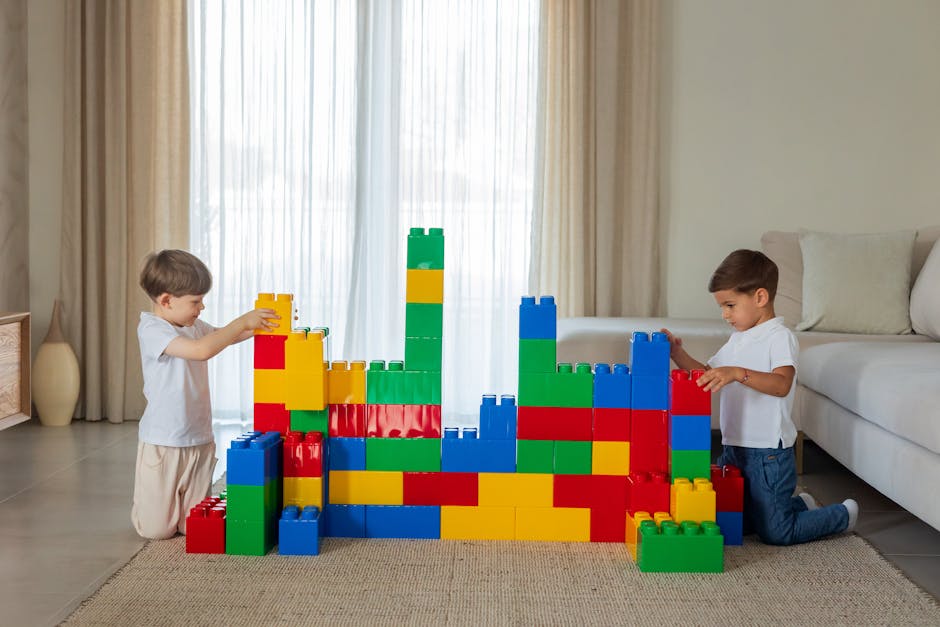
🇰🇷 South Korea — Nuri Curriculum Group Play (누리과정): South Korea’s national early childhood framework, updated in 2026, places heavy emphasis on cooperative project play, where small groups of 3–5 toddlers work together to build a shared “world” — a mini town, a pretend market, a garden. Teachers observe rather than direct, stepping in only to model language like “How do you think Jiho is feeling right now?” Research from Seoul National University shows children in Nuri classrooms score 23% higher on empathy assessments by age 6.
🇫🇮 Finland — Forest Play (Metsäleikkikoulu): Finnish forest kindergartens have been widely studied, and the social dimension is often underreported. Unstructured outdoor group play in natural settings forces children to negotiate real problems together — who climbs first, how to build a dam in a stream, what to do when someone gets scared. The absence of predefined rules means children must create social rules, which is exactly the kind of executive function workout that transfers to real-world social situations.
🇺🇸 United States — Socio-Dramatic Play Programs: Programs like Tools of the Mind, now implemented in over 2,000 early childhood centers across North America, use planned pretend play scenarios where children assign each other roles and narrate a story together. Independent evaluations show significant gains in self-regulation and peer conflict resolution within just one academic year.
5 Practical Play Methods You Can Start This Week
Let’s get concrete. These are ranked from easiest to implement to slightly more structured — choose based on your child’s temperament and your schedule:
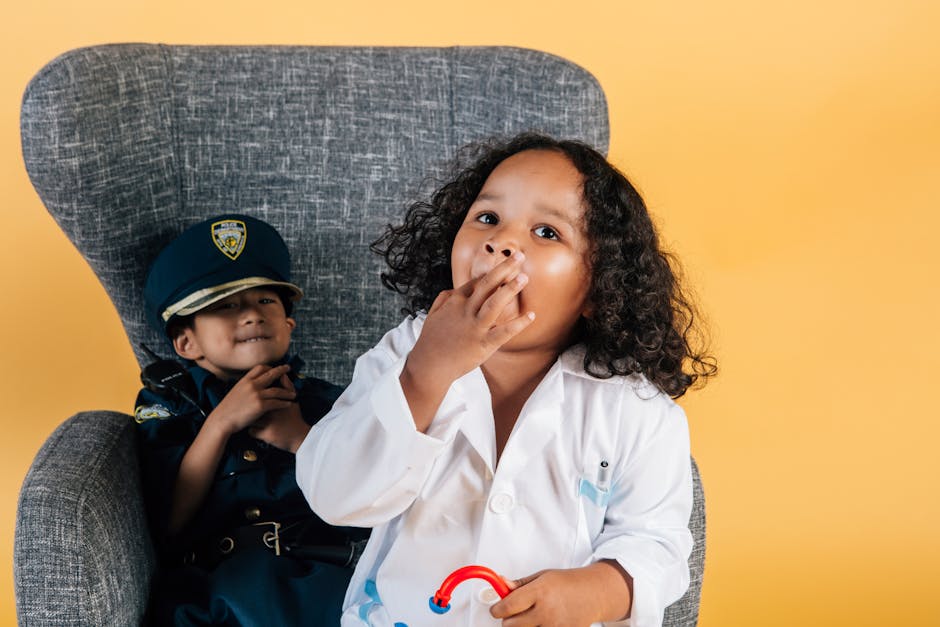
- 1. Role-Play Scenarios (Ages 2–5): Set up a “restaurant,” “doctor’s office,” or “grocery store” at home. Give your child a role and play the customer or patient yourself. Narrate feelings out loud: “Oh, the doctor looks very serious right now — I wonder what she’s thinking?” This directly trains Theory of Mind.
- 2. Cooperative Board Games (Ages 3–5): Games like Hoot Owl Hoot or Snug as a Bug are designed so everyone wins together or loses together. These teach collaborative strategy without the emotional sting of competitive loss — perfect for toddlers still developing emotional regulation.
- 3. Parallel Play Playdates with Minimal Intervention (Ages 18mo–3yrs): For very young toddlers, simply being near another child while playing independently is the first step. Resist the urge to force interaction. Let proximity do the work naturally.
- 4. Puppet Play for Conflict Scripts (Ages 2–4): Use two puppets to act out a common conflict scenario — “They both want the same crayon.” Then ask your child: “What should the puppets do?” This externalizes problem-solving and removes the emotional charge, making it easier for kids to think clearly.
- 5. Community Playground Rotations (Ages 3–6): Rather than staying at one playground, try visiting different ones weekly. New environments with unfamiliar children force your toddler to practice initiating social connections from scratch — arguably the most transferable real-world skill of all.
When to Adjust: Realistic Alternatives for Different Situations
Not every family has the same resources, and that’s completely okay. Here’s how to adapt:
- Only child with limited peer access? Mixed-age play with slightly older children (cousins, neighbors) is actually highly beneficial — older kids naturally model more sophisticated social language. Don’t underestimate this.
- Screen-heavy household? Co-viewing with narrated emotional commentary (“Why do you think that character looks sad?”) activates the same perspective-taking pathways as live play. It’s not ideal, but it’s genuinely not zero.
- Child with social anxiety or sensory sensitivities? Start with one-on-one playdates in familiar environments before group settings. Smaller social demands build confidence incrementally, and that confidence compounds over months.
- Working parents with limited time? Even 20 minutes of intentional role-play after dinner consistently outperforms two hours of unsupervised solo play. Quality and intentionality matter more than duration.
The beautiful thing about social development through play is that it doesn’t require expensive toys, special curricula, or perfect parenting. It requires presence, patience, and a little strategic thinking about what you set up and when you step back. Your toddler’s brain is doing extraordinary work every time they navigate a shared toy, take a turn, or look at another child’s face and wonder what they’re thinking.
Trust the process — and enjoy getting a little messy along the way.
Editor’s Comment : In 2026, with screen time competing more than ever for children’s attention, the irreplaceable value of embodied, face-to-face play is something we genuinely need to keep advocating for — loudly and clearly. The methods above aren’t revolutionary; they’re ancient human behaviors dressed in modern research language. Your toddler doesn’t need a perfect social skills curriculum. They need you to put down your phone, set up a pretend pizza shop, and let them be the boss for twenty minutes. That’s it. That’s the whole strategy.
📚 관련된 다른 글도 읽어 보세요
- 2026 Early Childhood Education Trends: What Developmental Psychology Is Telling Us About Raising Smarter, Happier Kids
- EdTech 2026: The Future of Education Technology Is Already Here — Are You Ready?
- 2026년 초등학교 AI 코딩 교육 커리큘럼 완벽 정리 — 우리 아이 뭘 배우고 있을까?
태그: [‘toddler social development’, ‘social skills through play’, ‘early childhood development 2026’, ‘cooperative play activities’, ‘pretend play benefits’, ‘social emotional learning toddlers’, ‘play-based learning’]
Leave a Reply