A few months ago, a close friend of mine — let’s call her Sarah — mentioned during a coffee catch-up that her pediatrician had flagged something at her son’s 18-month checkup. He wasn’t pointing at objects, wasn’t saying “mama” or “dada” with intent, and seemed oddly uninterested in other kids at the playground. She had noticed these things too, but kept telling herself, “He’s just a late bloomer.” Fast forward six months, after early intervention therapy began, and the difference in her son’s engagement and communication is remarkable. Sarah is the first to say: she wishes she had trusted her gut — and known what to look for — sooner.
That story is not rare. In fact, it’s one of the most common experiences parents share when reflecting on developmental delays. And in 2026, with better screening tools and growing community awareness, there’s genuinely no reason any family should have to wait and wonder. So let’s think through this together — what are the real signs, what do the numbers tell us, and what can you realistically do if something feels off?
What Does “Developmental Delay” Actually Mean?
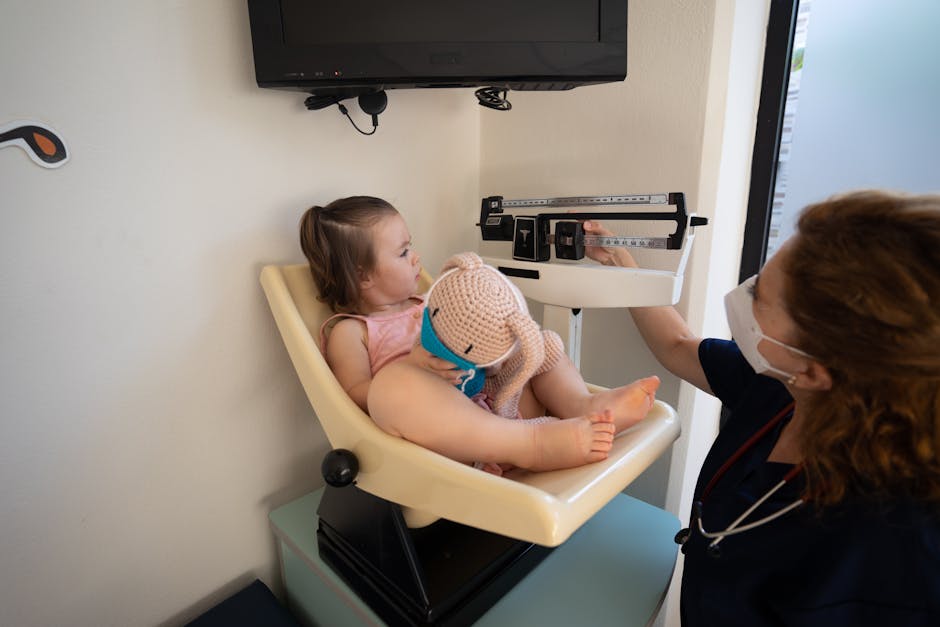
First, let’s clear up the terminology. A developmental delay occurs when a child doesn’t reach expected milestones within a typical age range across one or more areas: motor skills (both gross and fine), language and communication, cognitive ability, social-emotional development, or adaptive behavior (like self-care). It’s important to distinguish this from developmental disability — a delay can often be significantly improved or even resolved with early intervention, whereas a disability typically involves a longer-term or permanent condition.
The key phrase that pediatric developmental specialists repeat constantly is: “early identification, early intervention.” The brain’s neuroplasticity — its ability to form new connections — is at its peak during the first five years of life. The American Academy of Pediatrics (AAP) estimates that intervening before age 3 can lead to significantly better outcomes than waiting until school age, often reducing the need for intensive support later on.
The Numbers Behind Developmental Delays in 2026
According to the U.S. Centers for Disease Control and Prevention (CDC), approximately 1 in 6 children in the United States is diagnosed with a developmental disability. Globally, the World Health Organization estimates that around 15% of children worldwide experience some form of developmental delay, though underdiagnosis remains a significant challenge — particularly in lower-income regions and among marginalized communities.
What’s particularly notable is a 2025 follow-up study from the Journal of Developmental & Behavioral Pediatrics, which found that despite improved awareness campaigns, nearly 50% of developmental delays are still not identified before a child starts school. That’s a staggering gap. The reasons are complex — cultural stigma, lack of access to screening, and yes, that very human instinct to hope for the best and wait it out.
Early Warning Signs by Age Group — Let’s Break It Down
Here’s where things get practical. Developmental milestones are not rigid deadlines — they’re ranges. But certain red flags consistently appear in research and clinical practice as signals worth taking seriously. Think of these less like a checklist and more like a conversation starter with your child’s doctor.
- By 3 months: Doesn’t react to loud sounds; doesn’t follow moving objects with eyes; doesn’t smile at people; shows poor muscle tone (feels unusually floppy).
- By 6 months: No back-and-forth cooing or babbling; doesn’t reach for or hold objects; doesn’t laugh or squeal; shows no affection for caregivers.
- By 12 months: No babbling at all; doesn’t gesture (point, wave, show); doesn’t respond to their name; can’t stand with support.
- By 18 months: Uses fewer than 6–10 words; doesn’t point to show interest; doesn’t imitate actions or words; can’t walk independently (most children walk by 15 months).
- By 24 months: Uses fewer than 50 words or no two-word phrases (like “more milk”); doesn’t follow simple instructions; loses previously acquired skills (this is always a red flag at any age).
- By 36 months: Strangers can’t understand most of what the child says; doesn’t engage in make-believe play; doesn’t interact with other children; extreme difficulty with transitions or routines.
- Any age: Loss of previously acquired speech, social, or motor skills. This is always urgent and should prompt immediate evaluation.
Real-World Examples: How It’s Being Handled Globally
In South Korea, the government’s 영유아 건강검진 (Infant and Child Health Screening Program) mandates developmental screenings at seven scheduled intervals from 4 months to 71 months. Since the program’s expansion in the early 2020s, early identification rates have improved noticeably, with more children entering intervention programs before age 3. South Korean pediatric researchers reported in 2025 that children who entered speech therapy before 30 months showed vocabulary gains roughly twice as large as those who began after age 4.
In the UK, the National Health Service (NHS) Healthy Child Programme similarly schedules developmental reviews at 2-3 weeks, 6-8 weeks, and at 1 and 2 years. What’s particularly effective about the UK model is the integration of health visitors — specially trained nurses who conduct home visits and build ongoing relationships with families. This reduces the shame and hesitation many parents feel about raising concerns, because the conversation happens naturally in a trusted relationship rather than in a clinical, high-pressure appointment.
In the United States, the Individuals with Disabilities Education Act (IDEA) guarantees free early intervention services for children under 3 who have developmental delays — often referred to as Part C services. Yet many eligible families still don’t access these services simply because they don’t know the signs, don’t know the system exists, or fear the label. That’s exactly the gap this kind of awareness work is meant to close.
What Should You Do If You Notice These Signs?
Let’s be honest here — noticing a potential red flag doesn’t mean you spiral into worst-case scenarios. It means you act thoughtfully and promptly. Here’s a realistic roadmap:
- Document what you’re observing. Keep a simple journal or use your phone’s notes app. Write down specific behaviors, how often they occur, and in what contexts. Concrete examples are incredibly useful for clinicians.
- Bring it up at your next well-child visit — or make an appointment sooner. Don’t wait for the “right” appointment. Pediatricians would always rather discuss a concern that turns out to be nothing than miss a genuine delay.
- Ask for a standardized screening tool. The M-CHAT-R (Modified Checklist for Autism in Toddlers) and the ASQ (Ages and Stages Questionnaire) are widely used, validated tools. You can even access the ASQ online in many regions before your appointment.
- Request a referral if you feel unheard. Trust your instincts. If your doctor says “wait and see” but your gut says otherwise, ask for a referral to a developmental pediatrician, speech-language pathologist, or early intervention program. You are your child’s best advocate.
- Contact your local early intervention program directly. In the U.S., you don’t need a doctor’s referral to contact your state’s Part C early intervention program — you can self-refer. A quick online search for “[your state] early intervention” will get you started.
A Note on “Wait and See” — When Is It Okay?
It’s worth acknowledging that not every child who is a bit slower to talk or walk has a developmental delay. Variability is real and normal. A child with older siblings often speaks later because their needs are met before they can vocalize them. Bilingual children sometimes have a temporary mixing period that looks like delay but isn’t. Premature babies are typically assessed using their adjusted age, not their birth age.
The difference between legitimate watchful waiting and harmful inaction usually comes down to this: Are multiple areas of development affected? Is there regression (losing skills)? Does the child seem disconnected from social interaction? If yes, those are signs that waiting is not the right call. If it’s a single, isolated area and the child is otherwise engaged, curious, and socially connected, a short monitoring period with scheduled follow-up may be reasonable — but it should always be an active, tracked decision, not a passive hope.
Realistic Alternatives for Families with Limited Access
Not everyone has immediate access to a developmental pediatrician or a well-funded early intervention system. Here’s what can still be done:
- Free telehealth screenings have expanded dramatically since 2022, and in 2026 many speech-language pathologists and developmental specialists offer initial consultations virtually. Check platforms like Medicaid-covered telehealth networks or university clinic programs.
- Community health centers and federally qualified health centers (FQHCs) in the U.S. offer sliding-scale pediatric care and often have developmental screening built in.
- Head Start programs include comprehensive developmental screenings as a core component — and they serve families regardless of immigration status.
- Parent-child interaction activities like reading aloud daily, narrating daily routines, and structured play are evidence-backed ways to support language and cognitive development even while awaiting formal evaluation.
The bottom line? You don’t need a perfect healthcare system to start helping your child. You need information, a trusted clinician relationship, and the willingness to act on what you’re seeing.
Editor’s Comment : Parenting comes with an enormous amount of uncertainty, and it can feel deeply uncomfortable to wonder whether your child’s development is on track. But here’s the thing — asking the question is never the wrong move. The families I’ve spoken with who navigated early intervention programs all say the same thing: they wish they’d started sooner, and they’re glad they trusted that quiet voice that said something was worth checking. In 2026, the tools are better, the awareness is growing, and the support systems, while imperfect, are more accessible than ever. Don’t let the fear of a label stop you from getting your child what they might need. Early action is one of the most loving things you can do.
📚 관련된 다른 글도 읽어 보세요
- How to Design an AI Literacy Education Curriculum in 2026: A Step-by-Step Blueprint That Actually Works
- AI 시대 교사 역할 변화 전망 2026: 가르치는 사람에서 ‘학습 설계자’로
- 2026년 AI 리터러시 교육, 학생이 반드시 갖춰야 할 핵심 역량 7가지
태그: [‘developmental delay early signs’, ‘child developmental milestones 2026’, ‘early intervention toddlers’, ‘speech delay warning signs’, ‘pediatric developmental screening’, ‘autism early detection children’, ‘toddler development red flags’]
Leave a Reply