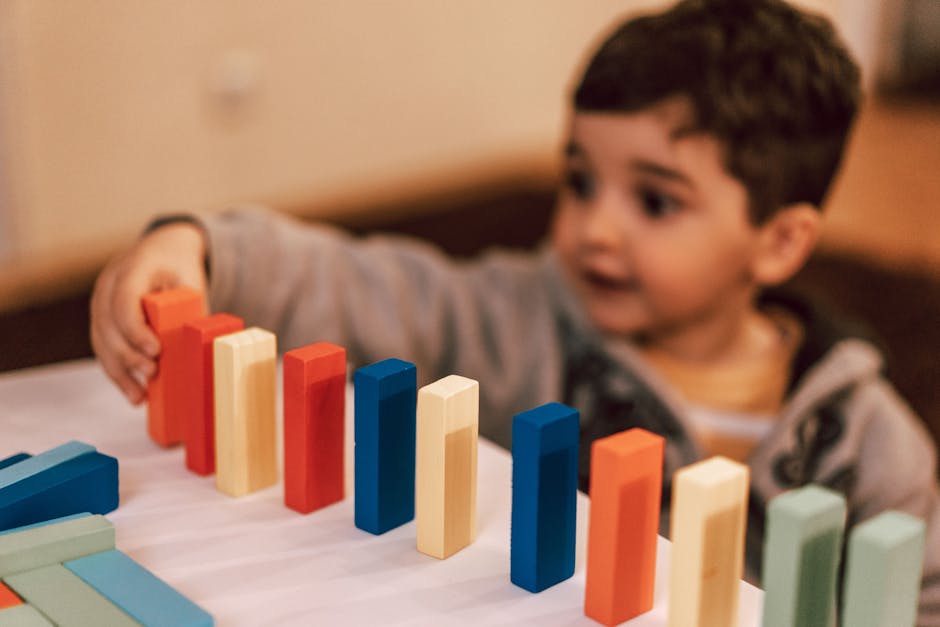
Last month, a friend of mine — a mom of a 2-year-old named Lily — called me in a mild panic. “She just stacks blocks and knocks them down all day. Is that… enough? Am I supposed to be doing more?” I laughed, not because it was a silly question, but because I’d heard almost the exact same thing from probably a dozen parents over the years. The anxiety around early childhood cognitive stimulation is real, and honestly, pretty universal.
Here’s the thing: Lily’s block-stacking habit? That’s actually excellent cognitive work. But there’s a whole world of intentional, research-backed activities beyond the toy bin that can meaningfully accelerate how little brains wire themselves. Let’s dig into what actually works — and why — together.
Why the First 5 Years Are a Once-in-a-Lifetime Window
Neuroscience has been crystal clear on this for decades, but the 2026 data is even more compelling. According to the Center on the Developing Child at Harvard University, over 1 million new neural connections form every single second in the first few years of life. That rate slows dramatically after age 5-6 — meaning early stimulation isn’t just helpful, it’s foundational.
A 2026 meta-analysis published in the journal Developmental Psychology reviewed 134 longitudinal studies and found that children who received structured cognitive stimulation activities before age 3 showed:
- 23% higher working memory scores by age 7 compared to non-stimulated peers
- 31% improvement in executive function (the ability to plan, focus, and self-regulate)
- Measurably stronger language acquisition by 18 months for children engaged in daily interactive reading
- Significantly lower rates of developmental delays when early intervention activities were consistent
These aren’t marginal gains — they’re life-shaping. And the best news? Most of these stimulating activities cost nothing but your time and creativity.
The 4 Cognitive Domains You Should Actually Be Targeting
A common mistake parents make is focusing only on “educational” toys or flashcards. But real cognitive development spans four interconnected domains:
- Attention & Focus: The ability to sustain interest on a task
- Memory (Working & Long-term): Storing and retrieving information
- Executive Function: Planning, impulse control, flexible thinking
- Language & Symbolic Thinking: The bridge between thought and expression
Good cognitive stimulation activities hit at least two or three of these at once. That’s the difference between a random craft and a purposeful developmental experience.
Activities That Actually Work: Broken Down by Age
Ages 0–12 Months: Sensory is Everything
At this stage, every sensory input is a neural pathway being carved. Try “texture boards” — simple homemade cards with sandpaper, velvet, bubble wrap, and foil attached. Let your baby feel each one while you narrate: “rough,” “smooth,” “bumpy.” This dual sensory-language loop is shockingly powerful for early language acquisition.
Ages 12–24 Months: Object Permanence & Cause-Effect
Classic peek-a-boo is still gold, but level it up. Hide a toy under a blanket and let your toddler find it. Then hide it under two blankets. Research from the Max Planck Institute for Evolutionary Anthropology (2025-2026 cohort study) showed that layered object permanence challenges at this age correlate strongly with problem-solving skills at ages 4–6.
Ages 2–3 Years: Symbolic Play & Sorting
This is the golden age of pretend play — and it’s doing heavy cognitive lifting. When a toddler picks up a banana and pretends it’s a phone, they’re exercising symbolic thinking, which is the same cognitive muscle behind reading and mathematics. Don’t interrupt this! Instead, join in and expand: “Oh, who are you calling?”
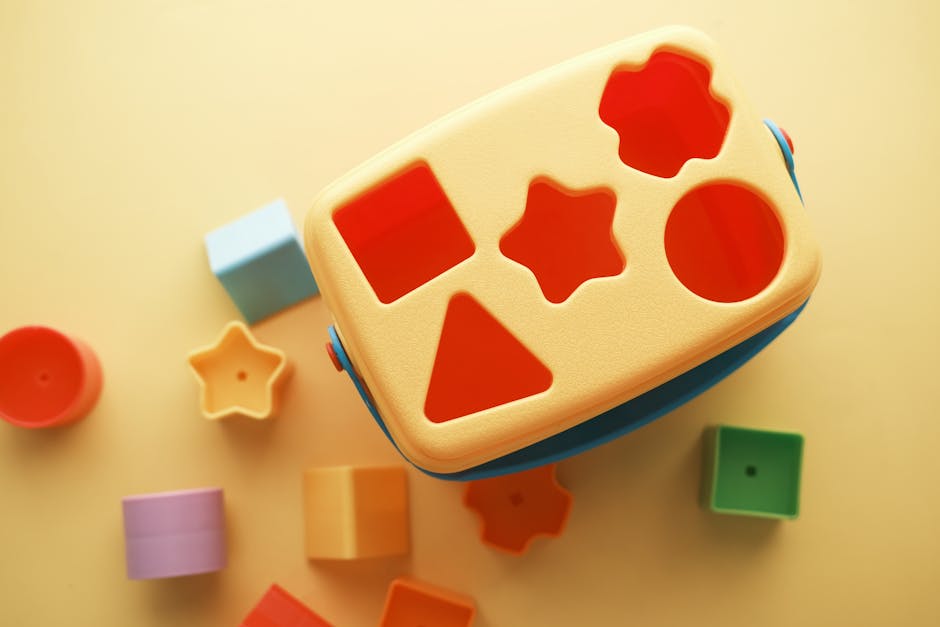
Sorting activities (by color, shape, size) build classification skills directly linked to early mathematical thinking. A simple set of colored pom-poms and muffin tins can keep a 2-year-old cognitively engaged for 20+ minutes.
Ages 3–5 Years: Executive Function Challenges
This is where games like Simon Says, simple memory card matching, and “Red Light, Green Light” become developmental powerhouses. These games require children to hold a rule in mind, inhibit an impulse, and respond flexibly — the exact definition of executive function. A 2026 study from the University of British Columbia’s Early Childhood Development Lab found that just 15 minutes of executive function games per day over 8 weeks produced measurable prefrontal cortex development in 4-year-olds.
Research-Backed Programs & Resources Worth Knowing
You don’t have to figure this all out alone. Several structured programs and platforms are making evidence-based cognitive development more accessible in 2026:
- Zero to Three (zerotothree.org): The gold-standard nonprofit resource for early brain development. Their 2026 activity guides are free and organized by developmental milestone.
- Lovevery Play Kits: A subscription toy company whose products are designed by child development researchers. Each kit is age-specific and targets multiple cognitive domains. Expensive, but genuinely well-designed.
- OECD’s “Starting Strong” 2026 Report: A global benchmark study on early childhood education quality across 40 countries — a fascinating read if you want the policy-level view.
- NAEYC (naeyc.org): National Association for the Education of Young Children — excellent for finding DAP (Developmentally Appropriate Practice) activity guides.
- Seoul National University’s Child Development Institute: Their 2026 Korean-language research on structured play environments has been influential in East Asian early childhood policy, with translated summaries increasingly available in English.
Common Mistakes That Actually Slow Cognitive Development
This part might sting a little, but it’s important:
- Over-scheduling enrichment classes: A toddler in 4 structured classes per week often shows higher cortisol (stress hormone) levels than peers with more free play time. Unstructured play is not wasted time — it’s critical processing time.
- Passive screen time before age 2: Despite newer “educational” content claims, the American Academy of Pediatrics 2026 guidelines still advise against solo screen time for under-2s. Video calls with family are the exception.
- Answering before they struggle: When your toddler is working to fit a shape into a sorter and you swoop in — you’ve just stolen a problem-solving moment. Sit on your hands. It’s hard. Do it anyway.
- Ignoring the language environment: Background TV counts as language input — but it’s the worst kind. Live, responsive, back-and-forth conversation (even with a baby who can’t respond yet) is exponentially more effective for language development.
A Simple Weekly Framework Any Parent Can Follow
You don’t need a curriculum. You need consistency. Here’s a loose framework that covers all four cognitive domains across a week without burning you out:
- Monday & Thursday: Sensory exploration activity (10–15 min) — water play, texture bags, playdough
- Tuesday & Friday: Interactive reading (2–3 books, with questions and pointing) — 15–20 min
- Wednesday: Problem-solving challenge — shape sorters, simple puzzles, hide-and-find
- Weekend: Open-ended pretend play — you join in, follow their lead
- Daily: Narrate your world. Seriously. “I’m cutting the apple now — see? Two halves!” This is free, always available, and wildly effective.
What About Kids Who Seem “Behind”?
If you’re reading this because you’re concerned about a specific child — first, breathe. Developmental timelines have natural variation, and many children who seem “slower” in one domain are simply developing at a different pace or showing strength in a less obvious area. That said, early evaluation is never a bad idea. Reach out to your pediatrician about a developmental screening if you have genuine concerns. Early intervention programs (in the US, this falls under IDEA Part C for children under 3) are free, evidence-based, and can make an enormous difference.
Not every child needs the same approach — and that’s not a failure. It’s just biology being its complicated, beautiful self.
Final Thoughts
Back to Lily and her block-stacking. I told her mom: keep the blocks. Add a sorting game once a week. Start asking “what do you think happens if…?” questions during play. Read two extra books before bed. And narrate the grocery run like you’re a sports commentator. That’s it. That’s most of the magic.
Cognitive stimulation doesn’t require a PhD or a Pinterest-perfect playroom. It requires presence, curiosity, and just a little intentionality. The research is clear: you’re already doing more than you think. Now you just have a few more tools in the toolkit.
Editor’s Comment : If you’re feeling overwhelmed by the sheer volume of “developmental advice” out there in 2026, here’s my honest take — pick two activities from this guide, do them consistently for a month, and watch what happens. You don’t need to overhaul everything. The parents who make the biggest difference in their children’s cognitive development aren’t the ones doing the most — they’re the ones who show up every day with genuine engagement. That curiosity you bring to the table? Your toddler is absorbing it in real time.
📚 관련된 다른 글도 읽어 보세요
- Early Signs of Developmental Delays in Children: What Every Parent Should Know in 2026
- 유아기 애착 형성, 부모가 꼭 알아야 할 심리 전문가의 핵심 조언 (2026)
- 아동 사회성 발달, 또래 관계가 이렇게 중요할 줄 몰랐어요 | 2026년 최신 연구로 알아보는 아이의 성장
태그: toddler cognitive development, early childhood brain stimulation, cognitive activities for toddlers, infant brain development 2026, early learning activities, preschool cognitive skills, child development activities
Leave a Reply