A few weeks ago, I was sitting in on a fifth-grade classroom in Seoul — not as an inspector, but just as a curious observer who’d been hearing a lot of buzz about how schools are integrating AI literacy into everyday lessons. What I saw genuinely surprised me. A ten-year-old girl was explaining to her classmate why a chatbot gave a “wrong” answer — she wasn’t just accepting the output, she was questioning it. That moment stuck with me. We’re not just teaching kids to use technology anymore. We’re teaching them to think alongside it, push back against it, and understand what it actually is.
So let’s dig into what AI digital literacy education looks like across elementary, middle, and high schools in 2026 — what the data says, what’s actually working, and what still needs serious attention.

Why AI Digital Literacy Is No Longer Optional in K-12
The conversation has shifted dramatically from “should we teach this?” to “how fast can we scale it?” In 2026, the World Economic Forum’s Future of Jobs Report identifies AI collaboration skills as one of the top three competencies employers will demand through 2030. That’s not abstract career advice — it’s a signal that kids entering high school today will graduate into a job market where knowing how to work with AI tools is as foundational as reading comprehension.
In South Korea specifically, the Ministry of Education expanded its AI education mandate in 2026 to require a minimum of 34 hours of AI-related curriculum per academic year at the middle school level — up from 17 hours just two years prior. Elementary schools now introduce computational thinking and basic machine learning concepts starting in Grade 3. That’s a kindergartner-to-college pipeline that didn’t exist five years ago.
Here are some numbers that put the urgency in perspective:
- 68% of South Korean high school students in a 2026 KERIS (Korea Education Research & Information Service) survey reported using AI tools for homework assistance at least once a week.
- Only 29% of those students said they felt confident evaluating the accuracy of AI-generated content.
- The OECD’s 2026 Digital Education Outlook found that countries with structured AI literacy programs see a 22% improvement in students’ critical thinking scores compared to those without.
- In the U.S., 38 states now have some form of AI or digital literacy standard embedded in K-12 curriculum frameworks — a jump from just 14 states in 2023.
That confidence gap — kids using AI constantly but not understanding it critically — is exactly the problem that good AI digital literacy education is trying to close.
What “AI Digital Literacy” Actually Means Across Grade Levels
Here’s where things get nuanced, because AI literacy isn’t one thing — it’s a layered skill set that should evolve as students mature. Let me break this down by school stage, because a one-size-fits-all approach is one of the biggest mistakes schools make.
Elementary Level (Grades 1–6): At this stage, the goal isn’t coding or machine learning theory. It’s building an intuitive, curious relationship with technology. Programs like SW·AI Education in Korea and CS Fundamentals by Code.org focus on pattern recognition, sequencing, and simple algorithmic thinking through games and unplugged activities (yes, learning computation without computers is still incredibly effective here). The key concept introduced early is data — what it is, where it comes from, and the idea that machines “learn” from examples.
Middle School Level (Grades 7–9): This is where things get more interesting and more challenging. Students are old enough to grasp concepts like training data, bias in algorithms, and the difference between correlation and causation. Schools like Gyeonggi Suwon International School in Korea have piloted project-based units where students build simple image classifiers using Google’s Teachable Machine — and then deliberately break them by introducing biased training data. Watching a 13-year-old realize that their classifier fails because they only showed it pictures of one type of cat is a more powerful lesson about AI bias than any lecture could deliver.
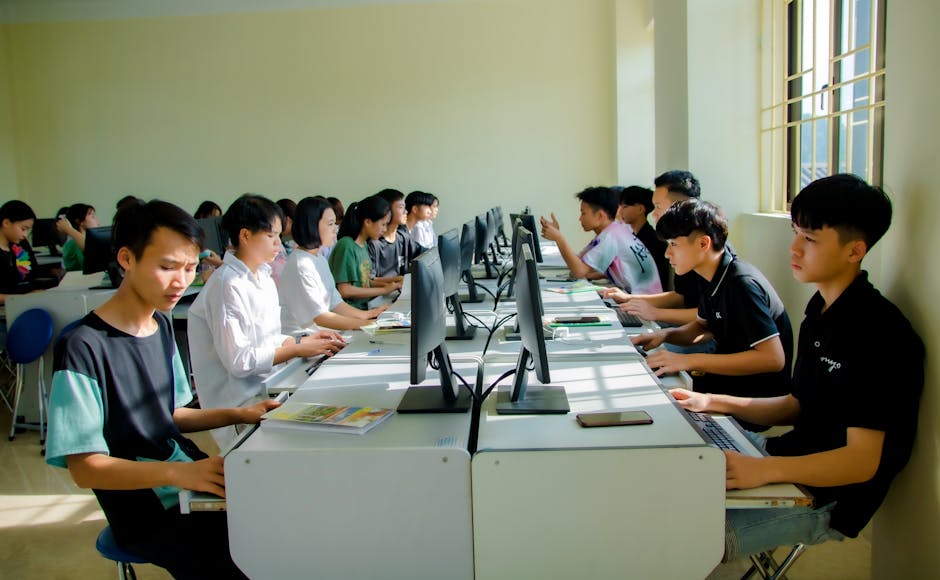
High School Level (Grades 10–12): Here, the curriculum branches. Students who lean technical can explore Python-based ML models, data ethics, and even introductory neural network architecture using platforms like Kaggle or fast.ai. Students in humanities tracks focus on the societal implications — AI governance, digital rights, misinformation detection, and ethical frameworks. Finland’s “Elements of AI” course, now adopted in adapted forms by multiple Asian and European countries, is a benchmark example of making AI conceptually accessible to non-technical high schoolers.
International Case Studies Worth Paying Attention To
Let’s look at a few real-world implementations that are getting results:
Singapore’s AI for Kids Initiative (AI4K): Launched under the Smart Nation framework, this program embeds AI literacy into science and math classes rather than treating it as a separate subject. The integration approach is smart — students aren’t learning AI in isolation, they’re using it as a lens to understand existing subjects better. Results from the 2025–2026 academic year showed measurable gains in both AI comprehension and science engagement scores.
Finland’s Nationwide AI Literacy Push: Building on the success of “Elements of AI” (developed by the University of Helsinki and Reaktor), Finland rolled out a secondary school adaptation in 2025 that’s now reaching over 90,000 students annually. What makes it work? The course is free, browser-based, requires no prior coding knowledge, and frames AI through real ethical dilemmas students actually care about — like social media recommendation algorithms and facial recognition in public spaces.
Korea’s AI Digital Textbook Rollout (2026): This one’s still hotly debated. The Ministry of Education began rolling out AI-powered adaptive digital textbooks (AI 디지털교과서) across math, English, and informatics for select grades. The idea is that the textbook itself personalizes learning pace and difficulty. Early pilot data from the first semester of 2026 shows promising engagement metrics, but teachers are raising important flags about screen dependency and the risk of students not developing struggle-tolerance — the productive frustration that leads to real learning.
UNESCO’s AI Competency Framework for Students (2025 Edition): If you’re looking for a global benchmark, UNESCO’s updated framework (available at unesco.org/en/digital-education) outlines five core competency domains: Understanding AI, Using AI, Creating with AI, Evaluating AI, and Governing AI. This is the closest thing we have to an international standard, and several national curricula are now explicitly aligning to it.
The Real Challenges Schools Are Still Wrestling With
Now, let’s be honest about what’s not working — because this field has plenty of hype that outpaces reality.
- Teacher preparedness gap: You can’t teach AI literacy if your teachers are themselves anxious about AI. A 2026 survey by the Korean Teachers’ Union found that only 31% of in-service teachers felt “adequately trained” to deliver AI curriculum. Professional development pipelines are lagging behind curriculum mandates by at least two to three years.
- Equity and access: Rural schools and low-income districts in both Korea and the U.S. consistently show lower AI literacy outcomes — not because of student capability, but because of infrastructure gaps, outdated devices, and inconsistent broadband. Rolling out AI textbooks without solving connectivity first is putting the cart before the horse.
- Assessment confusion: How do you grade “AI literacy”? Most schools are still relying on traditional written tests, which can’t adequately capture whether a student can critically evaluate an AI output in real time. Project-based and portfolio assessment models are being piloted but aren’t yet mainstream.
- Ethical framework integration: Teaching kids to use AI tools without embedding ethics is like teaching them to drive without traffic rules. The good news is 2026 curricula are increasingly mandating ethical reasoning modules — but implementation quality varies wildly between schools.
- Generative AI policy chaos: With tools like ChatGPT, Gemini, and Claude now deeply embedded in student workflows, schools are still struggling to develop coherent acceptable use policies. Blanket bans don’t work (students just use phones). What does work is teaching when and how to use these tools appropriately — and that requires curriculum, not just policy.
Practical Suggestions for Parents, Educators, and Policy Makers
If you’re a teacher trying to figure out where to start, you don’t need a master’s degree in machine learning. Start with what you know and layer in AI thinking:
- Use Teachable Machine (teachablemachine.withgoogle.com) for quick, visual AI experiments with no coding required.
- Explore AI4K12.org — a U.S.-based initiative with free, grade-band-specific curriculum resources that translate beautifully to international contexts.
- Assign students to audit AI outputs — give them an AI-generated paragraph and ask them to fact-check it. This builds critical evaluation skills without requiring technical knowledge.
- For high school, “Elements of AI” (elementsofai.com) is genuinely excellent and free. Assign it as an enrichment course or use it to supplement existing tech curriculum.
For parents: don’t wait for school to do all the work. Talk to your kids about how YouTube recommendations work, why ads seem to “know” what they want, and what data their devices are collecting. Those everyday conversations build AI intuition faster than you’d expect.
For policy makers: the single highest-leverage investment right now is teacher training, not technology. Hardware depreciates. A well-trained teacher compounds value for decades. Fund the professional development pipeline aggressively, and the curriculum outcomes will follow.
Where This Is All Heading by the End of 2026
The trajectory is clear: AI digital literacy is becoming a core subject alongside math, language arts, and science — not a nice-to-have elective. By the end of 2026, we’ll likely see South Korea’s AI digital textbook program expand to cover more grade levels, several more U.S. states codifying AI literacy standards, and UNESCO publishing implementation guidance for developing nations that are just beginning this journey.
The students who graduate in 2030 and beyond won’t just be consumers of AI — the best-educated ones will be critical collaborators with it, people who know when to trust a model’s output, when to question it, and when to build something better. That’s the real goal of AI digital literacy education, and honestly, it’s one of the most exciting educational frontiers I’ve seen in my career covering this space.
Editor’s Comment : The most important thing I’d leave you with is this — AI digital literacy education isn’t about making every student a data scientist. It’s about making sure no student grows up to be digitally passive. The gap between a student who critically evaluates AI output and one who blindly accepts it will define opportunities, vulnerabilities, and civic participation in ways we’re only beginning to understand. If your school hasn’t started this conversation yet, 2026 is not too late — but waiting much longer is. Start small, start honest, and let students lead the curiosity.
📚 관련된 다른 글도 읽어 보세요
- 2026년 AI 기반 맞춤형 학습 플랫폼 추천 TOP 5 – 내 공부 스타일에 딱 맞는 서비스는?
- 2026년 아동 심리 발달 최신 연구: 우리 아이 마음을 이해하는 5가지 핵심 키워드
- Best AI-Powered Personalized Learning Platforms in 2026: Which One Actually Fits Your Brain?
태그: AI digital literacy education, K-12 AI curriculum 2026, elementary middle high school AI, AI literacy Korea, digital education technology, AI ethics students, computational thinking schools
Leave a Reply