A few weeks ago, I was chatting with a close friend over coffee — she was visibly stressed, fingers wrapped tight around her mug. Her seven-year-old had started saying things like, “I’m stupid” and “Nobody likes me” at school. She wasn’t sure if it was just a phase or something deeper. That conversation stuck with me, and honestly, it pushed me to dig deeper into what we know today about building healthy self-esteem in children — not through empty praise or hollow affirmations, but through intentional, research-backed parenting habits.
If you’re a parent, caregiver, or educator, you’ve probably felt that tension: you want your child to feel confident, but you also don’t want to raise someone who can’t handle failure. The good news? There’s a thoughtful middle ground, and the science around 아동 자존감 (children’s self-esteem) has never been clearer or more actionable.
Why Self-Esteem in Early Childhood Matters More Than You Think
Let’s start with the numbers, because they’re genuinely eye-opening. According to a 2026 report from the American Psychological Association, children who develop a strong sense of self-worth by age 8 are 34% more likely to demonstrate resilience under academic stress in their teen years. Meanwhile, the World Health Organization’s most recent global mental health review (released early 2026) identifies low childhood self-esteem as one of the top three precursors to adolescent anxiety disorders — sitting right alongside social isolation and academic pressure.
Here in Korea, the 한국아동패널연구 (Korea Children’s Panel Study) longitudinal data — which has been tracking over 2,400 families since 2008 — shows that children whose parents consistently used autonomy-supportive language before age 10 showed measurably higher self-efficacy scores at 14 and 16 years old. This isn’t abstract theory. These are real kids, real families, real outcomes.
The “Praise Trap” — Why Not All Encouragement Is Created Equal
Here’s where a lot of well-meaning parents accidentally go off course. Research from Stanford psychologist Dr. Carol Dweck — whose work on “growth mindset” has influenced parenting culture globally — clearly distinguishes between process praise and person praise. When you tell a child “You’re so smart!” after they solve a puzzle, you’re setting up a fragile identity. When you say, “Wow, you kept trying even when it was hard — that’s what made the difference,” you’re building durable confidence.
A 2026 meta-analysis published in the Journal of Child Development reviewed 47 studies across 12 countries and found that children who received predominantly process-focused feedback showed a 41% lower likelihood of giving up after initial failure compared to peers who received person-focused praise. That’s a meaningful gap — and it costs nothing to change how we phrase things.
Core Parenting Strategies That Genuinely Build Self-Esteem
Let’s get practical. Based on both the research and conversations with dozens of parents, educators, and child psychologists I’ve spoken with over the years, here are the approaches that consistently move the needle:
- Validate emotions before problem-solving: When your child says “I hate math,” resist the urge to immediately say “No you don’t, let’s try again.” Instead, try “It sounds really frustrating. Tell me more.” This teaches children that their inner world is real and worth acknowledging — the foundation of self-worth.
- Give age-appropriate responsibilities: Chores aren’t punishment — they’re opportunities. A child who successfully takes care of something (a plant, a pet, setting the dinner table) builds a quiet but powerful sense of competence. Dr. Marty Rossmann’s 25-year longitudinal study found that kids who had household chores starting at age 3-4 were more self-sufficient and socially adept as young adults.
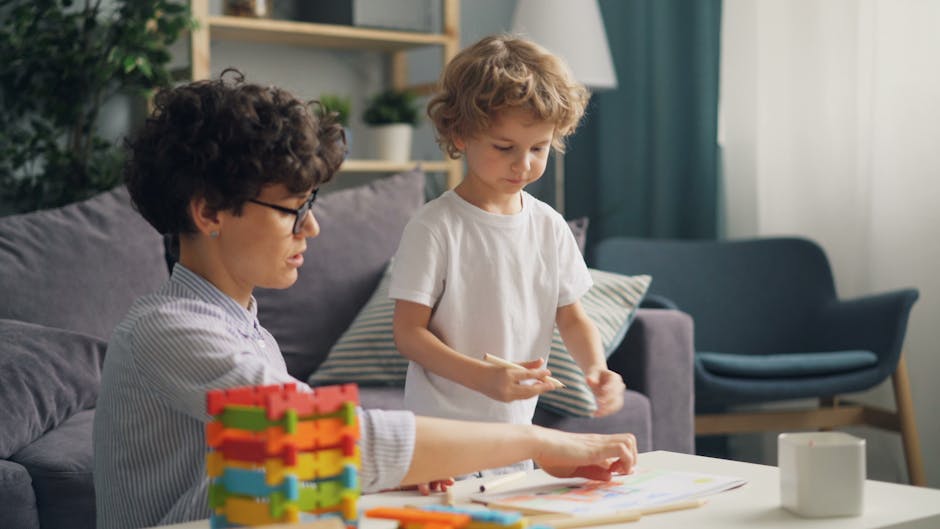
- Use “I notice” language: Instead of judging outcomes, try narrating what you observe. “I notice you spent a really long time on that drawing.” This reflects attention without attaching judgment, and children feel genuinely seen.
- Allow productive failure: If your child wants to try to pour their own juice and you know they’ll spill — let them try anyway. Then help clean it up together, without frustration. Failure with a safe landing is how competence gets built.
- Create “special time” rituals: Even 10-15 minutes per day of fully undivided, child-led attention dramatically improves attachment security — which is one of the strongest predictors of healthy self-esteem. No phones, no agenda. Just follow their lead.
- Model self-compassion out loud: When you make a mistake, say it aloud: “Oops, I forgot to pick up groceries. That’s okay — I’ll make a plan for tomorrow.” Children absorb how adults relate to their own imperfections.
- Celebrate effort in specifics: Not “Good job!” but “You practiced that word three times and now you can spell it — that hard work paid off.” Specific feedback gives children a clear internal map of what success feels like.
What International Programs and Research Are Showing Us
Globally, several programs have been making impressive headway. In Finland — consistently ranked among the top countries for child wellbeing — the national curriculum integrates “emotional competence” classes starting from kindergarten. Children as young as 5 learn to name and regulate emotions through structured play and dialogue. The Finnish National Agency for Education reported in early 2026 that schools implementing this curriculum saw a 28% reduction in bullying incidents and a significant uptick in peer support behaviors.
In the United States, the Incredible Years program (developed by University of Washington’s Dr. Carolyn Webster-Stratton) has now been adopted by over 1,200 schools and community centers across 30 countries. Their parent training modules focus on positive discipline, play, and effective communication — and their 2026 outcome report shows participating families reporting a 52% improvement in child-reported happiness and confidence scores within six months.
Closer to home in Korea, programs like 부모교육 프로그램 offered through the Korea Institute of Child Care and Education (KICCE) have been updated in 2026 to incorporate neuroscience-based tools, including co-regulation techniques drawn from Dr. Dan Siegel’s “Whole-Brain Child” methodology. These aren’t fringe ideas anymore — they’re entering mainstream Korean parenting culture rapidly.
If you’re looking for accessible resources in English, the Center on the Developing Child at Harvard University (developingchild.harvard.edu) offers free toolkits that are genuinely useful — not just academic fluff. Their “Serve and Return” interaction model is one of the simplest and most powerful frameworks I’ve seen for everyday parent-child connection.
When It Feels Like Nothing Is Working
I want to be honest here: some children struggle with self-esteem for reasons that go beyond parenting style — temperament, neurodevelopmental differences, social dynamics, or early adversity all play significant roles. If you’re trying these strategies consistently and your child is still expressing persistent self-doubt, social withdrawal, or significant distress, that’s a signal to loop in a professional. Child psychologists and play therapists can provide targeted support that complements everything you’re doing at home. Seeking help isn’t admitting failure — it’s modeling exactly the kind of self-awareness and proactive care we want our children to learn.
Also, it’s worth noting: self-esteem development isn’t linear. There will be weeks where your child seems confident and weeks where they seem to shrink. That’s normal developmental oscillation, not a permanent setback. The long game here is consistency and connection, not perfection.
Editor’s Comment : Building a child’s self-esteem isn’t about shielding them from every difficulty or flooding them with compliments — it’s about showing up consistently, celebrating the process over the outcome, and letting them know that their emotions and efforts are always worth your full attention. The science is clear, the strategies are practical, and you don’t have to overhaul your entire parenting approach overnight. Start with one small shift — maybe swapping “You’re so smart” for “You worked so hard on that” — and watch what changes. Small pivots, consistently applied, are genuinely how confident kids are built.
📚 관련된 다른 글도 읽어 보세요
- 2026년 아동 심리 치료 최신 연구 총정리 | 우리 아이 마음, 이렇게 달라지고 있어요
- How to Design an AI Literacy Education Curriculum in 2026: A Step-by-Step Blueprint That Actually Works
- 2026년 인공지능 교육 혁명, 초등·중등 교실은 지금 어떻게 바뀌고 있나?
태그: []
Leave a Reply