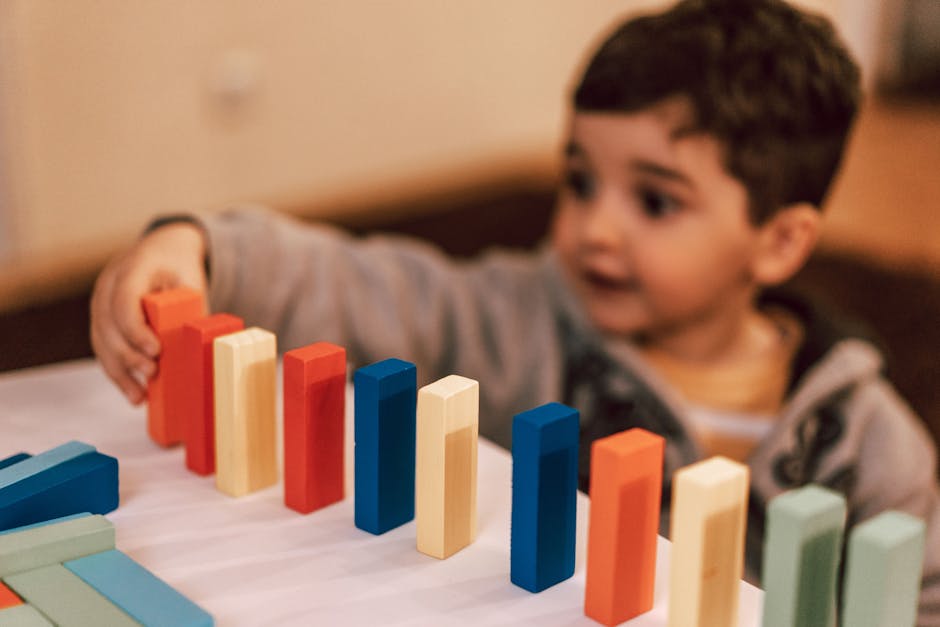
Picture this: it’s a quiet Tuesday morning, and a three-year-old named Mia is stacking colorful blocks on the kitchen floor. Her mom, exhausted from a night of interrupted sleep, wonders if this is ‘enough’ — or if she should be enrolling Mia in some structured program she saw advertised online. Sound familiar? If you’ve ever found yourself standing in that exact mental crossroads, you’re not alone — and the good news is, the answer might surprise you.
In 2026, our understanding of early childhood cognitive development has grown exponentially, thanks to advances in neuroscience and longitudinal educational research. The old debate between ‘structured learning vs. free play’ has largely been resolved — and the science points toward something beautifully nuanced. Let’s think through this together.
What Does ‘Cognitive Development’ Actually Mean for Toddlers?
Cognitive development refers to how children build mental processes — things like memory, attention, reasoning, language, and problem-solving. For children aged 0–6, this is the most rapid period of brain growth in a human lifetime. According to the Harvard Center on the Developing Child, over 1 million new neural connections form every second during early childhood. That’s not a metaphor — that’s literal biological architecture being laid down in real time.
What stimulates those connections? Three core pillars consistently emerge in the research: responsive interaction, environmental richness, and play-based exploration. Notice that “expensive educational toys” and “screen-based apps” aren’t on that list — at least not as top-tier stimulators. We’ll come back to that.
The 2026 Research Landscape: What New Data Is Telling Us
A 2026 meta-analysis published in the journal Developmental Psychology Review pooled data from over 84 longitudinal studies across 22 countries and found that children who engaged in guided play — play with gentle adult scaffolding — showed 34% better executive function scores by age 5 compared to children in purely passive learning environments. Executive function includes skills like working memory, cognitive flexibility, and impulse control — the very skills that predict academic success and emotional resilience later in life.
Additionally, the OECD’s 2026 Early Learning Outlook report highlighted that children in high-quality early education environments showed measurable advantages in literacy and numeracy that persisted through age 10. But here’s the catch: “high-quality” was defined not by curriculum rigor, but by adult responsiveness and emotional safety in the learning environment.
International Examples Worth Looking At
Let’s look at a few real-world models that are shaping early education in 2026:
- Finland’s Early Childhood Education (ECE) Reform: Finland continues to lead globally with its play-centered kindergarten philosophy. Children don’t begin formal reading instruction until age 7, yet Finnish students consistently rank among the top in international assessments. Their early years focus heavily on social-emotional learning and outdoor exploration — both proven cognitive stimulants.
- South Korea’s ‘Saessak’ Initiative: In response to concerns about over-academic preschool environments, South Korea launched its Saessak (“Sprout”) program in 2024, which expanded significantly in 2026. It emphasizes unstructured outdoor play and sensory exploration for children under 5, actively discouraging worksheet-based learning at that age. Early outcome data from 2026 shows improved creative problem-solving metrics in participating cohorts.
- Reggio Emilia Approach (Italy): This decades-old philosophy — now adopted by thousands of schools worldwide — treats children as capable, curious learners who drive their own inquiry. In 2026, Reggio-inspired programs have been updated to incorporate digital storytelling tools thoughtfully, always keeping child agency at the center.
- Singapore’s SPARK Framework: Singapore’s 2026-updated SPARK (Set Standards, Prepare and Support, Assess and Recognise, Know Your School) accreditation for preschools now includes cognitive stimulation benchmarks that specifically measure how often educators ask open-ended questions — a simple but powerful technique.
Practical Methods You Can Start Today
Now let’s get specific. You don’t need a Montessori classroom or a $300 STEM kit. Here are evidence-backed strategies that work in real homes:
- Serve and Return Interaction: When your child makes a sound, gesture, or expression, respond to it. This back-and-forth “conversational” pattern — even with infants — directly builds neural pathways for language and social cognition.
- Open-Ended Questions During Play: Instead of asking “Is that a red block?” try “What do you think will happen if we put this one on top?” This activates predictive reasoning and creative thinking.
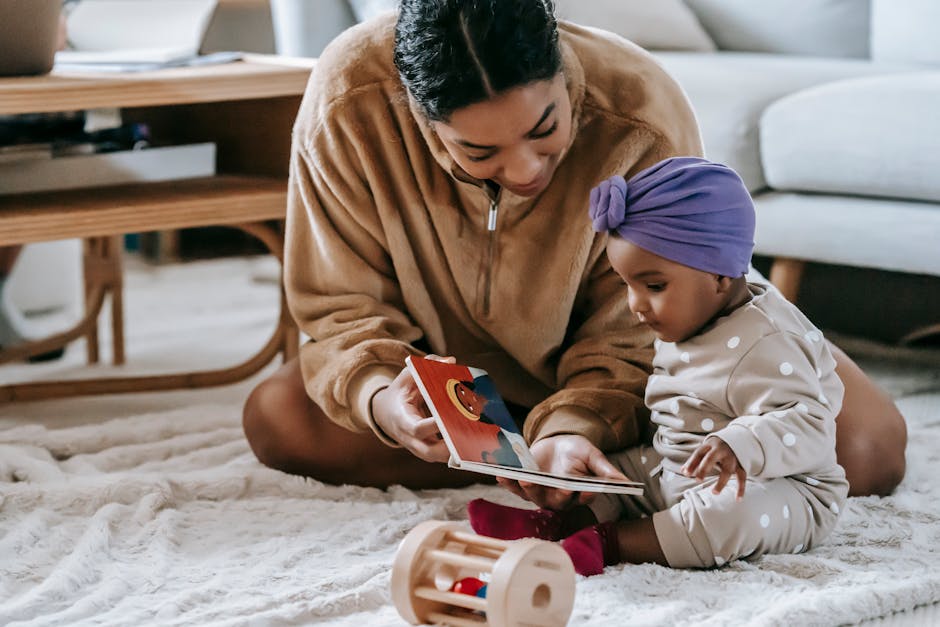
- Storytelling and Narrative Play: Whether it’s reading books or inventing stories together, narrative play strengthens sequencing, memory, and emotional vocabulary — all cognitive building blocks.
- Sensory Bins and Loose Parts Play: Rice, sand, water, stones, fabric scraps — low-cost materials that allow children to explore textures, volumes, and cause-effect relationships. This directly stimulates tactile and spatial intelligence.
- Limited, Intentional Screen Time: The American Academy of Pediatrics’ 2026 updated guidelines recommend that any screen content for ages 2–5 be co-viewed with a caregiver who actively discusses what’s happening on screen. Passive screen time still shows diminished cognitive return compared to interactive play.
- Music and Movement: Rhythm-based activities — clapping, dancing, simple percussion — are strongly linked to phonological awareness and mathematical pattern recognition. It’s joyful AND neurologically productive.
What If You Have Limited Time or Resources?
Here’s the realistic alternative section — because not every parent has three free hours a day to implement a pedagogical framework. If your mornings are chaotic and your evenings are short, here’s what actually matters most:
Quality over quantity. Research consistently shows that 15–20 minutes of fully present, engaged interaction with your child does more cognitive good than 2 hours of parallel presence while distracted. Put the phone down during bath time. Narrate what you’re doing while cooking. Ask “why do you think the pasta is getting soft?” These micro-moments compound dramatically over time.
And if you’re considering a structured program — daycare, preschool, enrichment classes — the most important question isn’t “what curriculum do they use?” It’s “how do the adults interact with the children?” Warm, responsive, curious educators outperform any curriculum on paper, every single time.
Editor’s Comment : What strikes me most about the 2026 research landscape is how it keeps validating something deeply human — that children learn best when they feel safe, curious, and genuinely seen. No app, program, or flashcard replaces the cognitive power of a caring adult saying, “That’s a great question. What do you think?” If there’s one thing to take from this piece, it’s that you’re probably doing more right than you realize — and the small, consistent moments of connection you build every day are literally shaping the architecture of your child’s mind. That’s extraordinary.
태그: [‘early childhood cognitive development’, ‘toddler learning activities 2026’, ‘play-based learning’, ‘brain development toddlers’, ‘early education strategies’, ‘parenting tips cognitive growth’, ‘preschool development methods’]
Leave a Reply