A friend of mine — let’s call her Dana — spent three days in Yosemite last spring and came back mildly frustrated. Not because the park was disappointing (it never is), but because she’d followed every “top 10 Yosemite hikes” list she found online, ended up elbow-to-elbow with tour bus crowds at every viewpoint, and somehow never stumbled onto the Valley Floor Loop. When she asked me, “Wait, is that even a real thing people do?” I realized the internet has done a spectacular job of hiding one of the park’s most rewarding, accessible routes in plain sight.
So let’s fix that together. Whether you’re a first-timer trying to make sense of the 1,169 square miles of granite and sequoias, or a returning visitor who’s already done Half Dome and wants something different, the Yosemite Valley Floor Loop deserves a serious look in 2025.
What Exactly Is the Valley Floor Loop — And Why Don’t People Talk About It?
The Valley Floor Loop is roughly an 11.5-mile (18.5 km) loop that circles the entire Yosemite Valley floor, connecting iconic landmarks without demanding the elevation gain of the park’s more famous routes. Total elevation change is only about 200–300 feet (60–90 meters), making it genuinely manageable for most fitness levels.
Here’s the catch that explains Dana’s confusion: the trail isn’t marketed as a single named experience. Park maps break it into segments — the Northside Drive corridor, Cook’s Meadow Loop, the riverside paths — and many visitors just pick pieces without realizing the full circuit exists. In 2025, with the park’s new timed entry permit system still in effect (required 6:00 AM–4:00 PM from late April through October), savvy hikers who understand the loop structure can time their entry permit use far more efficiently than someone chasing individual trailheads all day.
- Total distance: ~11.5 miles (full loop) — easily shortened to 6–7 miles by cutting across the Valley at Sentinel Bridge or Swinging Bridge
- Elevation gain: 200–300 ft — essentially flat by Yosemite standards
- Terrain: Mix of packed dirt trail, paved bike path sections, and meadow edges
- Best season: Late April through early November (peak wildflowers: May–June)
- Trailhead options: Valley Visitor Center, Curry Village, or Yosemite Valley Lodge
- Dogs allowed: Yes, on leash, on the paved portions — rare for Yosemite trails
- Bikes allowed: Yes, on designated segments — you can rent at Yosemite Valley Lodge (~$15.50/hour in 2025)
The Timing Game: When the Light Actually Hits Right
Most visitors enter Yosemite Valley between 9:00 AM and noon. That’s exactly when you don’t want to be starting the loop if photography or solitude matters to you. The golden hour logic here is straightforward: El Capitan’s southwest face catches direct morning light from roughly 7:30–9:30 AM in summer, while Bridalveil Fall is best lit in late afternoon, around 4:00–6:00 PM.
A practical 2025 schedule that actually works:
- 6:00–7:00 AM: Enter via the Arch Rock entrance (Highway 140) — timed entry permits are checked, but early arrivals often find the process faster
- 7:30 AM: Start at Valley Visitor Center, head west on the Northside (river-side) path toward El Capitan Meadow
- 9:00–10:30 AM: El Capitan Meadow — watch climbers on the Dawn Wall with binoculars, genuinely one of the most surreal free experiences in the park
- 11:00 AM–1:00 PM: Lunch break at the Valley Lodge area or packed lunch at Cathedral Beach picnic area
- 1:00–4:00 PM: Return via Southside — pass Sentinel Meadow, Sentinel Bridge (best straight-on Half Dome reflection shot)
- 4:30–6:30 PM: Bridalveil Fall area and Valley View — crowds thin dramatically after 4 PM
The Permit Reality in 2025 — Don’t Get Caught Off Guard
This is the part travel blogs often gloss over. In 2025, Yosemite’s Day Use Reservation system requires a reservation between late April and late October (specific dates announced on recreation.gov typically in early March). Cost is $2 per reservation — not per person, per vehicle entry. The reservation is time-slot based, not timed to the minute, so flexibility exists once you’re in.
Key nuance: if you’re staying at Curry Village, Half Dome Village, Yosemite Valley Lodge, or Ahwahnee Hotel, your lodging confirmation substitutes for the day-use reservation. This is why booking even a single night inside the Valley — even a tent cabin at Curry Village starting around $140–$165/night in 2025 — unlocks access without the permit lottery anxiety.
For day-trippers, reservations typically release 28 days in advance at 8:00 AM Pacific, with a rolling 24-hour release for same-day spots. Set a calendar reminder. Missing that window by even 10 minutes in peak July–August can mean selling out.
What the Loop Actually Shows You (That Other Trails Don’t)
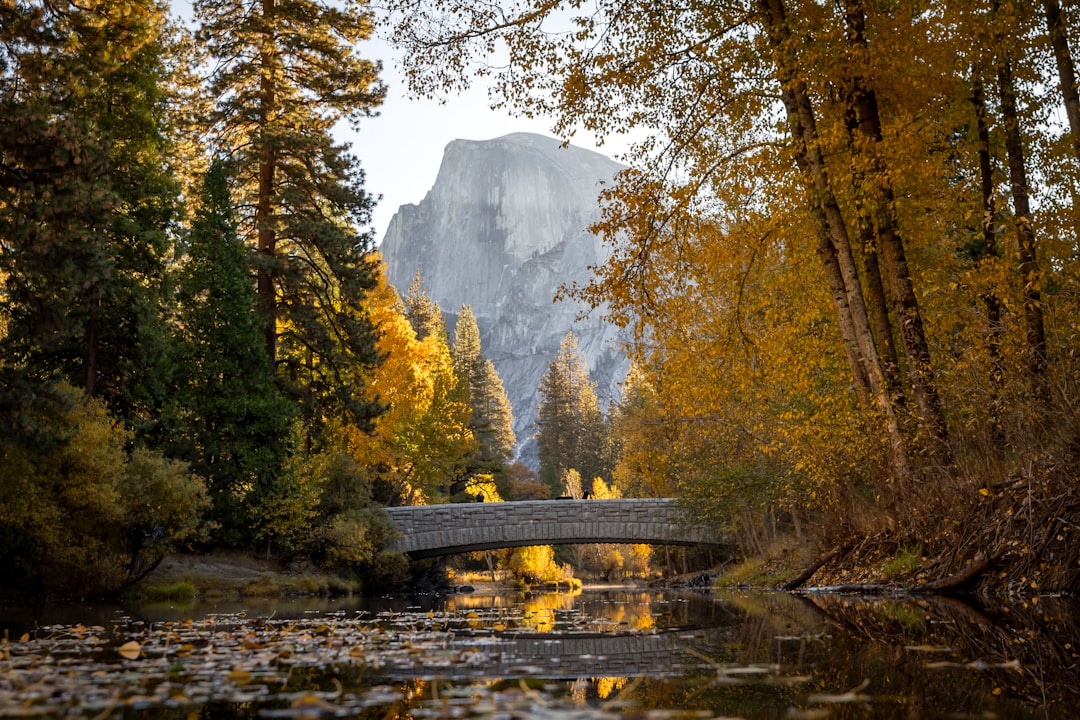
Here’s the honest sell: the Valley Floor Loop gives you a spatial understanding of Yosemite that summit-focused hikes simply can’t provide. When you’re at the top of Half Dome, you’re inside the postcard. When you’re walking the Valley floor, you’re reading the whole geography at once — the relationship between El Capitan, Cathedral Rocks, Half Dome, and the Merced River becomes physically intuitive rather than map-abstract.
Three specific spots worth calling out:
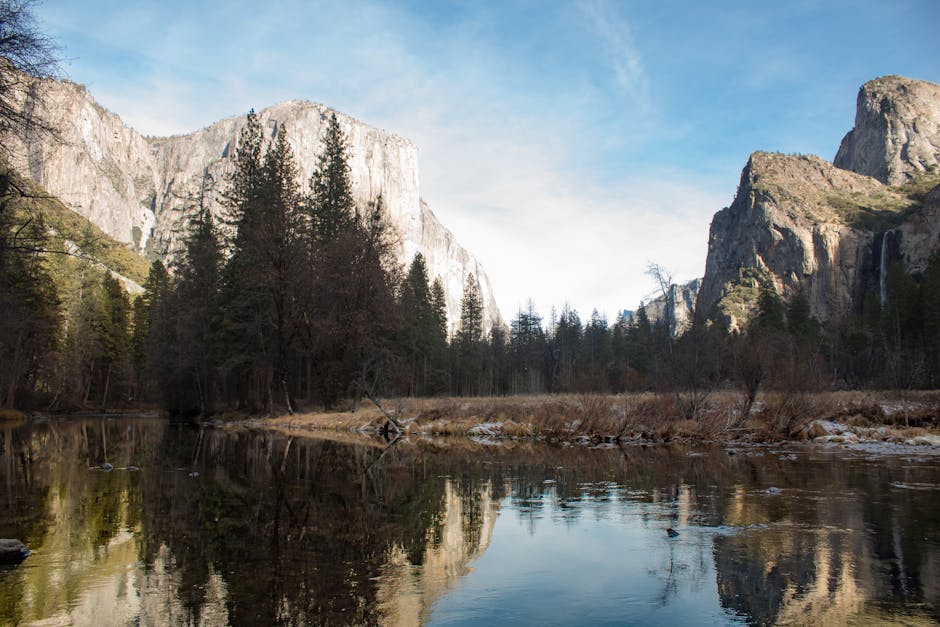
- Valley View (Gates of the Valley): The classic “Welcome to Yosemite” composition — El Capitan left, Bridalveil Fall right, Merced River center. Best light is late afternoon. Parking is genuinely limited (about 8 cars), so walking from the loop beats driving.
- Cook’s Meadow: The Ansel Adams angle for Half Dome. In early morning with low mist, it’s the kind of scene that makes you understand why people devoted careers to this place.
- Sentinel Bridge at dusk: The Merced River runs glassy calm by late afternoon in summer. Half Dome’s reflection appears sharply — this is legitimately one of the most photographed spots in American national parks, and for good reason.
Practical Gear and Honest Warnings
Because the trail is mostly flat, people consistently underprepare. Don’t make that mistake.
- Water: Carry at least 2 liters. Refill stations at Valley Visitor Center, Curry Village, and Valley Lodge. The Merced River water is not safe to drink untreated despite looking pristine.
- Sun exposure: Valley floor offers almost no shade between 11 AM–3 PM in summer. SPF 50, wide-brim hat, and UV-blocking layers are non-negotiable.
- Wildlife protocol: Black bears are active in Yosemite Valley year-round. Never approach, keep food in hard-sided containers (required in the park). Bear canisters are available to rent at the Valley Visitor Center for about $5/day.
- Footwear: Trail runners or light hiking boots work well. The paved sections are easy on joints; the meadow edges can be muddy through June.
- Cell coverage: Spotty to nonexistent in significant stretches of the loop. Download offline maps via AllTrails Pro or the NPS Yosemite app before you enter.
Off-Season: The Version Nobody Writes About
November through March in Yosemite Valley is a genuinely different experience — and in many ways a better one. No reservation system. No crowds. Horsetail Fall (famous for the “firefall” effect in February when late sunsets hit it just right) is only accessible in this window. Lodging prices drop 30–40%. The Ahwahnee, which runs $600–$900/night in peak summer, sometimes drops to $380–$450/night in January.
The tradeoff: Tioga Road (to Tuolumne Meadows) closes typically by November, some trails may have snow or ice, and daylight hours are short (sunset as early as 4:45 PM in December). Microspikes ($30–$50 at REI) and layering systems matter significantly in winter. But if you’ve always imagined a quieter Yosemite, this is the door.
Alternatives If the Full Loop Feels Like Too Much
Not everyone wants 11.5 miles — and that’s completely valid. Here’s a conditional breakdown:
- If you have 2–3 hours: Cook’s Meadow Loop alone (~1 mile) hits Sentinel Bridge, Swinging Bridge, and the meadow viewpoints. Genuinely complete as a short experience.
- If you’re with young kids or elderly family: The paved Valley Loop bike path sections (roughly 5 miles between Curry Village and Yosemite Village) are stroller and wheelchair accessible in dry conditions.
- If you want elevation without Half Dome crowds: Mirror Lake Loop (5 miles, ~200 ft gain) or the Four-Mile Trail to Glacier Point (9.6 miles round-trip, 3,200 ft gain) offer dramatically different perspectives.
- If you only have one day and want the classic view: Tunnel View (a 5-minute roadside stop) gives you the postcard shot without the permit headache — it’s technically outside the day-use reservation zone.
한 줄 요약 (One-line wrap-up): The Valley Floor Loop isn’t Yosemite’s most thrilling trail — but it might be its most honest one, and in 2025, with the right timing and a little permit prep, it’s the route that actually makes the whole park click into place.
📚 관련된 다른 글도 읽어 보세요
- 실제로 해보니 이렇더라 — 2026년 기준 한번에 성공하는 Cursor AI 실제 세팅법
- 싸다고 샀다가 큰코다친다 — 2026년 기준 자동차 타이어 교체 실패 없는 선택 가이드
- Why I Almost Gave Up on Budgeting — The {year} Honest Money Reset Guide
태그: Yosemite Valley Floor Loop, Yosemite 2025 guide, Yosemite timed entry permit, Yosemite hiking trails, national park travel tips, Yosemite off-season, Yosemite day hike
Leave a Reply