Picture this: a tired new parent at 3 a.m., rocking their crying baby for what feels like the hundredth time, wondering, “Does any of this even matter?” Short answer? Absolutely yes — and science in 2026 is giving us more precise, actionable reasons why than ever before. Infant attachment isn’t just a feel-good concept from old psychology textbooks. It’s a neurobiological framework that shapes how a child will regulate emotions, form relationships, and even respond to stress decades down the road.
What’s exciting right now is that researchers are moving well beyond simply categorizing attachment styles (secure, anxious, avoidant, disorganized) and are diving into exactly what parents do — moment by moment — that builds or disrupts that bond. Let’s think through this together, because the nuance here is genuinely fascinating.
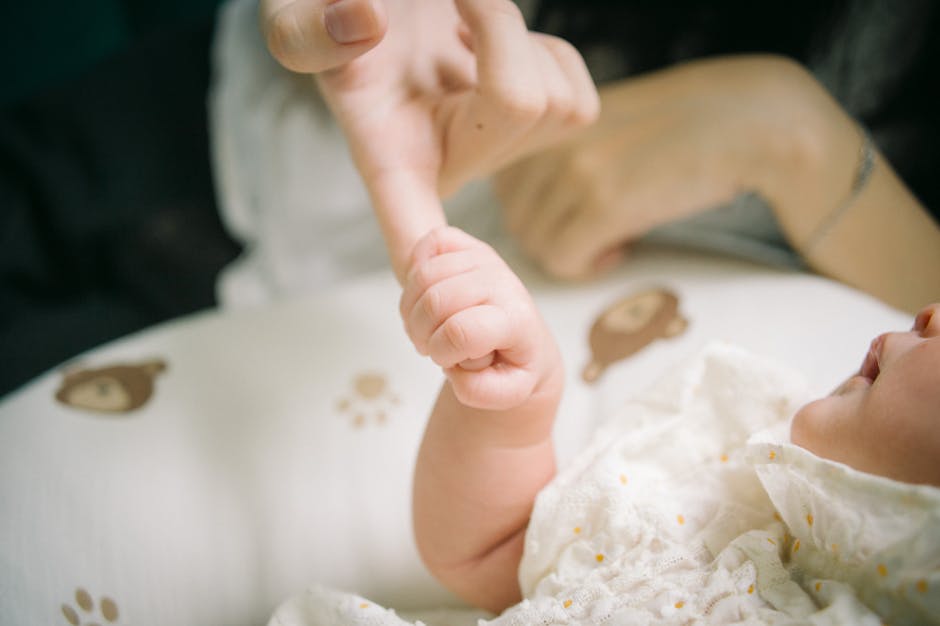
📊 What the Latest Research Actually Shows (2026 Update)
A landmark longitudinal study published in Developmental Psychobiology in early 2026 tracked 1,200 parent-infant dyads across 14 countries and identified something researchers are calling the “Responsive Window Effect.” In plain terms: it’s not just how often you respond to your infant’s cues, but how quickly and consistently you do so during the first 9 months of life that most strongly predicts secure attachment by age 2.
Key data points from the study include:
- Infants whose caregivers responded within 5–10 seconds to distress signals showed measurably higher oxytocin baseline levels by 6 months — oxytocin being the neurochemical most associated with trust and bonding.
- Consistency mattered more than perfection. Parents who responded correctly about 70% of the time showed similar attachment outcomes to those responding 90% of the time — a relief for every imperfect parent out there.
- Screen-distracted non-response (the phenomenon of parents being physically present but mentally absent due to device use) was associated with a 23% higher rate of anxious attachment patterns — a sobering but important finding for 2026’s hyper-connected households.
- Fathers and co-parents who engaged in at least two daily “serve and return” interaction sessions (more on this below) independently contributed to secure attachment, regardless of the primary caregiver’s behavior. This powerfully dismantles the outdated notion that attachment is solely the mother’s domain.
Separately, South Korea’s Korean Institute of Child Care and Education (KICCE) released its 2026 national infant study, which tracked 3,800 Korean families and found that parental attachment sensitivity was more predictive of infant social development than household income — a finding that challenges the assumption that economic resources are the primary driver of child outcomes.
🌍 Real-World Examples: How Different Contexts Apply This Research
It’s one thing to read data; it’s another to see how it plays out across different family structures and cultures.
The Nordic “Slow Parenting” Model: Countries like Finland and Norway have long integrated attachment science into parental leave policy. In 2026, Finland extended its shared parental leave to 14 months, explicitly citing new research on paternal attachment windows. The result? Finnish pediatric mental health clinics report a 17% drop in early childhood anxiety diagnoses over the past five years. That’s not coincidence — it’s policy meeting neuroscience.
Japan’s Amae Framework Meets Modern Science: Japanese child psychology has long recognized amae (dependence/indulgence as a form of bonding), and 2026 research from Kyoto University validated that this culturally embedded practice aligns closely with the “serve and return” model championed by Harvard’s Center on the Developing Child. Cultures that normalize infant dependency — rather than rushing toward independence — tend to produce more securely attached children by measurable neurological markers.
Urban U.S. Dual-Income Households: A Chicago-based pilot program called Attach Forward trained daycare workers in responsive caregiving techniques and found that children in these environments showed attachment security scores comparable to home-raised infants when parental engagement at home was also high. This matters enormously for the millions of parents who simply cannot avoid daycare — quality of all caregiving environments compounds.

🛠️ The “Serve and Return” Practice — Broken Down for Busy Parents
“Serve and return” is Harvard’s shorthand for the back-and-forth interaction loop that literally builds neural pathways in your infant’s brain. Here’s how it works in practice and why it matters:
- Serve: Your baby makes a sound, facial expression, or gesture — this is the “serve.”
- Return: You acknowledge and respond — with eye contact, a matching facial expression, a word, or touch.
- Why it works: Each successful exchange activates the prefrontal cortex and limbic system simultaneously, essentially teaching the infant that the world is responsive and safe — the foundation of all future emotional regulation.
- Quantity target: Researchers now suggest aiming for at least 20–30 serve-and-return exchanges per waking hour during months 2–9. This sounds daunting but often happens naturally during diaper changes, feeding, and bath time if you’re mentally present.
- Common disruptor: Checking your phone mid-interaction breaks the loop. Even one phone interruption during a serve-and-return sequence can signal to the infant that the environment is unpredictable — which is literally the neurological definition of insecure attachment.
🔄 Realistic Alternatives for Real-Life Constraints
Here’s where I want to be genuinely useful rather than idealistic. Not every parent can achieve the textbook version of responsive caregiving — and that’s completely okay. Let’s think through practical alternatives:
- If you’re a single parent: Prioritize designated “full-presence” blocks (even 20 minutes, twice daily) over attempting constant engagement while exhausted. Quality windows beat quantity of distracted time every time.
- If you’re returning to work early: Brief but high-quality morning and evening routines — consistent sensory cues like a specific song, scent, or holding position — can maintain attachment continuity. Predictability itself is attachment-building.
- If you have postpartum depression or anxiety: Research consistently shows that treated PPD outcomes for infant attachment are nearly equivalent to never having PPD. Getting help is literally an attachment intervention. Don’t delay it.
- If you’re co-parenting across households: Align on two or three consistent soothing rituals that both homes use. Cross-home consistency in cues meaningfully reduces the attachment disruption that typically comes with transition stress.
- If your infant is in daycare: Create a detailed “cue document” for caregivers — specific sounds, gestures, and preferred soothing methods your baby uses. The more the daycare provider can mirror your responsive patterns, the more attachment continuity your child experiences.
The research is clear, but it’s also merciful: perfect parenting is not the goal. Consistent, warm, and responsive enough parenting — paired with genuine repair after missteps — is what the science is actually pointing to. The “good enough” parent that psychologist Donald Winnicott described decades ago is now validated by neuroscience in ways he never could have anticipated.
What’s most empowering about 2026’s body of research is its democratizing message: attachment security is not a luxury reserved for parents with more time, money, or natural instinct. It’s built through thousands of small, learnable moments. And knowing that? That changes everything.
Editor’s Comment : As someone who has watched attachment science evolve over the past decade, what strikes me most about 2026’s research landscape is how it’s shifting the conversation from guilt to agency. We’ve moved past telling parents what they’re doing wrong and toward giving them a genuinely workable map. If I had one thing to tell any new parent today, it would be this: put your phone face-down during one feeding session today and just look at your baby. That’s not a small thing. That’s neuroscience in action.
태그: [‘infant attachment 2026’, ‘parent-infant bonding research’, ‘secure attachment parenting’, ‘serve and return interaction’, ‘early childhood development’, ‘responsive parenting tips’, ‘newborn brain development’]
Leave a Reply