Last spring, my neighbor’s eight-year-old walked up to me at a backyard barbecue and casually said, “I taught my robot to avoid walls today.” She wasn’t talking about a toy — she was describing a project from her after-school AI coding program. That moment stuck with me. We’re not in the era of “kids might learn to code someday” anymore. That someday is right now, in 2026, and the programs available today are genuinely remarkable.
But here’s the thing: not every program is built the same, and not every child thrives in the same learning environment. So let’s think through this together — what’s actually out there, what the data says, and how you can find the right fit for your kid.
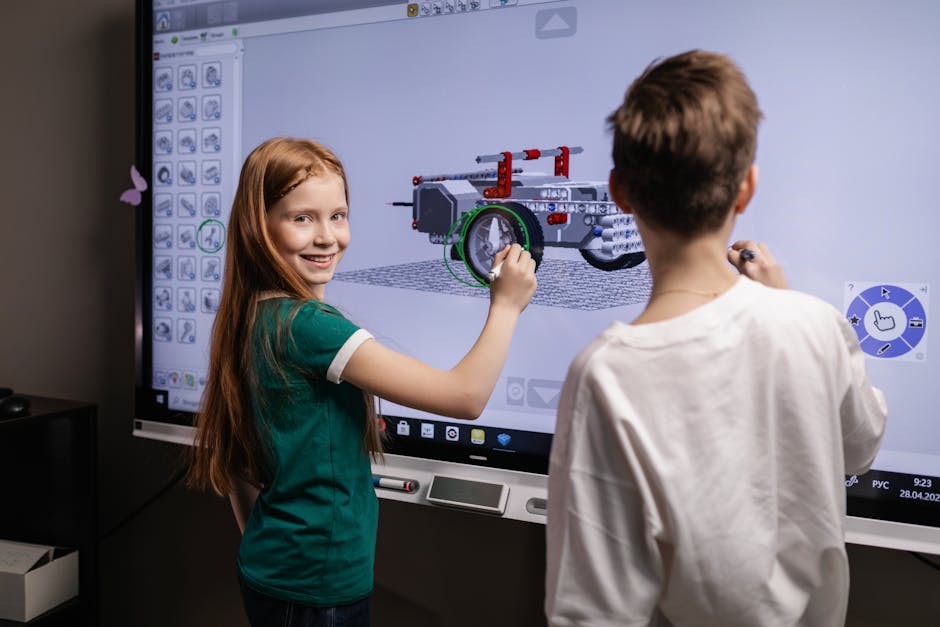
Why AI Coding Education for Kids Is Exploding in 2026
According to the World Economic Forum’s 2026 Future of Jobs Report, AI-adjacent roles are projected to represent over 40% of new job creation by 2030. That’s not a distant forecast anymore — it’s a four-year runway. Naturally, parents, educators, and governments have responded. Global investment in K-12 STEM and AI education platforms crossed $12 billion in 2025, with 2026 on track to surpass that significantly.
But beyond job prep, research from MIT’s Media Lab consistently shows that children who engage in computational thinking — the logic behind coding — develop stronger problem-solving skills, better math reasoning, and even improved reading comprehension. AI coding programs take this a step further by introducing kids to concepts like machine learning, pattern recognition, and data — in age-appropriate, game-like formats.
Top AI Coding Programs for Children Worth Exploring in 2026
- Scratch AI Extensions (MIT, Ages 7–14): Scratch remains a gold standard, and its 2025–2026 AI extensions now let kids build basic image classifiers and train simple models using a drag-and-drop interface. It’s free, browser-based, and has a massive global community. Perfect for beginners.
- Code.org AI for Oceans & Beyond (Ages 6–12): Code.org’s AI curriculum has expanded considerably. Their flagship AI module teaches machine learning concepts through interactive ocean-cleanup scenarios. It’s used in over 180 countries and is completely free.
- Tynker AI Adventures (Ages 8–16): Tynker offers structured, curriculum-aligned courses that now include dedicated AI tracks. Kids can build chatbots, train image recognition models, and even explore generative AI basics. The platform has school and home editions, with pricing around $15–20/month for families.
- AI Camp (Ages 10–17, US-Based): A more intensive option — AI Camp runs both online and in-person summer programs where kids build real AI projects over 1–4 weeks. Alumni have built apps that detect plant diseases and tools that assist visually impaired users. Tuition ranges from $500 to $2,500 depending on program length.
- iCodeEdu & Similar Korean EdTech Platforms (Ages 6–13): For Korean-speaking families or those in Korea, platforms like iCodeEdu and Codingville have localized AI coding curricula aligned with the Korean Ministry of Education’s 2026 software education mandates. These are particularly strong in offline blended learning environments.
- Raspberry Pi Foundation Courses (Ages 9–16, UK & Global): The Raspberry Pi Foundation’s free online courses now include an “Introduction to Machine Learning” path that pairs physical computing with AI concepts. Excellent for hands-on learners who enjoy building hardware projects alongside software.
Domestic & International Programs Making Real Impact
In South Korea, the government’s 2026 “AI Convergence Education” initiative has embedded AI literacy into public school curricula starting from 3rd grade. Programs like Samsung’s “Junior Software Academy” and KT’s AI coding camps have reached over 300,000 students since their expansion in 2025. These aren’t elective extras — they’re becoming foundational.
Internationally, Finland continues to lead with its “Elements of AI for Kids” program, now adapted for ages 10 and up. Singapore’s Ministry of Education made AI modules compulsory in secondary schools in 2025, and early results show measurable gains in computational reasoning scores. In the United States, Google’s CS First program has integrated AI modules that are now active in 25,000+ schools.
What’s common across successful programs? They all start with concepts before syntax — meaning kids understand why something works before they’re asked to write a single line of code. That pedagogical approach makes a real difference in long-term retention and enthusiasm.
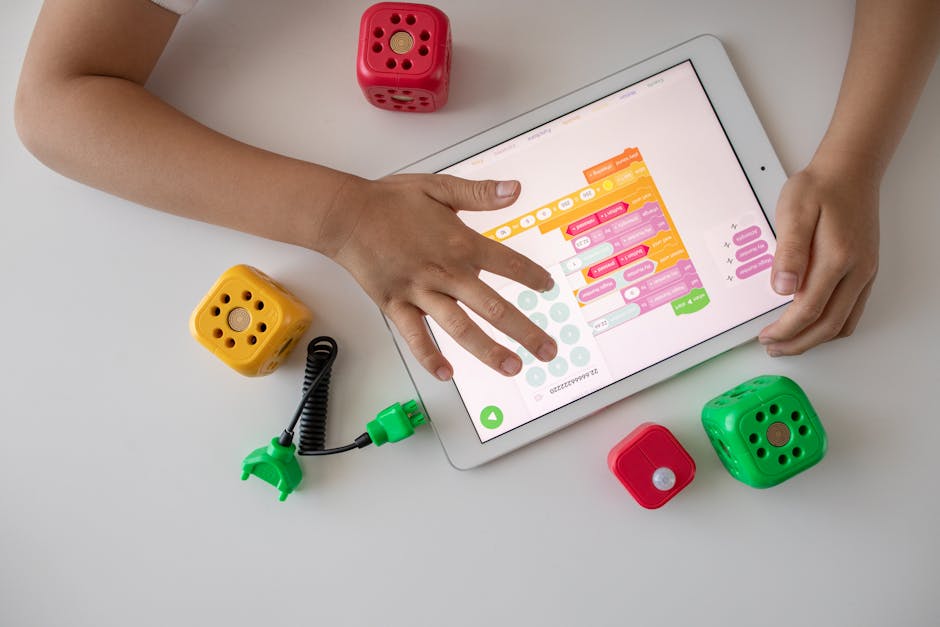
How to Choose the Right Program for Your Child
Here’s where I want to slow down and think realistically with you, because the “best” program is deeply personal. Consider these factors:
- Age & Attention Span: For kids under 8, visual block-based tools like Scratch or Code.org are ideal. Text-based coding (Python, JavaScript) is generally more appropriate from age 10–11 onward.
- Learning Style: Does your child love building physical things? Look at Raspberry Pi or LEGO SPIKE with AI integrations. Does your child prefer storytelling and games? Tynker’s narrative approach works beautifully.
- Budget: Free options like Scratch and Code.org are genuinely excellent — don’t feel pressured to spend money before trying them. Paid programs justify their cost mainly through structured curriculum, teacher feedback, and community.
- Time Commitment: A 30-minute session twice a week is more sustainable and effective than a four-hour Saturday marathon. Consistency beats intensity for young learners.
- Goal Clarity: Are you nurturing curiosity, preparing for competitions, or supplementing school? Each goal points to a different program type.
Realistic Alternatives If Formal Programs Don’t Fit
Not every child is ready for structured coding classes — and that’s completely fine. If your child feels overwhelmed or uninterested, here are meaningful alternatives that still build the same underlying skills:
- AI-integrated games: Games like Minecraft Education Edition (with its AI NPC builder) and Roblox Studio teach logic and systems thinking without the pressure of “learning to code.”
- Unplugged AI activities: CS Unplugged and similar resources teach machine learning concepts through card games and physical activities — no screen required. Great for younger children or those with screen fatigue.
- YouTube + project-based exploration: Channels like “TechWithKids” and “CS Dojo Junior” (both updated through 2026) offer guided mini-projects that kids can follow at their own pace alongside a parent.
- Library programs: Many public libraries in the US, UK, Canada, and Korea now run free monthly AI and coding workshops for children. These are often overlooked and genuinely well-run.
The goal isn’t to create a room full of future software engineers (though some will become that). The goal is to raise kids who are comfortable thinking computationally — who see problems as things that can be broken down, tested, and improved. That mindset is valuable in medicine, design, writing, and every field imaginable.
So whether your child builds their first chatbot this month or just plays a logic puzzle game before bed, they’re already on the path. The best program is the one they’ll actually look forward to.
Editor’s Comment : In 2026, AI coding education for children is no longer a niche extracurricular — it’s becoming as fundamental as reading comprehension. But the sheer number of options can feel paralyzing. My honest advice? Start free (Scratch or Code.org), observe what excites your child, and then invest in a paid or intensive program if the spark is there. The technology will keep evolving, but a child who loves to build and problem-solve will always find their way forward.
태그: [‘AI coding for kids’, ‘children coding programs 2026’, ‘best kids coding apps’, ‘AI education elementary school’, ‘learn coding at home kids’, ‘STEM programs children’, ‘machine learning for beginners kids’]
Leave a Reply