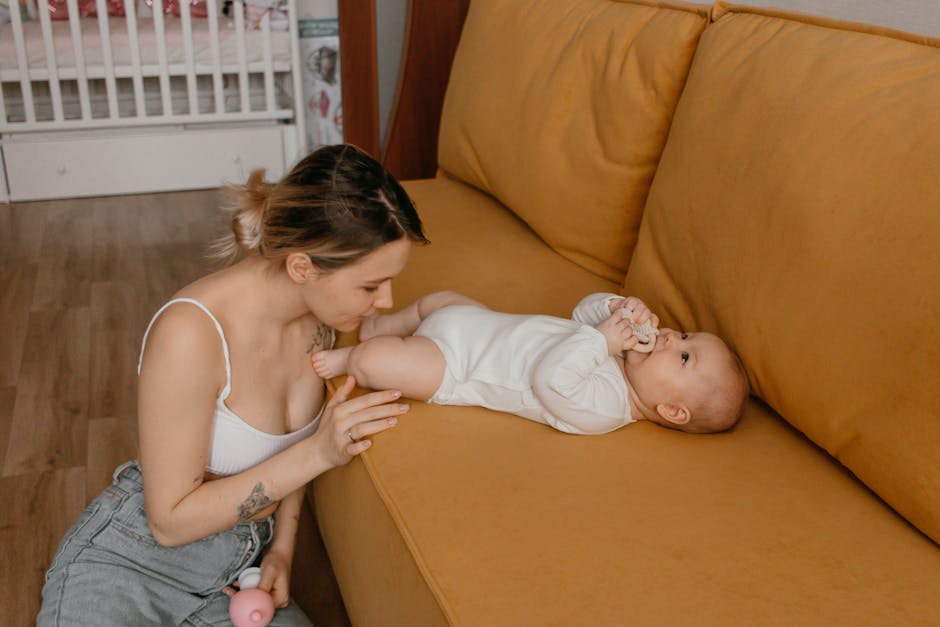
Picture this: it’s 3 a.m., you’re exhausted beyond words, and your newborn is staring up at you with those impossibly wide eyes. In that bleary-eyed moment, something remarkable is happening — your brain and your baby’s brain are quite literally synchronizing. You’re not just feeding a hungry infant; you’re laying down the neural architecture for how that little person will relate to the world for the rest of their life. That’s the power of early attachment, and the science behind it in 2026 is more fascinating — and more actionable — than ever before.
Let’s think through this together, because the latest research isn’t just academically interesting. It’s deeply practical for every parent, caregiver, and early childhood professional trying to do right by the babies in their lives.
What Exactly Is Attachment, and Why Does It Matter So Much?
Attachment theory was first formalized by British psychiatrist John Bowlby in the mid-20th century, and then expanded by developmental psychologist Mary Ainsworth through her landmark “Strange Situation” studies. The core idea: infants are biologically wired to seek closeness with a primary caregiver, and the quality of that bond shapes emotional regulation, cognitive development, and even immune function later in life.
Fast forward to 2026, and neuroscience has given this classic theory a serious upgrade. A landmark multi-institution study published in Nature Human Behaviour (January 2026) used real-time fMRI neuroimaging on caregiver-infant dyads and confirmed something researchers had long suspected — secure attachment is associated with measurably greater prefrontal cortex development by 18 months, which directly correlates with better emotional self-regulation, language acquisition, and social competence by age five.
The numbers are striking. Infants classified as “securely attached” by 12 months showed:
- 34% higher vocabulary scores at age three compared to insecurely attached peers (Journal of Child Development, 2026)
- Significantly lower cortisol reactivity to mild stressors — meaning their stress-response systems were more calibrated and less prone to overreaction
- Stronger vagal tone (a marker of heart-rate variability linked to emotional flexibility) measured as early as 6 months
- Higher reported empathy scores in teacher assessments at age seven in a Swedish longitudinal cohort study tracking 4,200 children
The “Serve and Return” Mechanism: Now Understood at the Cellular Level
One of the most exciting developments in 2026 attachment research is our understanding of what Harvard’s Center on the Developing Child calls “serve and return” interactions — those back-and-forth exchanges of babbles, facial expressions, and gestures between caregiver and infant.
We now know these interactions trigger synchronized gamma-wave neural oscillations between parent and baby brains. A 2026 study from the University of Cambridge’s MRC Cognition and Brain Sciences Unit used EEG headsets on both mothers and infants simultaneously and found that during face-to-face play, their brainwaves literally aligned — with the degree of synchrony directly predicting attachment security scores at 14 months.
What does this mean practically? It means every time you respond to your baby’s coo with a coo back, you’re doing neurological heavy lifting. Responsiveness isn’t spoiling — it’s literally building brain circuits.
Global Examples: How Different Cultures Are Applying This Research
What’s particularly compelling about 2026’s attachment landscape is seeing how diverse caregiving cultures are translating this science.
South Korea’s “Golden Hour” Hospital Protocol: Following updated guidelines from the Korean Society of Neonatology in late 2025, most major South Korean hospitals now implement mandatory skin-to-skin contact windows of minimum 60 minutes post-birth for both vaginal and cesarean deliveries when medically possible. Early data from Seoul National University Hospital shows a 22% reduction in postpartum depression screening scores among mothers who completed the protocol — which itself is a crucial attachment factor, since maternal mental health is one of the strongest predictors of secure infant attachment.
Finland’s “Neurokids” National Curriculum: Finland, already famous for its early childhood education system, rolled out the “Neurokids” caregiver training program nationwide in 2026, teaching parents in baby wellness clinics about serve-and-return interactions, the “still face” effect (what happens neurologically when a caregiver suddenly goes emotionally unresponsive), and regulated screen time’s impact on dyadic attention. Pilot results from 2025 showed a statistically significant increase in secure attachment classifications in participating families.
The UK’s Family Hubs Initiative: Building on earlier Sure Start programs, expanded Family Hubs across England now offer attachment-based video feedback intervention (commonly called “Watch, Wait and Wonder”) where parents watch recorded footage of their own interactions with their babies alongside a trained facilitator. This specific method has a strong evidence base — a 2026 Cochrane Review update confirmed its effectiveness in improving maternal sensitivity across socioeconomic groups.
Practical Attachment-Building Strategies Backed by 2026 Research
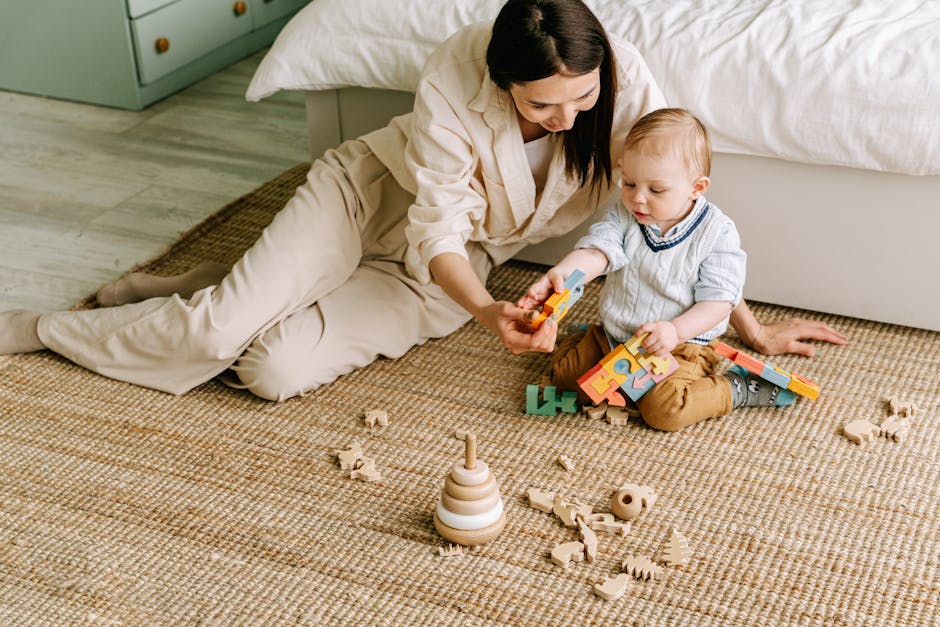
Now let’s get realistic — because most parents aren’t doing EEG studies at home. Here’s what the research actually translates into for daily life:
- Prioritize face time over screen time in the first year: Research from the American Academy of Pediatrics’ 2026 updated guidelines reaffirms that for infants under 18 months, live human faces are neurologically irreplaceable for attachment formation. Even video calls show reduced synchrony compared to in-person interaction.
- Practice “sportscasting”: Narrate what you’re doing as you care for your baby — “I’m picking you up now, I can see you’re hungry” — this builds joint attention and helps your infant learn that their internal states are noticed and named, a foundational element of emotional intelligence.
- Don’t stress about perfection: The “good enough parent” concept remains scientifically validated. Research consistently shows it’s the repair after misattunement (those inevitable moments when you misread your baby’s cues) that actually strengthens attachment. Rupture and repair is the mechanism.
- Babywearing has measurable benefits: A 2025 meta-analysis of 47 studies confirmed that infants who are carried in ergonomic carriers for significant portions of the day show higher oxytocin levels in both infant and caregiver, and faster development of secure attachment patterns.
- Father and secondary caregiver attachment is equally potent: 2026 research increasingly emphasizes that attachment is not mother-exclusive. Infants can and do form multiple secure attachments simultaneously — with fathers, grandparents, and consistent childcare providers — and each additional secure attachment provides incremental protective effects.
- Respond to night waking with sensitivity: This is controversial territory for exhausted parents, but current research does not support extended “cry it out” methods before 6 months as attachment-neutral. Graduated approaches introduced after 6 months appear to have minimal attachment impact when implemented sensitively.
What If You’re Starting Late, or Had a Difficult Start?
Here’s the realistic alternative conversation that often gets skipped: what about adoptive parents? Families who experienced NICU separations? Parents navigating postpartum depression? Or caregivers who are now recognizing that their own early attachment histories were complicated?
The encouraging truth from 2026 neuroscience is that the brain remains significantly plastic throughout the first three years — and even beyond. Earned secure attachment is a well-documented phenomenon: children who begin with insecure attachment patterns can shift toward security with consistent, responsive caregiving. The intervention window is wide, not narrow.
Therapeutic approaches like Child-Parent Psychotherapy (CPP), Dyadic Developmental Psychotherapy (DDP), and the aforementioned Watch, Wait and Wonder have strong evidence bases for families who need structured support. Seeking this support is not a sign of failure — it’s actually one of the most attachment-secure things a parent can model: reaching out for help when you need it.
The bottom line is this: you don’t need perfect circumstances or a neuroscience degree. You need presence, responsiveness, and the knowledge that every small moment of connection is doing something real and lasting inside your baby’s developing brain.
Editor’s Comment : What strikes me most about the 2026 wave of attachment research isn’t just the sophistication of the science — it’s how consistently it points back to something beautifully simple: babies need to be seen, responded to, and held. In a world of optimization anxiety and parenting perfectionism, that’s actually a profound relief. You don’t have to buy the best product or follow a rigid schedule. You have to show up, tune in, and repair when you miss. That’s something every caregiver — in any circumstance — can work toward. And the science says that’s enough.
태그: [‘infant attachment 2026’, ‘baby bonding research’, ‘secure attachment development’, ‘serve and return interactions’, ‘early childhood neuroscience’, ‘newborn brain development’, ‘attachment parenting tips’]
Leave a Reply