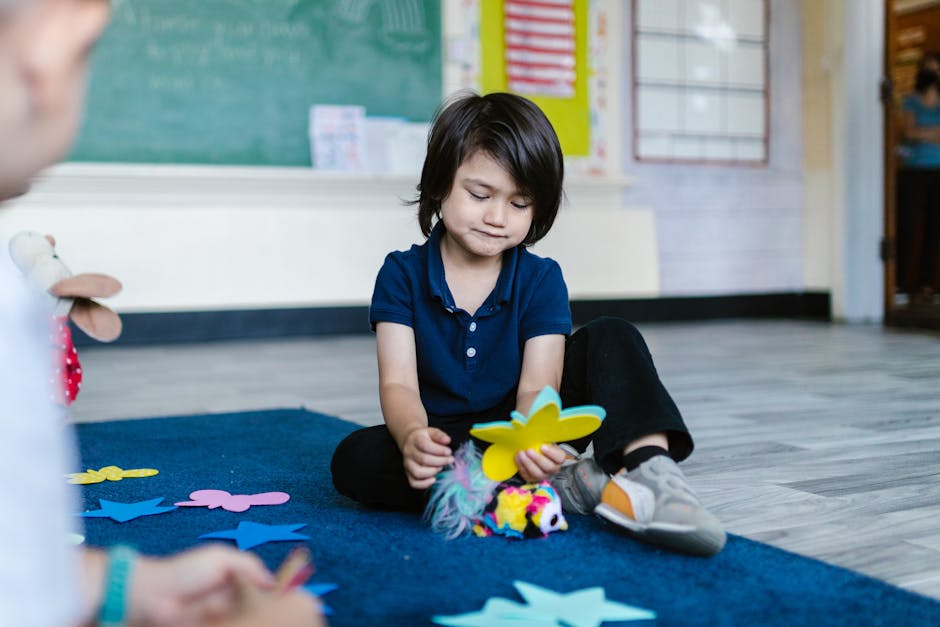
Picture this: a seven-year-old named Mia refuses to raise her hand in class — not because she doesn’t know the answer, but because she’s convinced she’ll say something wrong and everyone will laugh. Her teacher notices, her parents worry, and Mia quietly starts believing she’s just “not smart enough.” Sound familiar? This scenario plays out in classrooms across the globe every single day, and the long-term consequences are far more serious than most parents realize.
Self-esteem in elementary-age children isn’t just a feel-good concept — it’s a foundational psychological structure that shapes academic performance, social relationships, and even physical health well into adulthood. Let’s think through this together: what does the research actually say, what therapeutic approaches are showing real results in 2026, and what can you realistically do for your child starting today?
Why Elementary School Is the Critical Window
Developmental psychologists have long identified ages 6–12 as a sensitive period for self-concept formation. According to data from the American Psychological Association’s 2026 Child Development Report, approximately 34% of children entering middle school already exhibit measurable signs of low self-esteem — a number that has climbed 8 percentage points since 2020, largely attributed to post-pandemic social adjustment difficulties and increased screen-based social comparison.
What makes this window so critical? During this stage, children shift from purely egocentric thinking (“the world revolves around me”) to a more comparative framework (“how do I measure up to others?”). Psychologist Susan Harter’s Multidimensional Self-Concept Model explains that children begin evaluating themselves across specific domains: academic competence, social acceptance, athletic ability, physical appearance, and behavioral conduct. When a child consistently perceives failure in even two of these domains without compensatory support, the risk of chronic low self-esteem escalates significantly.
Evidence-Based Psychological Therapies Making an Impact
The good news? We’re not guessing anymore. Several therapeutic modalities have strong empirical backing specifically for elementary-age children:
- Cognitive Behavioral Therapy (CBT) for Kids: Adapted versions of CBT — often called “Think, Feel, Do” programs in school settings — teach children to identify negative automatic thoughts (“I’m stupid”) and replace them with realistic alternatives (“This is hard, but I’m learning”). A 2025 meta-analysis published in the Journal of Child Psychology and Psychiatry found that school-based CBT interventions reduced self-esteem deficits by an average of 41% over a 12-week period.
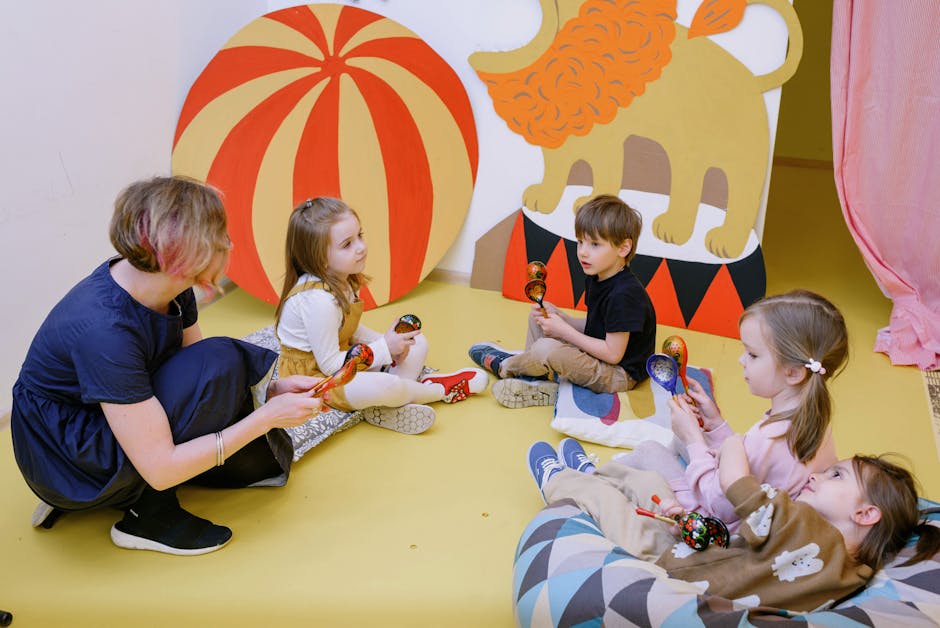
- Play Therapy: For younger elementary children (ages 6–8), directive and non-directive play therapy remains one of the most accessible and effective modalities. A licensed play therapist uses structured games, puppets, sand trays, and art to help children externalize inner conflicts they can’t yet verbalize. The Association for Play Therapy reported in early 2026 that children receiving weekly play therapy for 16 sessions showed a 37% improvement on standardized self-esteem scales.
- Acceptance and Commitment Therapy (ACT) Adapted for Children: ACT helps kids learn to observe their thoughts rather than be controlled by them — a concept explained to children as “being the sky, not the storm.” Programs like the Hexaflex Kids curriculum, piloted in South Korean elementary schools between 2023 and 2025, showed promising results: teacher-reported prosocial behavior increased by 29% and self-reported confidence scores improved markedly.
- Strengths-Based Positive Psychology Interventions: Rooted in Martin Seligman’s PERMA model, these interventions ask children to identify and actively use their top character strengths each week. VIA Institute data from 2026 suggests that children who practice strengths-based journaling for just 10 minutes daily show significant boosts in self-efficacy within six weeks.
- Group Social Skills Training: Often underestimated, peer-based therapeutic groups help children practice self-assertion, empathy, and conflict resolution in real time — skills that directly reinforce self-worth through successful social interaction.
Global and Domestic Examples Worth Knowing
Let’s look at what’s actually happening on the ground in 2026:
Finland’s “Minä Osaan” (“I Can”) Program: Integrated into the national curriculum for grades 1–4 since 2022, this program combines strengths-based journaling, weekly peer appreciation circles, and teacher-led CBT micro-lessons. By 2026, Finnish national education data shows a 22% reduction in school refusal behavior — a key behavioral marker of low self-esteem — compared to 2021 baseline figures.
South Korea’s School Counseling Expansion Initiative: South Korea’s Ministry of Education mandated in 2024 that all elementary schools employ at least one full-time school counselor trained in child psychological therapy. Early results from Seoul’s Mapo district show that schools implementing weekly small-group ACT sessions reported a 31% drop in peer conflict incidents and significantly improved self-reported happiness scores among students in grades 3–6.
The United States — Chicago’s CASEL SEL Framework: Chicago Public Schools expanded its Social-Emotional Learning (SEL) curriculum system-wide in 2025, incorporating dedicated self-esteem modules at every grade level. Preliminary 2026 data indicates students in SEL-integrated classrooms score 18% higher on self-concept assessments than those in control schools. This isn’t just anecdotal — it’s systemic change at scale.
What Parents Can Realistically Do at Home
Therapy is powerful, but it works best when reinforced at home. Here’s the realistic part — you don’t need to become a therapist yourself. Small, consistent actions matter enormously:
- Praise effort, not outcome: Instead of “You’re so smart!” try “I noticed how hard you worked on that.” This cultivates a growth mindset (Carol Dweck’s research remains just as relevant in 2026) and decouples self-worth from performance results.
- Create “strength spotting” rituals: At dinner, ask your child: “What’s one thing you did today that showed one of your strengths?” This simple question rewires attention toward competence rather than failure.
- Normalize mistakes with storytelling: Share your own age-appropriate failures and how you navigated them. Children internalize resilience models far more powerfully from real stories than from lectures.
- Limit comparison language at home: Phrases like “Why can’t you be more like your sister?” are extraordinarily damaging to domain-specific self-concept. Replace with individual benchmarking: “How does this compare to where you were last month?”
- Seek professional support early: If your child shows persistent signs — school avoidance, excessive self-criticism, withdrawal from activities they used to love — consulting a licensed child psychologist or play therapist isn’t overreacting. It’s proactive parenting.
Choosing the Right Approach for Your Child
Here’s where I want to be honest with you: not every therapy works for every child, and that’s perfectly okay. A highly verbal, imaginative child might thrive in CBT-based talk therapy, while a kinesthetic learner might respond far better to play therapy or movement-based interventions. Age matters too — ACT concepts that work beautifully with a 10-year-old may be developmentally premature for a 6-year-old.
The realistic alternative if formal therapy isn’t accessible right now? School counselors are an enormously underutilized resource. Most elementary schools have them, and in 2026, many are trained in evidence-based brief interventions. Starting there costs nothing and can serve as a powerful bridge to more intensive support if needed.
Community programs through local YMCAs, arts organizations, and sports leagues also provide what researchers call “incidental self-esteem building” — authentic experiences of mastery and belonging that no worksheet can replicate.
Final Thoughts
Building self-esteem in an elementary school child isn’t about inflating their ego or shielding them from all difficulty. It’s about equipping them with an accurate, resilient sense of self that can absorb setbacks without collapsing. The research in 2026 is clearer than ever: early psychological intervention, combined with consistent home reinforcement, produces measurable, lasting change. Mia — and the millions of children like her — deserve that foundation.
Editor’s Comment : If there’s one thing I hope you take away from this deep dive, it’s this — low self-esteem in kids is not a personality flaw, and it is absolutely not permanent. The window between ages 6 and 12 is genuinely one of the most powerful opportunities we have to redirect a child’s psychological trajectory. Whether you’re a parent, teacher, or school counselor reading this in 2026, the evidence is on your side. Start small, stay consistent, and don’t hesitate to bring in professional support. The ROI on a child’s self-belief is immeasurable.
📚 관련된 다른 글도 읽어 보세요
- STEM 교육 여학생 참여 확대 방안 2026 — 왜 아직도 여학생들은 이공계를 망설일까?
- EdTech 2026: The Future of Education Technology Is Already Here — Are You Ready?
- 챗GPT 활용 학교 수업 방법 총정리 | 2026년 교사·학생 모두를 위한 실전 가이드
태그: [‘elementary school self-esteem’, ‘child psychology therapy 2026’, ‘play therapy for kids’, ‘CBT for children’, ‘self-esteem building activities’, ‘positive psychology children’, ‘school counseling elementary’]
Leave a Reply