Picture this: your seven-year-old suddenly refuses to go to school, clings to your leg every morning, and wakes up crying at 2 a.m. three nights in a row. You’ve checked for fever, asked about bullying, and even rearranged the bedroom — but nothing seems to work. Sound familiar? You’re not alone, and more importantly, you’re not failing as a parent. What you’re witnessing is likely a form of childhood anxiety behavior, and understanding it is the first step to genuinely helping your child.
Let’s think through this together — what’s actually going on inside a child’s mind when anxiety takes the wheel, and what can we realistically do about it?
What the Data Is Telling Us in 2026
Childhood anxiety isn’t a new phenomenon, but its prevalence has shifted dramatically over the past decade. According to the World Health Organization’s 2026 Child Mental Health Report, approximately 1 in 5 children globally between the ages of 5 and 12 exhibit clinically significant anxiety symptoms at some point during their development. In South Korea, the National Mental Health Survey (국가정신건강현황보고서) indicates that anxiety-related complaints among children aged 6–12 have increased by 34% since 2020, a trend accelerated by post-pandemic social disruption and increased screen exposure.
Here’s what makes childhood anxiety particularly tricky: it rarely shows up as what we’d call “classic worry.” Instead, it disguises itself as:
- Somatic complaints — stomachaches, headaches, or nausea with no medical cause
- Avoidance behaviors — refusing school, social events, or new activities
- Irritability and aggression — anger outbursts that seem disproportionate to the trigger
- Sleep disturbances — nightmares, difficulty falling asleep, or frequent nighttime waking
- Clinginess and separation distress — intense fear when separated from a primary caregiver
- Perfectionism and reassurance-seeking — constantly asking “Am I doing it right?” or refusing tasks they might fail
- Regression — reverting to younger behaviors like thumb-sucking or bedwetting
Recognizing these signals early is crucial. Untreated childhood anxiety has been linked to long-term outcomes including adolescent depression, academic underperformance, and social withdrawal — but here’s the reassuring part: early, consistent intervention is highly effective.
The Brain Science Behind It (In Plain Language)
A child’s prefrontal cortex — the part of the brain responsible for rational thinking and emotional regulation — isn’t fully developed until the mid-20s. This means when a child’s amygdala (the brain’s alarm system) fires off a threat signal, there’s very little internal “braking” capacity available. The child isn’t being dramatic or manipulative. Their nervous system is genuinely overwhelmed, and they lack the cognitive tools adults use to self-soothe.
This is why strategies like “just calm down” or “there’s nothing to be scared of” rarely work — they require a level of self-regulation the child’s brain simply hasn’t built yet.
Real-World Examples: What’s Working Around the Globe
Let’s look at how different countries are approaching this challenge in meaningful ways.
🇩🇰 Denmark — The “Worry Time” Method: Danish elementary schools have integrated a structured concept called bekymringstid (worry time) into daily classroom routines. Children are given a designated 10-minute window each day to verbalize or draw their worries, after which the worry is symbolically “closed” until the next session. Studies from Aarhus University (2025) showed a 28% reduction in anxiety-related school refusals among participating students within one semester.
🇰🇷 South Korea — School Counselor Expansion: Following the 2023 revision of the Elementary and Secondary Education Act, South Korea mandated at least one licensed counselor per school for institutions with over 300 students. The 2025 follow-up survey by the Korean Educational Development Institute showed that schools with active counseling programs reported 41% fewer incidents of anxiety-driven behavioral issues compared to those without.
🇦🇺 Australia — The BRAVE Program: Developed by the University of Queensland, BRAVE (Building Resilience and Vitality through Education) is an online CBT-based program designed for children aged 8–17. As of early 2026, it has been adopted by over 1,200 schools across Australia and New Zealand, with documented success rates showing 60% of participating children no longer meeting diagnostic criteria for anxiety disorders after 12 weeks.
Practical Coping Strategies You Can Start Today
Now, let’s get realistic. Not every family has access to school counselors or structured programs. Here’s what parents can do at home — no clinical training required:
- Name It to Tame It: Help your child label their emotion. “It sounds like your body is feeling scared right now — is that right?” Naming emotions activates the prefrontal cortex and reduces amygdala activity. This is backed by neuroscientist Dr. Dan Siegel’s research on affect labeling.
- Create Predictable Routines: Anxiety thrives in uncertainty. A consistent daily schedule — same wake time, meal times, bedtime rituals — gives the anxious child’s brain a sense of safety and control.
- Use the “Worry Jar” Technique: Have your child write or draw their worry on a piece of paper and physically place it in a jar. Tell them the jar is “holding” the worry so they don’t have to. This externalization technique is used in child-centered play therapy and is surprisingly effective for ages 5–10.
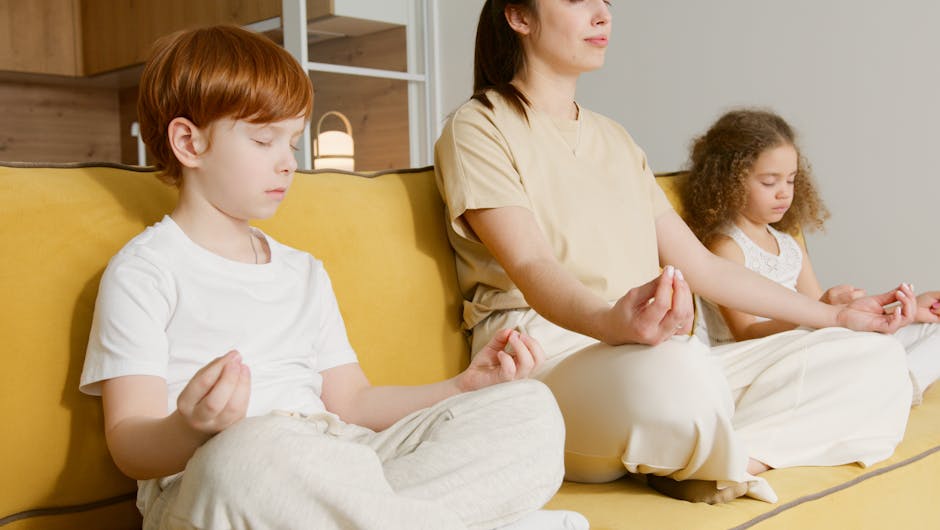
- Practice Box Breathing Together: Inhale for 4 counts, hold for 4, exhale for 4, hold for 4. Do it with your child — making it a shared activity rather than a correction reduces resistance.
- Validate Before Problem-Solving: Resist the urge to immediately fix the fear. First say: “That sounds really hard. I understand why that feels scary.” Validation is not agreement — it’s emotional attunement, and it’s the foundation of all effective therapeutic relationships.
- Gradual Exposure, Not Avoidance: If your child fears a situation, help them approach it in small, manageable steps rather than avoiding it entirely. Avoidance reinforces anxiety; gradual approach weakens it over time.
- Watch Your Own Anxiety: Research consistently shows that parental anxiety is one of the strongest predictors of childhood anxiety. It’s not about blame — it’s about awareness. Modeling calm, regulated behavior is one of the most powerful tools you have.
When to Seek Professional Help
Home strategies are powerful, but they have limits. Consider consulting a licensed child psychologist or psychiatrist if:
- Anxiety behaviors have persisted for more than 4–6 weeks without improvement
- Your child’s daily functioning — school, friendships, sleep, eating — is significantly impaired
- There are signs of self-harm, extreme withdrawal, or panic attacks
- You’re feeling consistently overwhelmed and unsure how to respond
In South Korea, the 정신건강 위기상담전화 (Mental Health Crisis Counseling Hotline) at 1577-0199 is available 24 hours. Internationally, the Child Mind Institute (childmind.org) offers free multilingual resources and a therapist finder tool.
A Realistic Alternative Path: You Don’t Need to Be Perfect
Here’s something the parenting books often gloss over: you don’t have to implement every strategy flawlessly. The goal isn’t a perfectly anxiety-free child — anxiety is a normal, adaptive human emotion. The goal is a child who has enough tools to navigate anxiety without being controlled by it.
Start with one thing. Maybe it’s the worry jar. Maybe it’s saying “I see you’re scared” instead of “there’s nothing to worry about.” One consistent change, repeated over weeks, creates new neural pathways. That’s not motivational fluff — that’s neuroplasticity.
And on the days it doesn’t work? That’s data, not failure. You adjust, you try again. That’s exactly the resilient modeling your child needs to see.
Editor’s Comment : Childhood anxiety is one of those areas where parents often carry enormous guilt that simply doesn’t belong to them. The research is clear: anxious children are not the product of bad parenting — they’re often deeply sensitive, perceptive kids navigating a genuinely complex world. What they need most isn’t a perfect parent; they need a present one. If this post made you feel even slightly more equipped to show up for your child today, that’s a win worth celebrating.
📚 관련된 다른 글도 읽어 보세요
- 2026년 미래 직업 시장, STEM 교육이 답인 이유 – 지금 시작해야 할 현실적 이유
- AI Coding Curriculum for Elementary Students in 2026: What Actually Works (And What Doesn’t)
- 아동 심리 불안 행동 대처법 – 우리 아이가 보내는 신호, 2026년 지금 바로 읽어야 해요
태그: [‘childhood anxiety’, ‘child psychology’, ‘anxiety behaviors in children’, ‘parenting tips 2026’, ‘child mental health’, ‘coping strategies for kids’, ‘CBT for children’]
Leave a Reply