Picture this: a toddler tumbles off a low step, looks up immediately — not at their scraped knee — but straight at their parent’s face. What they’re looking for in that split second isn’t a bandage. It’s a signal. “Is this okay? Am I safe?” That tiny moment, repeated thousands of times across the first years of life, is attachment theory playing out in real time. And it turns out, how parents respond to those moments shapes far more than we used to think.
If you’ve been wondering whether you’re “doing attachment right” — whether you’re present enough, responsive enough, or perhaps too hovering — you’re in good company. Let’s unpack what the research and clinical experts are actually saying in 2026, and more importantly, what it means for your everyday parenting life.
What Is Attachment, Really? (Beyond the Buzzword)
Attachment, first formalized by British psychiatrist John Bowlby in the 1950s and later expanded by Mary Ainsworth’s “Strange Situation” experiments, describes the deep emotional bond a child forms with their primary caregiver. But here’s what often gets lost in the social media simplification of this concept: attachment is not about being perfect. It’s about being predictable and emotionally available enough of the time.
Ainsworth identified four main attachment styles — secure, anxious-ambivalent, avoidant, and disorganized. Research consistently shows that around 55–65% of children develop secure attachment when their caregiver responds sensitively to their cues. The good news? You don’t need to respond perfectly 100% of the time. Studies by developmental psychologist Ed Tronick suggest that caregivers are “in sync” with their infant only about 30% of the time — and the process of repairing those mismatches is actually what builds resilience.
The Neuroscience Behind Early Bonding: Why the First 3 Years Matter So Much
By age three, a child’s brain has formed approximately 1,000 trillion synaptic connections — more than at any other point in life. The prefrontal cortex, responsible for emotional regulation, decision-making, and empathy, is being wired largely based on relational experiences. When a caregiver responds consistently to a baby’s distress — picking them up, soothing them, making eye contact — the stress response system (the HPA axis) learns to regulate itself. Chronic unresponsiveness, on the other hand, keeps the stress hormone cortisol elevated, which can literally alter brain architecture over time.
Dr. Daniel Siegel, clinical professor of psychiatry at UCLA and author of The Whole-Brain Child, describes this as “interpersonal neurobiology” — the idea that relationships physically shape the developing brain. His work, widely cited in 2026 parenting circles, emphasizes that co-regulation precedes self-regulation. In plain terms: children learn to calm themselves down by first experiencing adults calming them down, repeatedly.
What Global Research and Real-World Cases Are Telling Us
The attachment conversation looks different across cultures, and that’s worth acknowledging. A landmark cross-cultural meta-analysis published in the journal Child Development found that secure attachment rates are fairly consistent globally — hovering around 60% — but the behaviors that signal sensitivity vary widely. In Japan and Germany, for instance, caregiver practices that might look “cold” by North American standards (like less verbal narration of emotions) still produce securely attached children, because consistency and physical availability compensate.
In South Korea — where academic pressure begins shockingly early — child psychologists like Dr. Lee Soo-yeon at Seoul National University Children’s Hospital have been sounding alarms since the early 2020s about how performance-oriented parenting is disrupting early attachment. Her clinical work shows that parents who consistently prioritize emotional attunement in the first three years, even when later academic pressure mounts, raise children with significantly better emotional regulation by school age.
Meanwhile, in Scandinavia, parental leave policies that keep primary caregivers home for 12+ months have produced measurable differences in secure attachment outcomes. Sweden’s parenting education programs, embedded into prenatal care, teach something deceptively simple: follow the child’s lead. It’s a concept that sounds easy but runs counter to achievement-oriented parenting instincts.

Practical Signs You’re Building Secure Attachment (Without Overthinking It)
Let’s get grounded. Here’s what secure attachment actually looks like in daily life, according to clinical psychologists and attachment researchers:
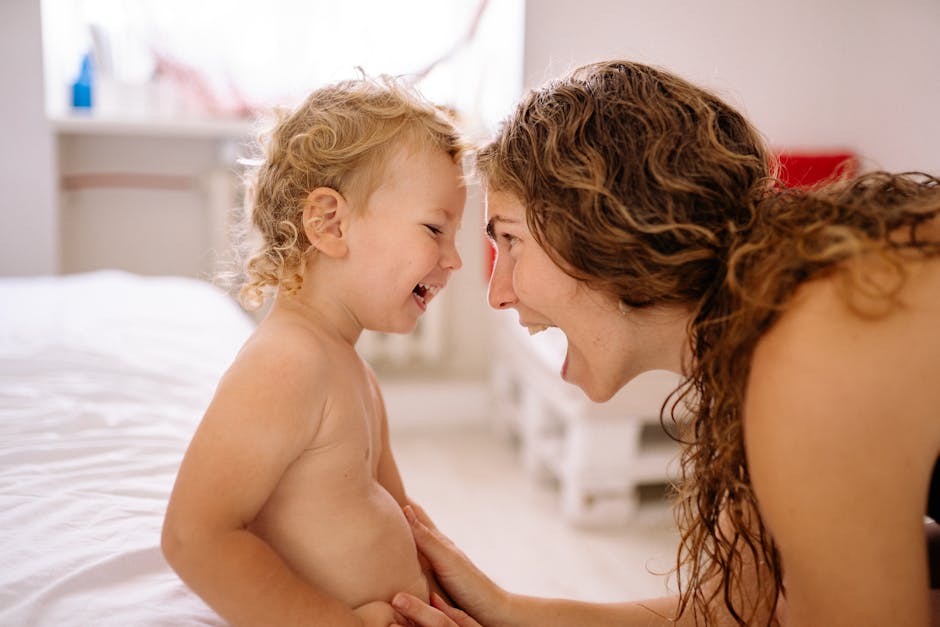
- You make eye contact and “mirror” your child’s expressions — smiling back when they smile, looking concerned when they’re distressed. This is called affect mirroring, and it’s foundational.
- You respond to crying fairly consistently — not instantly every single time, but in a pattern that the baby can begin to predict. Predictability is the operative word here.
- You use a warm, higher-pitched voice (“motherese”) during interactions — this isn’t cultural performance; research shows infants’ brains are literally tuned to respond to this register.
- You repair after misattunements — you snapped, you were distracted, you missed their cue. Coming back with warmth and reconnection afterward teaches children that relationships can be repaired. This is arguably more important than avoiding ruptures altogether.
- You allow your child to use you as a “safe base” for exploration — they venture out, come back, venture out again. Resist the urge to over-intervene or to rush them to independence.
- You narrate your child’s emotional experience — “You seem frustrated that the blocks fell down” — this isn’t projecting feelings; it’s helping build their emotional vocabulary and sense of being understood.
- You maintain physical presence during distress — not fixing everything, just being there. The research on “therapeutic presence” in pediatric psychology shows that physical proximity alone lowers cortisol in toddlers.
When Attachment Feels Hard: Realistic Alternatives for Struggling Parents
Here’s where I want to be genuinely useful rather than just inspirational. Not everyone starts from the same place. Parents who experienced insecure attachment in their own childhoods, parents dealing with postpartum depression (which affects roughly 1 in 5 mothers and 1 in 10 fathers globally as of 2026 data), parents working multiple jobs, or parents raising children with sensory or developmental differences — the standard attachment advice can feel tone-deaf.
Clinical psychologist Dr. Nicole LePera (“the Holistic Psychologist”) and colleagues have increasingly emphasized what’s called “earned secure attachment” — the research-backed finding that adults who experienced insecure attachment themselves can still raise securely attached children, particularly if they’ve engaged in reflective work about their own history. You don’t need a perfect past. You need a degree of self-awareness about your patterns.
If responsive parenting feels chronically overwhelming, these are realistic entry points:
- Dyadic parent-child therapy (like Circle of Security or Watch, Wait, and Wonder programs) — structured interventions that don’t require you to have it all figured out independently.
- Reducing baseline stress — attachment responsiveness drops measurably when parents are chronically overwhelmed. Securing your own regulation is not selfish; it’s structural.
- Consistent secondary caregivers — grandparents, trusted childcare workers with long-term involvement — can support secure attachment development even when primary caregiver availability is limited. One strong attachment figure is enough to make a meaningful difference.
What to Avoid: Common Well-Intentioned Missteps
A quick note on things that sound attachment-friendly but can actually work against it: over-scheduling “enrichment” activities in the first two years at the expense of unstructured face-to-face time; using screen-based distraction as the primary soothing tool (it substitutes for co-regulation rather than facilitating it); and confusing attachment with constant physical proximity. Attachment is about emotional availability — you can be in the same room but emotionally absent, or briefly out of sight but emotionally secure in your child’s internal working model.
In 2026, there’s also growing conversation among pediatric psychologists about the risks of “performative attachment parenting” — parents who are technically present but emotionally managed rather than genuinely attuned, often because they’re anxiously monitoring their parenting performance rather than actually connecting. The irony is real, and the research supports it: genuine, imperfect presence consistently outperforms anxious, curated presence.
The Long Game: What Secure Attachment Predicts
Longitudinal studies, including the famous Minnesota Longitudinal Study of Risk and Adaptation tracking children from infancy into their 30s, show that secure early attachment correlates with better peer relationships, higher academic engagement (not achievement, but curiosity and persistence), greater resilience under stress, and lower rates of anxiety and depression in adulthood. These aren’t guarantees, and life is complex — but the protective effect is statistically meaningful and spans decades.
The takeaway isn’t that early childhood is your only shot. The brain remains plastic throughout life, and therapeutic relationships, close friendships, and romantic partnerships can all support earned security. But the early years offer a window of particularly high neurological receptivity. It’s not about pressure — it’s about opportunity.
So the next time your toddler trips and looks up at your face before deciding how to react: you’re not just comforting a child. You’re co-authoring the emotional architecture of their future self. And most days, just showing up with a warm, steady presence is genuinely enough.
Editor’s Comment : The most relieving thing I keep coming back to in all of this research is the “30% synchrony” finding — the idea that being attuned roughly a third of the time, and then repairing the gaps, is what healthy attachment actually looks like. If you’ve been holding yourself to an impossible standard of constant attunement, you can put that down. Parenting isn’t a performance you perfect; it’s a relationship you keep showing up for. That’s really the whole secret, wrapped in neuroscience.
📚 관련된 다른 글도 읽어 보세요
- 초등학생 자존감 향상 심리 치료, 어떻게 시작해야 할까? 2026년 최신 접근법 총정리
- The Evolving Role of Teachers in the AI Age (2026): From Knowledge Deliverers to Human Connection Architects
- 유아기 애착 형성, 부모가 꼭 알아야 할 심리 전문가의 핵심 조언 (2026)
태그: [‘early childhood attachment’, ‘parenting psychology 2026’, ‘secure attachment development’, ‘infant brain development’, ‘responsive parenting tips’, ‘child psychologist advice’, ‘toddler emotional bonding’]
Leave a Reply