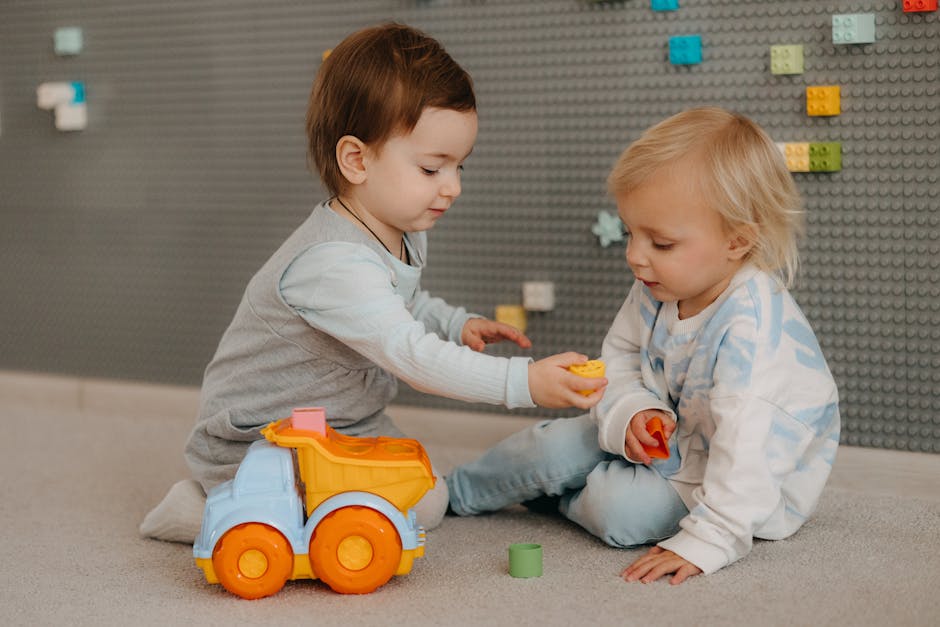
Picture this: your two-year-old walks into a playroom, spots another child building a block tower, and instead of saying hello, just… sits next to them and starts stacking their own blocks in silence. No words, no introduction, just peaceful parallel play. You might wonder, “Is my child being antisocial?” Spoiler alert — they’re actually doing exactly what they’re supposed to do. That quiet side-by-side moment? That’s the very first chapter of a beautiful social story unfolding in real time.
Early childhood social development is one of the most fascinating — and often misunderstood — journeys a child takes. And as parents, caregivers, and educators, understanding how toddlers form peer relationships can make a world of difference in how we support them along the way. Let’s think through this together.
What Does “Social Development” Actually Mean for Young Children?
Social development in early childhood refers to the process by which children learn to interact, communicate, cooperate, and form emotional bonds with others — particularly peers their own age. This isn’t just about whether your child plays nicely at the park. It encompasses empathy, emotional regulation, conflict resolution, and the ability to understand other people’s perspectives (what psychologists call Theory of Mind).
Here’s where the data gets really interesting. According to longitudinal research compiled through 2026 by the National Institute of Child Health and Human Development (NICHD), children who develop strong peer relationship skills between ages 2–5 show measurably better outcomes in:
- Academic performance — cooperative learning skills translate directly into classroom engagement
- Emotional resilience — children with peer support networks recover faster from setbacks
- Mental health — lower rates of anxiety and depression through adolescence
- Communication fluency — vocabulary and language development accelerate through peer interaction
- Conflict negotiation — early practice with peer disagreements builds lifelong problem-solving skills
The Developmental Stages of Peer Interaction (Ages 1–5)
One of the most useful frameworks for understanding toddler social behavior comes from sociologist Mildred Parten’s classic play stages — which, even decades later, remain highly relevant in 2026 early childhood education settings worldwide.
Stage 1 — Solitary Play (Ages 1–2): Children play alone, largely unaware of or uninterested in what peers are doing. This is completely normal and healthy. Don’t rush it.
Stage 2 — Parallel Play (Ages 2–3): That block-tower moment we described above. Children play alongside each other without direct interaction. They’re aware of each other, learning by observation — this is actually powerful social learning happening under the surface.
Stage 3 — Associative Play (Ages 3–4): Children begin interacting, sharing materials, and talking to each other, but without organized group goals. You’ll see them borrowing crayons and commenting on each other’s drawings.
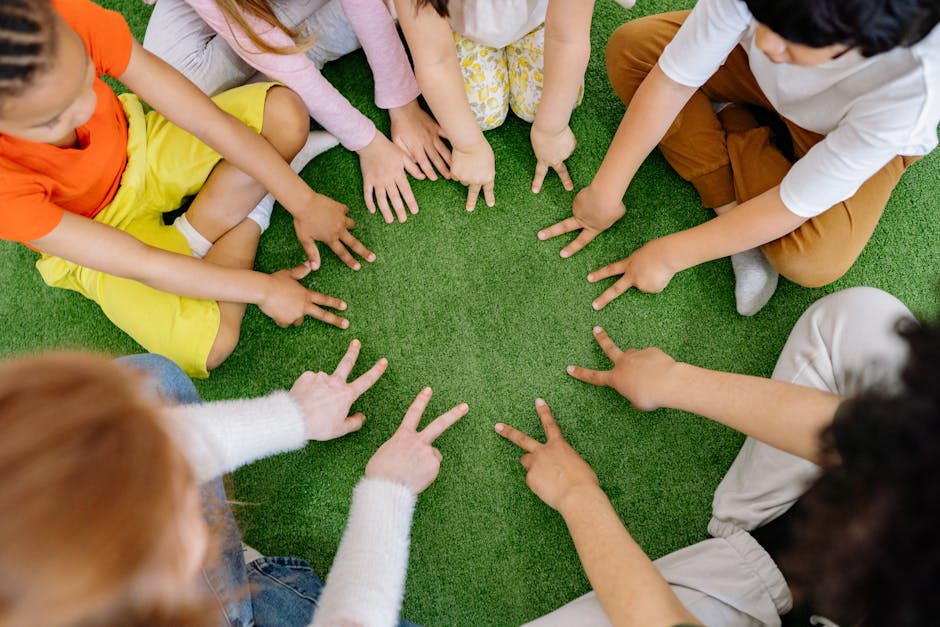
Stage 4 — Cooperative Play (Ages 4–5+): Now we have teamwork! Children organize games with rules, assign roles, and work toward shared goals. “You be the dragon, I’ll be the knight” — this level of play requires sophisticated social negotiation.
Understanding these stages helps us resist the urge to force social interaction before a child is developmentally ready. Pushing a 2-year-old into cooperative group play isn’t just ineffective — it can actually create social anxiety.
What the Research Tells Us About Peer Relationships in 2026
A comprehensive meta-analysis published in the journal Child Development Perspectives in early 2026 reviewed data from over 40 countries and found that children who had consistent access to mixed-age peer groups (rather than strictly same-age groups) developed social competency skills 18–24% faster than those in age-segregated environments. Why? Older children naturally model more advanced social behaviors, while younger children feel less competitive pressure.
Additionally, research from South Korea’s Korea Institute of Child Care and Education (KICCE) — which has been pioneering early childhood social development studies — demonstrated that children in high-quality childcare settings with low adult-to-child ratios (1:4 or better for toddlers) showed significantly stronger peer bonding within the first 6 months of enrollment compared to home-based care with limited peer exposure.
Meanwhile, in Finland — consistently ranked among the world’s leaders in early education — the 2026 national curriculum for ages 1–5 explicitly prioritizes “social learning through free play” over structured academic preparation. Finnish educators report that unstructured outdoor peer play of at least 90 minutes daily is treated as non-negotiable, regardless of weather conditions. The results speak for themselves in long-term social and academic outcomes.
Practical Ways to Support Your Toddler’s Peer Relationship Development
Here’s where we get realistic and actionable. Not every family has access to premium childcare or the ideal playgroup setup — and that’s completely okay. Let’s think through what actually works across different circumstances:
- Narrate social situations: When your child watches other children play (even on a screen or at the park), talk through what’s happening — “Look, she shared the swing! How do you think that other child feels now?” This builds social cognition even without direct interaction.
- Set up low-pressure playdates: One-on-one playdates are far less overwhelming than group settings for children under 4. Keep them short (60–90 minutes) and end before conflict escalates — always leave on a positive note.
- Role-play social scenarios at home: Practice saying hello, taking turns, and handling “no” with stuffed animals or dolls. Children who rehearse social scripts feel more confident applying them in real situations.
- Validate emotions without rushing resolution: When your child says “She’s not my friend anymore!” resist the urge to immediately fix it. Acknowledge first: “That sounds really upsetting.” Then explore: “What happened?” Emotional validation builds the self-awareness needed for healthy peer relationships.
- Create shared-goal activities: Even at home with siblings or cousins, activities like building a blanket fort together, cooking a simple recipe, or putting together a puzzle naturally encourage cooperative interaction.
- Read picture books about friendship: Books remain one of the most powerful tools for social-emotional learning. Titles featuring characters navigating friendship conflicts, sharing, and inclusion help children build a mental vocabulary for social experiences.
- Model your own social behavior: Children are watching how you greet neighbors, handle disagreements, and show kindness. Your daily social interactions are their most influential curriculum.
When Should You Be Genuinely Concerned?
It’s worth distinguishing between typical developmental variation and signs that warrant professional guidance. Consider speaking with your pediatrician or a developmental specialist if, by age 3–4, your child:
- Consistently shows no interest in other children (not just shyness, but active avoidance)
- Has significant difficulty with transitions or unexpected changes in social routines
- Displays aggressive behavior that escalates rather than decreases over time
- Shows limited eye contact and difficulty reading basic emotional cues
- Has trouble with imaginative or pretend play with peers
These patterns can sometimes indicate developmental differences that benefit enormously from early intervention. Early support — whether through speech therapy, occupational therapy, or structured social skills programs — can be genuinely transformative when started in the toddler years.
Realistic Alternatives for Different Family Situations
Not every family can enroll their child in a well-resourced preschool or afford regular playgroup fees. Here are some honest alternatives that actually work:
If you’re in a rural or isolated area: Library story times, community center drop-in programs, and religious community playgroups offer peer exposure without high costs. Even structured video calls with cousins or neighborhood children can supplement in-person interaction.
If your child is highly sensitive or introverted: Don’t force large group settings. One trusted peer relationship is developmentally just as valuable as a large social circle. Quality genuinely matters more than quantity here.
If you’re working full-time: Maximize weekend peer interaction strategically — one well-planned playdate or community activity per weekend creates consistent peer exposure. Consistency matters more than frequency.
The bottom line is this: social development doesn’t require perfect conditions. It requires enough opportunity, warm support, and the freedom to navigate small social challenges — with a caring adult nearby to help make sense of them.
Editor’s Comment : After spending time really digging into this topic, what strikes me most is how much we underestimate toddlers. That child sitting quietly next to another child, stacking blocks in peaceful parallel? They’re doing something genuinely sophisticated — observing, processing, building the neural groundwork for every friendship they’ll ever have. Our job isn’t to accelerate their social development; it’s to create the conditions where it can unfold naturally, safely, and with joy. Trust the process. Trust your child. And maybe sit next to them and build something too.
📚 관련된 다른 글도 읽어 보세요
- 발달 지연 아이 조기 발견 징후 총정리 | 2026년 부모가 꼭 알아야 할 체크리스트
- 아동 사회성 발달, 또래 관계가 이렇게 중요할 줄 몰랐어요 | 2026년 최신 연구로 알아보는 아이의 성장
- 유아기 애착 형성, 부모가 꼭 알아야 할 심리 전문가의 핵심 조언 (2026)
태그: [‘toddler social development’, ‘peer relationships early childhood’, ‘preschool friendship skills’, ‘child development 2026’, ‘parallel play toddlers’, ‘early childhood education’, ‘social emotional learning’]
Leave a Reply