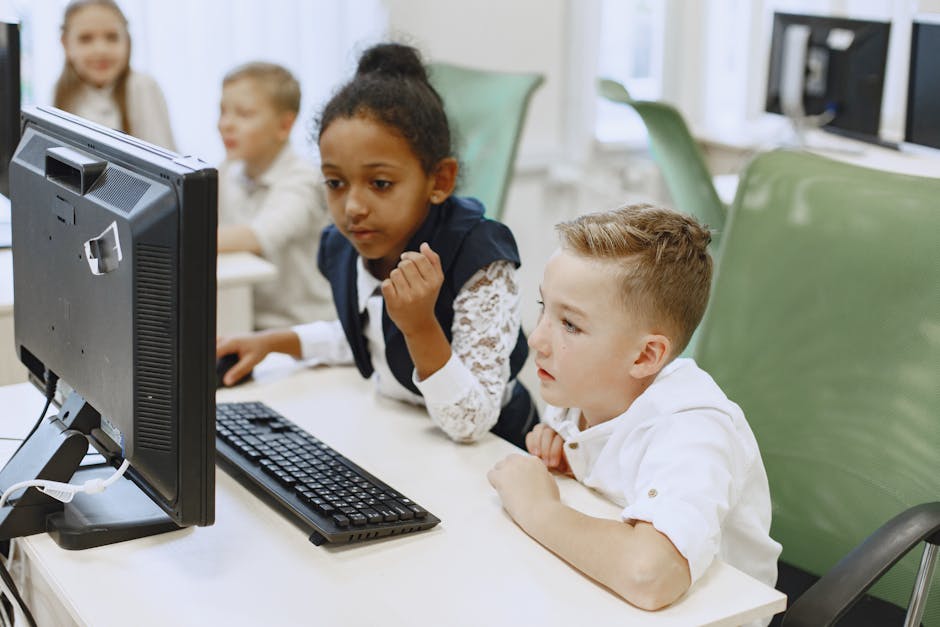
A colleague of mine — a middle school teacher in Seoul — told me something that stopped me mid-sip of coffee last month. She said, “Half my students now learn more from their AI tutor at home than they do from me in the classroom.” She wasn’t complaining, actually. She was genuinely curious about what that meant for her role. And honestly? That question stuck with me. Because she’s not wrong, and the data doesn’t lie.
We’ve been talking about personalized learning for decades — differentiated instruction, adaptive curricula, individualized education plans. But most of it required enormous teacher time and resources. Now, in 2026, AI-based personalized learning systems (what educators are calling AIPLS in academic circles) have fundamentally changed the equation. Let’s dig into what’s actually happening, what the research shows, and what you should look for if you’re evaluating these tools for yourself, your school, or your kids.
What Exactly Makes an AI Learning System “Personalized”?
Here’s where a lot of marketing hype gets in the way of understanding. Not every system that calls itself “AI-powered” is actually doing meaningful personalization. True AIPLS works across three core layers:
- Diagnostic Layer: Continuously assesses a learner’s current knowledge state — not just through quizzes, but by analyzing response time, error patterns, and even the sequence of answers attempted.
- Predictive Layer: Uses machine learning models (typically transformer-based architectures in modern systems) to forecast which concepts a learner is likely to struggle with next — before the struggle happens.
- Adaptive Content Layer: Dynamically adjusts the sequence, format, difficulty, and even the modality of content (video, text, interactive simulation) based on what’s working for that specific learner.
The distinction matters because a simple quiz-and-branch system is not the same as a system that’s building a real-time probabilistic model of your cognitive state. In 2026, the best platforms are doing the latter, and the gap between them and legacy “adaptive” tools is enormous.
The Numbers Behind the Revolution
Let’s talk data, because the results from the past few years have been genuinely striking.
A 2026 report from the UNESCO Institute for Statistics found that students using AI-personalized learning systems for at least 90 minutes per week showed 34% faster mastery of core curriculum concepts compared to traditional instruction-only control groups. That’s not a marginal improvement — that’s roughly compressing a full academic year of learning into eight months.
The McKinsey Global Institute’s 2026 Education Technology Report puts the global AIPLS market at $47.3 billion, with a projected CAGR of 28% through 2030. The fastest growth isn’t in North America or Europe — it’s in Southeast Asia and Sub-Saharan Africa, where AI tutors are filling critical gaps in teacher availability.
Perhaps most importantly, a longitudinal study published in Nature Human Behaviour (March 2026) tracked 12,000 students across 14 countries over three years. Students in AI-personalized programs showed not just higher test scores, but measurably better metacognitive skills — they got better at knowing what they didn’t know. That’s the learning-to-learn outcome that educators have been chasing forever.
Who’s Leading the Field Right Now?
The competitive landscape in 2026 has matured significantly. A few standout players worth knowing:
- Khan Academy’s Khanmigo 3.0: Now fully integrated with a Socratic dialogue engine, it guides students through problems rather than just providing answers. The 2026 version introduced real-time emotional state detection to adjust pacing when frustration signals are detected.
- Carnegie Learning’s MATHia: Consistently the gold standard for math personalization at the K-12 level. Their 2026 platform update introduced “conceptual anchoring” — linking new math concepts explicitly to skills the student has already mastered, dramatically reducing cognitive load.
- Coursera’s AI Coach: Targeting adult learners and professional upskilling, their system now integrates with LinkedIn job market data to personalize not just what you learn, but the sequence that maximizes employability outcomes.
- LifterLMS with AI Pathways (open-source adjacent): For educators building their own platforms, this ecosystem has become the backbone for hundreds of custom AIPLS implementations — particularly in the K-12 private sector and corporate training.
- MEGA Study (South Korea): One of the most sophisticated implementations in East Asia, MEGA’s AI tutoring system now serves over 2 million students and has been benchmarked against human tutors in SAT-equivalent preparation with near-parity results.
The Pedagogy Behind the Algorithm
One thing I always want to flag for anyone evaluating these systems: the AI is only as good as the pedagogical framework underneath it. The best AIPLS platforms in 2026 are explicitly built on spaced repetition (Ebbinghaus forgetting curve principles), interleaving (mixing practice across topics to boost retention), and retrieval practice (testing over re-reading, always). These are some of the most robustly validated findings in cognitive psychology, and platforms that ignore them in favor of pure engagement metrics are optimizing for the wrong thing.
Ask any vendor you’re evaluating: “What learning science frameworks does your system implement?” If they can’t answer that clearly, walk away.
Real Concerns Worth Taking Seriously
I’d be doing you a disservice if I made this sound like pure upside. There are genuine challenges with AI personalized learning systems that educators and parents should think about carefully:
- Data Privacy: These systems collect extraordinarily granular data about how children think and learn. Who owns that data, how it’s stored, and whether it can be sold or shared are critical questions. Look for FERPA compliance (US), GDPR compliance (EU), and equivalent local standards.
- Equity of Access: The best AIPLS platforms require reliable internet and decent hardware. In low-resource contexts, this can widen rather than close educational gaps — unless specifically designed for offline or low-bandwidth environments.
- Social Learning Deprivation: Humans learn from each other. Pure AI-mediated learning environments, without thoughtful design, can reduce peer collaboration and discussion — skills that no algorithm can fully replace.
- Algorithmic Ceiling Effects: If a student gets labeled as a “visual learner” or “struggling in algebra” by the system’s model, and that model calculates incorrectly, it may deliver sub-optimal content for months before a teacher catches it. Human oversight remains essential.
How to Actually Evaluate a Platform Before Committing
Whether you’re a parent, an educator, or an instructional designer, here’s a practical framework for evaluating any AIPLS before you commit time or budget:
- Ask for independent efficacy research — not internal marketing studies, but peer-reviewed or third-party evaluations.
- Request a data privacy impact assessment or privacy policy summary specifically for student data.
- Run a pilot with clear metrics — define upfront what success looks like (mastery rate, time-to-proficiency, learner engagement) and measure against a control group if possible.
- Evaluate the teacher dashboard — the best systems don’t replace teachers, they give teachers better information. If the platform doesn’t have robust teacher-facing analytics, that’s a red flag.
- Check for interoperability — does it integrate with your existing LMS (Canvas, Schoology, Google Classroom)? Standalone silos create administrative headaches.
Looking Ahead: Where Is This Going?
By late 2026 and into 2027, the frontier in AIPLS is moving toward what researchers are calling “whole-learner modeling” — systems that don’t just track academic knowledge but integrate emotional state, motivation trajectory, and even long-term goal alignment into their adaptive decisions. Early pilots from MIT’s Education Lab and KAIST in Korea show remarkable promise, though the ethical frameworks for handling that level of personal data are still catching up with the technical capability.
The other major frontier is AI-to-AI tutoring collaboration — where multiple specialized AI agents (a math tutor agent, a writing coach agent, a motivation/accountability agent) coordinate dynamically within a unified learning environment. Think of it less like a single teacher and more like a well-coordinated support team, available 24/7.
My teacher friend from Seoul? She’s actually started using her school’s AIPLS data to run what she calls “strategic intervention sessions” — instead of teaching the whole class the same thing, she uses the AI’s mastery maps to pull small groups for targeted support while the rest of the class works independently. She says it’s the first time she’s felt like she’s actually teaching rather than just delivering content. That, to me, is the right relationship between AI and human educators.
If you’re on the fence about diving into AI personalized learning — whether as a learner, a teacher, or an institution — the realistic answer isn’t “wait until it’s perfect.” It’s already good enough to create meaningful impact. The key is choosing thoughtfully, maintaining human oversight, and treating the AI’s output as a tool for better decisions, not an oracle.
Editor’s Comment : After reviewing dozens of AIPLS platforms over the past two years, my honest take is this — the technology has genuinely crossed a threshold where the learning outcomes are real and reproducible. But the platforms that work best aren’t the ones with the flashiest AI; they’re the ones that respect good pedagogy, protect learner data rigorously, and keep teachers genuinely in the loop. Start with a clearly scoped pilot, measure relentlessly, and let the data guide you. The future of education isn’t AI replacing teachers — it’s AI giving teachers superpowers. And in 2026, that future is very much now.
📚 관련된 다른 글도 읽어 보세요
- 선생님이 직접 6개월 써보고 말하는 ChatGPT 교육 현장 활용 사례 8가지 – 2026년 실전 리포트
- 2026년 디지털 리터러시, 이제는 선택이 아닌 생존 역량입니다 | 미래 핵심 역량 교육 완전 정리
- Bridging the AI Education Gap in 2026: Real Strategies That Actually Work
태그: AI personalized learning, adaptive learning systems, EdTech 2026, AI tutor, personalized education, machine learning in education, intelligent tutoring systems
Leave a Reply