Last month, a close friend called me in a mild panic. Her five-year-old had somehow navigated three apps, downloaded a game, and racked up in-app purchases — all while she was folding laundry in the next room. “Is my kid a genius, or am I a terrible parent?” she asked, half-laughing, half-horrified. Honestly, I’ve heard versions of that same story dozens of times over the years, and it always kicks off the same rabbit hole: what is all this screen time actually doing to our kids?
It’s a question worth sitting with carefully, because the answer in 2026 is a lot more nuanced than the old “screens are bad, full stop” narrative that dominated parenting discourse a decade ago.
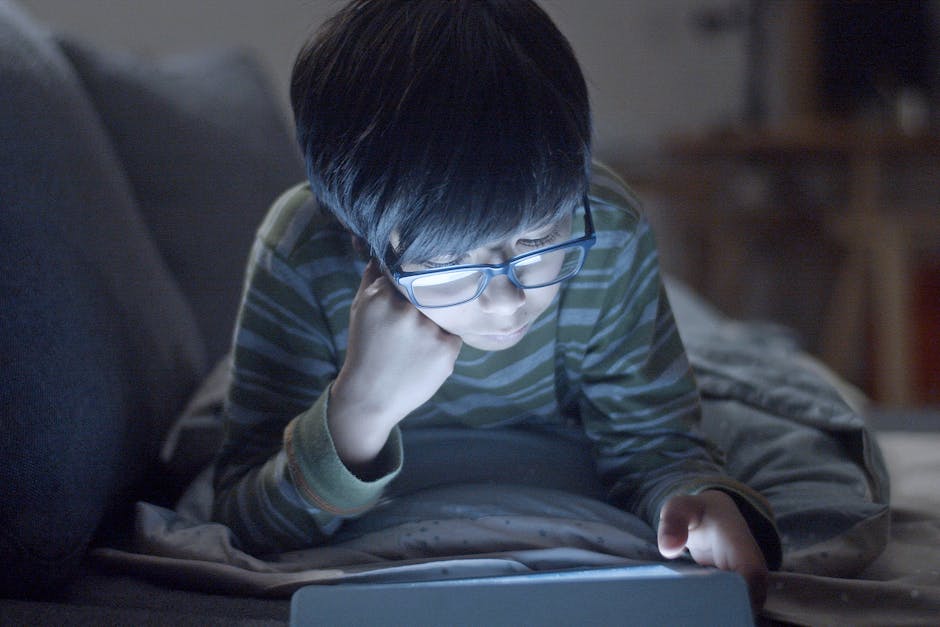
The Numbers Behind the Screen Time Debate
Let’s ground this in some data first, because opinions fly fast in this space. According to the American Academy of Pediatrics (AAP) 2026 updated guidelines, children ages 2–5 are now recommended to limit recreational screen time to one hour per day of high-quality programming — a figure that hasn’t changed dramatically, but the definition of quality has evolved considerably. Interactive, co-viewed content now scores far better developmentally than passive consumption.
Meanwhile, data from Common Sense Media’s 2025–2026 Kids & Tech Report reveals some eye-opening trends:
- Children aged 0–8 average approximately 2 hours 45 minutes of daily screen time — up 18 minutes from 2023.
- Over 42% of children under 2 now regularly use a smartphone or tablet.
- Educational app usage among 3–5 year olds increased by 31% between 2023 and 2026.
- Children who engage in co-viewing with a caregiver show markedly better language outcomes than solo viewers.
- Screen use after 8 PM is linked to a 23% increase in sleep onset difficulties among school-age children.
These aren’t just abstract statistics — they directly map onto what pediatric occupational therapists and developmental psychologists are seeing in clinic settings right now.
Cognitive Development: The Double-Edged Sword
Here’s where it gets interesting. Digital devices aren’t uniformly harmful or beneficial — they’re context-dependent tools. Think of it like diet: it’s not just about how much you consume, but what you consume and how.
On the positive side, well-designed educational apps have demonstrated measurable benefits. Research from the MIT Media Lab’s Early Childhood Learning Initiative (2026) found that children aged 4–6 who used adaptive learning apps like Khan Academy Kids and Duolingo ABC for structured 20-minute sessions showed an average 14% improvement in pre-literacy skills compared to control groups over six months. The key variable? The apps responded to the child’s individual pace — that feedback loop mimics what a good teacher does.
On the flip side, passive consumption — think autoplay YouTube videos with no adult involvement — is where developmental researchers wave the red flags. Studies consistently associate heavy passive screen use before age 3 with:
- Delayed expressive language development
- Reduced sustained attention spans
- Lower scores on social-emotional readiness assessments upon kindergarten entry
- Disrupted sleep architecture, particularly REM sleep patterns
Social and Emotional Development: The Nuance Nobody Talks About Enough
One of the most underappreciated angles in this conversation is how devices are reshaping social learning opportunities. Human brains are wired to read faces, pick up micro-expressions, and calibrate emotional responses through live interaction. Screens, by definition, can’t fully replicate that.
A longitudinal study from the University of British Columbia (published early 2026) tracked 800 children from ages 2 to 7. Children with higher daily device usage in the 2–4 age window showed slower development in theory of mind — the ability to understand that others have thoughts, feelings, and perspectives different from your own. This matters enormously for peer relationships, conflict resolution, and empathy.
That said, video calling platforms have emerged as a genuinely positive exception. FaceTime, Zoom family calls, and similar tools that connect children with grandparents or geographically distant family members appear to support rather than hinder social development — because they involve live, responsive human interaction even through a screen.

Physical Development: Eyes, Posture, and Sleep
This is the area where I see the most concrete, measurable impact — and honestly, the most preventable harm. Pediatric ophthalmologists across Asia and North America have been sounding the alarm on myopia rates in children, and digital device use is a contributing factor, though not the only one (reduced outdoor time is equally implicated).
The International Myopia Institute’s 2026 Global Report estimates that myopia now affects nearly 50% of school-age children in East Asia, with rates climbing steadily in North America and Europe. The fix? More outdoor time (natural light genuinely matters for eye development) and following the 20-20-20 rule: every 20 minutes of screen time, look at something 20 feet away for 20 seconds.
Posture is another underrated concern. Tablet and phone usage tends to involve prolonged neck flexion — sometimes called “tech neck” — which is increasingly being diagnosed in children as young as 7 or 8. Ergonomic positioning guidance from organizations like AOTA (American Occupational Therapy Association) recommends raising devices to eye level and limiting continuous use sessions to under 30 minutes for younger children.
What the Research Actually Recommends (Not What the Headlines Say)
Rather than hard bans or guilt-driven restrictions, the emerging consensus from developmental science in 2026 points toward a balanced, intentional framework. Here are the evidence-backed principles worth actually implementing:
- Prioritize co-engagement over prohibition: Watching or playing alongside your child and narrating what’s happening dramatically improves learning transfer.
- Choose interactive over passive content: Apps with responsive feedback (that adapt to your child’s input) outperform video consumption for cognitive development.
- Protect the bookend hours: No screens in the hour before bed and the first 30 minutes after waking — these windows significantly impact sleep and morning emotional regulation.
- Count outdoor time as the antidote: WHO guidelines suggest at least 3 hours of daily physical activity for children under 5. Outdoor play literally counteracts many of the physiological risks of screen time.
- Use device-free meals: Family dinner without screens isn’t just nostalgia — it’s documented as one of the strongest predictors of language development and emotional security in children.
- Model the behavior you want: Children mirror parental device habits with striking accuracy. If you’re scrolling during play, they learn that attention is interruptible.
Brands and Tools Worth Knowing in 2026
If you’re going to put a device in front of your child, the platform genuinely matters. Here’s what the developmental research community currently considers better-designed options:
- Amazon Kids+ (formerly FreeTime Unlimited): Robust parental controls, curated content library, usage scheduling — one of the more parent-friendly ecosystems for ages 3–12.
- Khan Academy Kids: Completely free, research-backed, ad-free. Adaptive learning pathways for ages 2–8. Consistently cited in positive developmental studies.
- Osmo (now part of the BYJU’S Learning Suite): Blends physical play with digital feedback — a genuinely hybrid approach that preserves fine motor development alongside digital literacy.
- Bark parental monitoring: For older children, Bark uses AI to flag concerning content and communication patterns without requiring parents to read every message — balancing safety and privacy.
- Apple Screen Time + Focus Modes: Built directly into iOS, these tools allow granular scheduling and app restrictions without additional hardware costs.
A More Realistic Path Forward
The honest truth? Completely eliminating digital devices from your child’s life in 2026 is neither practical nor necessarily optimal. Digital literacy is increasingly a foundational life skill — children who grow up with zero exposure to technology face their own developmental disadvantages when navigating school, social environments, and eventually the workforce.
The goal isn’t digital abstinence — it’s digital intentionality. That means making active choices about what, when, how long, and crucially, with whom your child engages with technology, rather than defaulting to whatever keeps the peace in the moment.
Think of yourself less as a gatekeeper and more as a digital co-pilot: present enough to guide, curious enough to engage, and secure enough in the boundaries you’ve set to hold them without constant negotiation.
My friend’s five-year-old, by the way? She refunded the in-app purchases (most platforms will cooperate if you contact them promptly), set up Family Sharing controls, and now does a 20-minute “app time” with her daughter every evening — together. Last week, she told me her daughter is now teaching her how to use the drawing app. That feels about right.
Editor’s Comment : After spending years researching and writing about child development and technology, what strikes me most is how much the quality of our presence matters more than the presence of screens. The data is clear that device use isn’t inherently harmful — but displaced human connection is. The best thing you can invest in isn’t a better content filter or a stricter app timer. It’s the ten minutes of undivided, device-free attention you give your child every single day. That’s the developmental variable that consistently shows up in the research, and it costs exactly nothing.
📚 관련된 다른 글도 읽어 보세요
- AI & Digital Literacy in K-12 Education (2026): What’s Actually Working in Classrooms Right Now
- Toddler Separation Anxiety: Proven Psychological Treatments and Coping Strategies That Actually Work in 2026
- AI 튜터 개인 맞춤형 학습, 정말 효과 있을까? 2026년 최신 데이터로 분석해봤습니다
태그: digital devices child development, screen time effects on children, children technology 2026, parental controls for kids, cognitive development toddlers, educational apps children, child brain development technology
Leave a Reply