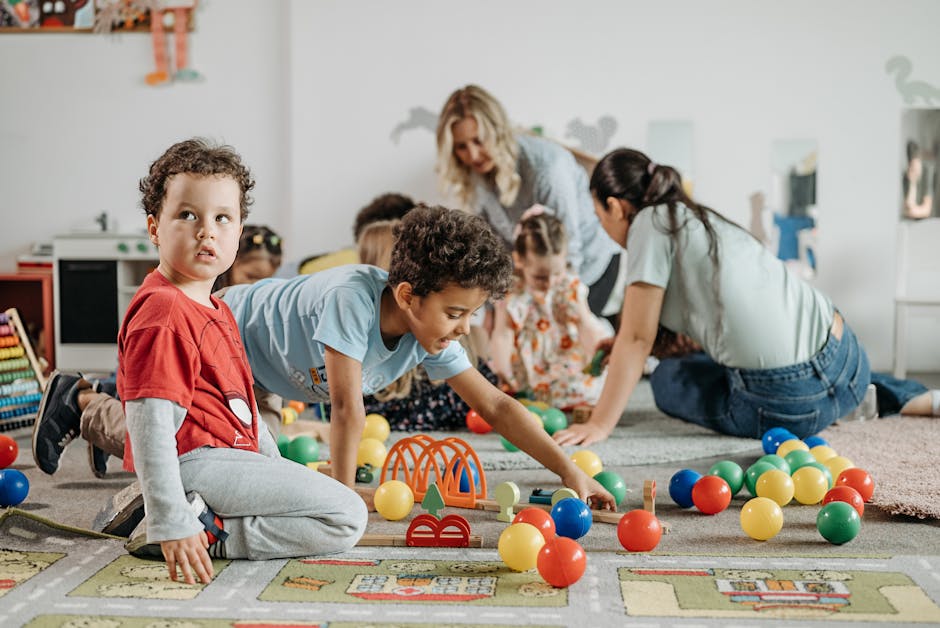
A few weeks ago, I was chatting with a kindergarten teacher named Ms. Jenna at a local education workshop. She looked genuinely exhausted but also excited. She told me about a child in her class — let’s call him Leo — who, at the start of the school year, would push other kids out of the way to grab toys without a single word. By spring, Leo was negotiating turns, comforting a crying classmate, and actually waiting in line. “What changed?” I asked. She smiled and said, “We stopped drilling rules at him. We started playing with purpose.” That one sentence stuck with me, and honestly, it’s what drove me to dive deep into the research on play-based social development in early childhood education.
Why Social Development in Kindergarten Is the Foundation, Not an Add-On
Here’s the thing most people don’t realize: kindergarten isn’t just about learning ABCs and 123s. The ages between 4 and 6 are a critical window for social-emotional development. According to a 2026 UNICEF early childhood education report, children who develop strong social competencies before age 7 are 3.4 times more likely to demonstrate academic resilience by third grade. Social skills aren’t soft skills — they’re the scaffolding everything else is built on.
In South Korea, where structured play-based curricula (known as 누리과정, or the Nuri Curriculum) have been formally implemented since the early 2010s and continually updated, data from the Korean Institute of Child Care and Education (KICCE) in 2026 shows that children exposed to intentional play-based social learning programs showed a 41% improvement in cooperative behavior metrics versus those in purely academic-focused settings.
What “Play-Based Social Skills Education” Actually Means (Hint: It’s Not Just Free Play)
This is where a lot of well-meaning educators and parents get tripped up. “Play-based” doesn’t mean “let them do whatever they want and hope for the best.” There’s a spectrum here:
- Free Play: Child-directed, unstructured. Great for creativity and autonomy, but limited in targeted social skill development without adult facilitation.
- Guided Play: Child-directed but with a learning goal set by the educator. This is the sweet spot for social development.
- Structured Play/Games: Adult-directed activities with clear rules — board games, role-playing scenarios, cooperative building challenges. Excellent for teaching turn-taking, conflict resolution, and empathy.
- Dramatic/Symbolic Play: Children assign roles and act out scenarios. Research consistently shows this as the most powerful modality for developing theory of mind (understanding others have different perspectives).
The magic happens when educators intentionally layer these types throughout the day. Think of it like a recipe — you need different ingredients at different times.
The Research Backing: What Studies Are Saying in 2026
Let’s get into the evidence, because this is where it gets really fascinating. The Harvard Center on the Developing Child has consistently published findings showing that executive function skills — including impulse control, emotional regulation, and flexible thinking — are best developed through play during the early childhood years. Their 2026 follow-up longitudinal study confirms that children in play-rich preschool environments showed measurably thicker prefrontal cortex development by age 8 compared to peers in highly structured, rote-learning environments.
Meanwhile, in Finland (still the gold standard for early childhood education, let’s be honest), the national curriculum mandates a minimum of 15 minutes of outdoor play for every 45 minutes of indoor learning. Finnish ECEC (Early Childhood Education and Care) researchers at the University of Helsinki reported in early 2026 that structured outdoor cooperative games — think team-based obstacle courses, collaborative sandbox building — produced the highest gains in prosocial behavior among 5-year-olds.
Closer to home in South Korea, programs like Seoul Metropolitan Office of Education’s “Social Play Ladder” initiative have been piloted across 140+ public kindergartens since 2024. Their 2026 mid-term report shows a statistically significant drop in peer conflict incidents (down 28%) and a rise in self-reported happiness scores among kindergarteners in participating schools.
Practical Play Activities That Actually Build Social Skills
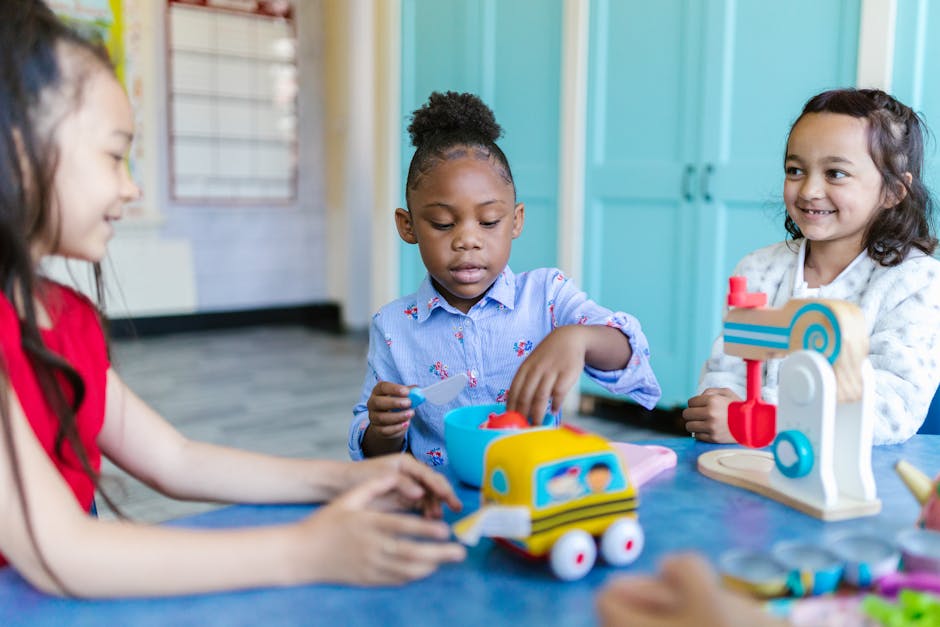
Okay, let’s get hands-on. Here are evidence-backed activities broken down by the specific social skill they target:
- “The Feelings Chair” Role Play (Empathy & Emotional Vocabulary): One child sits in a designated chair and describes a situation (“I felt sad when nobody wanted to play my game”). Others respond with empathy statements, not solutions. This builds emotional labeling and active listening simultaneously.
- Cooperative Block Building (Negotiation & Collaboration): Two or more children are given a shared set of blocks with a goal they must achieve together — build a bridge that holds a toy car. No individual ownership of pieces. Conflict is guaranteed, which makes it perfect for guided resolution practice.
- “Freeze Tag with Feelings” (Impulse Control & Emotional Regulation): Standard freeze tag, but to unfreeze a friend, you have to name an emotion and ask “How are you feeling?” It sounds silly, but it works remarkably well.
- Story Circle with Character Decisions (Perspective-Taking): Read a picture book, stop at a key moment, and ask “Why do you think the fox did that? What was he feeling?” This directly develops theory of mind.
- “Compliment Toss” Ball Game (Positive Social Reinforcement): Children sit in a circle. Whoever holds the ball says one genuine compliment to the person they toss to. Builds positive peer culture over time.
- Collaborative Mural Painting (Sharing Space & Communication): A large shared canvas, limited brushes. Children must communicate and manage shared resources — a microcosm of real-world social negotiation.
What Parents Can Do at Home to Reinforce Classroom Learning
Here’s something Ms. Jenna told me that I thought was brilliant: “The classroom is the practice field, but home is where the game is played.” The social skills kids rehearse at kindergarten need reinforcement at home to truly stick. Some practical strategies:
- Family Board Games Over Screen Time: Even simple games like “Snakes and Ladders” teach turn-taking, managing frustration with losing, and celebrating others’ wins graciously. In 2026, game publishers like Peaceable Kingdom and Haba continue to release fantastic cooperative board games specifically designed for ages 4-6.
- Narrate Social Situations: When you’re at the playground, narrate what you observe. “Look, that child looks sad because they can’t reach the monkey bars. What do you think we could do?” This develops real-time social cognition.
- Role-Play Difficult Scenarios at Home: Practice scripts with your child. “What do you say when someone takes your toy?” isn’t lecturing — it’s rehearsal. The brain learns social scripts the same way it learns any other motor pattern.
- Limit solitary screen time; prioritize play dates: Unstructured but supervised peer interaction remains one of the most powerful social development tools available — and it’s free.
Common Mistakes Educators and Parents Make (And How to Course-Correct)
In my experience digging into early childhood education, a few patterns keep coming up as counterproductive:
- Resolving conflict FOR children too quickly: When adults jump in and fix social disputes immediately, kids lose the chance to practice negotiation. Let it breathe (within safety limits).
- Over-praising sharing: “Good sharing!” sounds positive, but research from Stanford’s developmental psychology lab suggests that over-labeled praise can actually reduce intrinsic motivation. Instead, describe what you see: “I noticed you gave Mia a turn. How did that make her feel?”
- Treating play as less important than “real” academics: This one is huge, especially in high-academic-pressure cultures. Play IS the curriculum for social development at this age. Full stop.
- Ignoring the shy child: Introverted kids often get overlooked because they’re not causing problems. But social skill development is just as critical for them — they need different entry points (smaller groups, lower-stakes interactions).
Tools and Resources Worth Exploring in 2026
For educators looking to implement structured play-based social learning, a few resources stand out this year:
- CASEL (Collaborative for Academic, Social, and Emotional Learning): casel.org remains the gold standard for SEL frameworks, updated for 2026 with new play-based implementation guides.
- The Nuri Curriculum (누리과정) Resource Portal: For Korean educators, the updated 2026 guidelines include significantly expanded sections on social play methodology.
- “Playful Learning” by Kathy Hirsh-Pasek & Roberta Golinkoff: Still one of the most readable, research-dense books on the science of play. Updated edition references are worth seeking out.
- Funbrain.com and Starfall: Digital supplements (not replacements!) that include cooperative online activities for young learners — useful in hybrid learning environments.
The bottom line? We’re not choosing between academic rigor and play-based social development — the research in 2026 is crystal clear that these goals reinforce each other. When Leo started learning through play, he didn’t just become kinder to his classmates. He became a better learner, too. That’s not a coincidence. That’s developmental science doing exactly what it’s supposed to do.
Editor’s Comment : If you’re a parent worried that play “wastes time” at kindergarten, I’d gently reframe that concern. What you’re actually asking is whether your child is learning to be human — to cooperate, to feel, to communicate. And the answer, when play is done right, is a resounding yes. Start small at home: one family game night a week, one narrated playground visit. You’ll be surprised how quickly those seeds take root. And if you’re an educator feeling pressured to cut play time in favor of drills, bring this research to your next staff meeting. The data is on your side.
📚 관련된 다른 글도 읽어 보세요
- Bridging the AI Education Gap in 2026: Real Strategies That Actually Work
- 아동 ADHD 조기 진단과 치료, 2026년 최신 동향 총정리 — 우리 아이 신호를 놓치지 마세요
- Early ADHD Diagnosis in Children: What Every Parent Should Know in 2026
태그: kindergarten social skills, play-based learning, early childhood education, social emotional learning, 유치원 사회성 발달, preschool cooperative play, SEL curriculum 2026
Leave a Reply