Picture this: it’s 8:15 AM, you’re already running five minutes late, and your three-year-old has both arms wrapped around your leg like a tiny, tearful octopus. Every step toward the daycare door feels like wading through emotional cement. Sound familiar? If you’ve lived through this morning ritual, you already know — separation anxiety is one of the most emotionally draining challenges of early parenthood. But here’s the thing: it’s also one of the most misunderstood.
Let’s think through this together, because the difference between healthy attachment and problematic separation anxiety matters enormously — and so does the advice you follow.
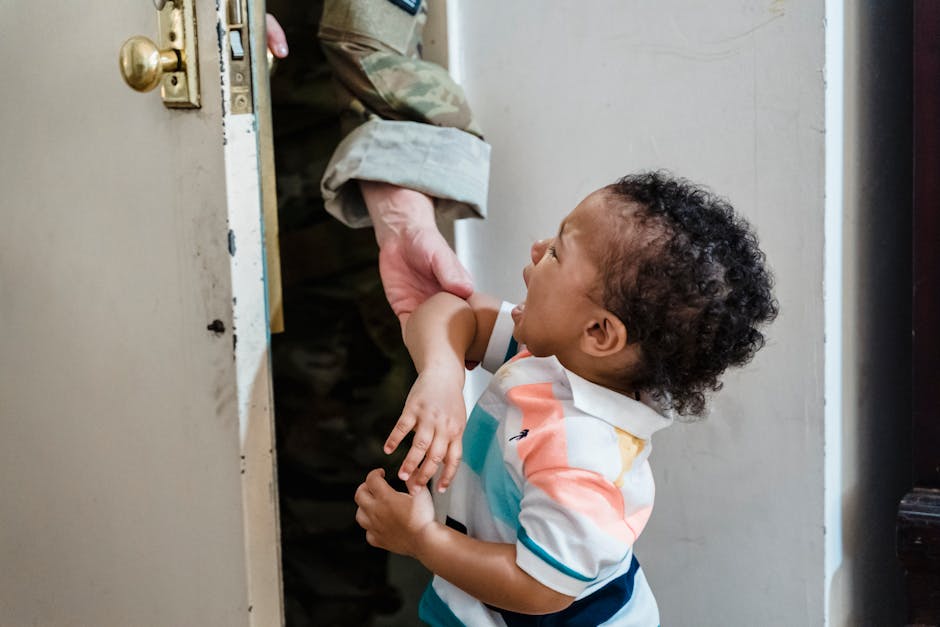
What Is Separation Anxiety, Really? (It’s Not What You Think)
Separation anxiety is a completely normal developmental phase, typically peaking between 10–18 months and again around ages 3–6. According to the American Academy of Pediatrics, approximately 7–8% of school-age children experience separation anxiety disorder (SAD) — a clinical escalation beyond typical developmental stress. The key distinction? Duration, intensity, and functional impairment.
A 2024 meta-analysis published in the Journal of Child Psychology and Psychiatry — data that continues to shape 2026 clinical practice — found that children whose parents responded with confident, warm, consistent goodbyes showed measurably lower cortisol (stress hormone) spikes within 15 minutes of separation compared to children whose parents lingered or repeatedly returned to reassure. In other words, how you leave matters as much as the fact that you’re leaving.
The Science Behind the Cling: Why Your Child’s Brain Does This
Here’s where neuroscience gets genuinely fascinating. Young children’s prefrontal cortex — the part responsible for logical reasoning like “Mom will come back at 5 PM” — is still under construction. What is fully online? The amygdala, the brain’s alarm system. So when you walk out the door, your child isn’t being dramatic. Their brain is literally firing a threat response.
Understanding this reframes everything. We’re not dealing with misbehavior — we’re dealing with a nervous system doing exactly what it was designed to do. This is why punitive approaches like “stop crying or I’ll leave faster” can backfire spectacularly, potentially reinforcing insecurity rather than resolving it.
What International Research and Practice Shows Us in 2026
Looking at approaches from around the world reveals some refreshing nuance:
In Scandinavia, particularly Denmark and Sweden, early childhood educators use a philosophy called “trygg base” (secure base), where the transition environment itself is redesigned. Teachers greet children at the door with a specific ritual — a handshake, a special phrase, a visual anchor object — creating a bridge between home and school. Studies from the Nordic Early Childhood Research Journal show this approach reduces transition distress by up to 40% within the first month.
In South Korea, where academic pressure makes separation anxiety particularly acute, child psychologists have increasingly embraced Social Emotional Learning (SEL) curricula at the preschool level. Seoul National University’s Child Development Institute reported in early 2026 that preschools incorporating daily “feelings check-ins” saw significantly faster adaptation in children with clinically elevated anxiety scores.
In the United States and UK, Cognitive Behavioral Therapy (CBT) adapted for young children — often called CBT-C — remains the gold standard for clinical-level separation anxiety. The BRAVE program (developed in Australia) is now widely used internationally, including digitally through parent-guided apps, making professional-grade tools more accessible to families who can’t afford weekly therapy sessions.

Practical Expert-Backed Strategies You Can Start Today
Here’s what actually moves the needle, according to child psychologists and attachment researchers active in 2026:
- The Confident Goodbye Protocol: Keep your farewell brief (under 60 seconds), warm, and consistent. Use a specific phrase your child can predict — “I love you. I’ll pick you up after snack time. Bye!” Predictability is calming to an anxious nervous system.
- Transitional Objects with Intention: A small item from home (a photo in their pocket, a parent’s scrunchie) isn’t “babying” — it’s evidence-based. It acts as a tangible reminder that connection persists even when you’re apart.
- Gradual Exposure, Not Avoidance: If your child resists school, the worst response is extended school avoidance. Work with educators on shortened days that gradually lengthen over 1–2 weeks. Avoidance feeds anxiety.
- Narrate the Reunion: When you return, don’t just move on. “I was at work, I thought about you, and now I’m HERE” — this builds what therapists call “time permanence,” helping children trust that separations end.
- Check Your Own Anxiety: This one stings a little, but research consistently shows that parental anxiety is one of the strongest predictors of child separation anxiety. Children are exquisite emotional barometers. If your goodbye feels catastrophic to you, they’ll sense it.
- Read Together About Separation: Books like The Kissing Hand or Llama Llama Misses Mama normalize the experience and give children language for feelings they can’t yet articulate.
- Involve the Receiving Adult: Brief your child’s teacher or caregiver on their specific comfort strategies. A warm, prepared caregiver can reduce transition distress dramatically — this is a team effort.
When to Seek Professional Support
Most separation anxiety resolves with consistent, informed parenting. However, it’s worth consulting a child psychologist or pediatrician if:
- Anxiety persists beyond 4 weeks with no improvement despite consistent strategies
- Your child experiences physical symptoms: recurring stomachaches, headaches, or vomiting on school mornings
- Sleep is severely disrupted due to fear of being alone
- The anxiety is interfering with normal daily functioning across multiple settings
In 2026, telehealth options have made accessing child psychologists significantly easier. Platforms specializing in pediatric mental health can connect you with licensed CBT practitioners, often within days rather than the months-long waitlists of traditional in-person services.
Realistic Alternatives Based on Your Situation
Not every family has the same resources, schedule, or support system. Let’s be practical:
- If you can’t afford therapy: Free CBT-based resources like the BRAVE Online program, or apps like GoZen!, offer structured anxiety tools at low or no cost.
- If your schedule prevents gradual transition: Work with your childcare provider to create micro-rituals (a goodbye wave from a window, a special sticker chart) that don’t require extra time.
- If your child has a neurodevelopmental difference: Separation anxiety in children with autism or ADHD often requires specialized approaches — occupational therapists who specialize in sensory processing can be game-changers here.
- If extended family judges your approach: Arm yourself with the research. Responding warmly to anxiety is not “spoiling” — it’s building secure attachment, which research shows predicts better emotional regulation, academic outcomes, and relationship quality throughout life.
The journey through separation anxiety is genuinely hard — messy, guilt-laden, and exhausting. But here’s what I find oddly comforting: the fact that your child is anxious to leave you is, in its own bittersweet way, evidence of a strong, loving attachment. Your job isn’t to eliminate that bond. It’s to help them trust that it survives distance.
Editor’s Comment : After exploring all this research and expert guidance, the throughline is remarkably consistent — security, predictability, and your own calm are your most powerful tools. None of this requires perfection. A good-enough, consistent parent who understands what’s happening neurologically is already ahead of the curve. Start with one strategy this week, observe your child, and adjust. You’ve got this — and so do they.
태그: [‘child separation anxiety’, ‘parenting expert advice 2026’, ‘toddler anxiety tips’, ‘separation anxiety disorder children’, ‘secure attachment parenting’, ‘child psychology strategies’, ‘school separation anxiety’]
Leave a Reply