Picture this: Your three-year-old is on the floor, completely melting down because you cut their sandwich into triangles instead of squares. You’re exhausted, a little baffled, and honestly — maybe a tiny bit amused. But here’s the thing: that dramatic moment? It’s actually one of the most important emotional learning opportunities your child will ever have. And you are the teacher.
The Korean concept of 유아 정서 발달 부모 역할 — roughly translated as “the parent’s role in infant and toddler emotional development” — has gained serious traction in global early childhood research circles. And for good reason. What parents do (and don’t do) in those first five years shapes the emotional architecture a child carries into adulthood. Let’s think through this together.
Why the First Five Years Are Neurologically Non-Negotiable
Here’s where the science gets genuinely fascinating. According to the Harvard Center on the Developing Child (2026 update), over 1 million new neural connections form every second in a child’s brain during the first few years of life. The prefrontal cortex — the area responsible for emotional regulation, empathy, and decision-making — is actively being sculpted during this window.
A landmark study published in Child Development Perspectives (early 2026) found that children who experienced consistent emotional validation from caregivers before age five were:
- 43% more likely to show healthy peer relationships by age eight
- Significantly less prone to anxiety disorders in adolescence
- Better equipped at self-regulation — the ability to calm themselves without external help
- More resilient in the face of academic and social challenges
- Higher in measured emotional intelligence (EQ) scores throughout childhood
So that sandwich meltdown? Your response to it is literally rewiring your child’s brain. No pressure — but also, actually, a little pressure. The good kind.
The Four Parental Roles That Actually Move the Needle
Researchers at Seoul National University’s Child Development Lab conducted a multi-year longitudinal study (published in late 2025, with 2026 follow-up data now available) tracking 1,200 Korean families. They identified four distinct parental emotional roles that correlated most strongly with positive child outcomes:
1. The Emotion Coach
This is the parent who doesn’t dismiss feelings but names them. Instead of “Stop crying, it’s not a big deal,” they say, “You’re really upset right now. That sandwich thing felt really wrong to you, didn’t it?” This approach — popularized by Dr. John Gottman’s “emotion coaching” framework — teaches children that emotions are information, not performances.
2. The Safe Harbor
Attachment theory, pioneered by John Bowlby and refined through decades of research, tells us that children need a secure base. When parents are predictable, warm, and available — not perfect, but present — children develop what’s called secure attachment. Securely attached toddlers explore more boldly, recover from distress faster, and form healthier adult relationships.
3. The Emotional Mirror
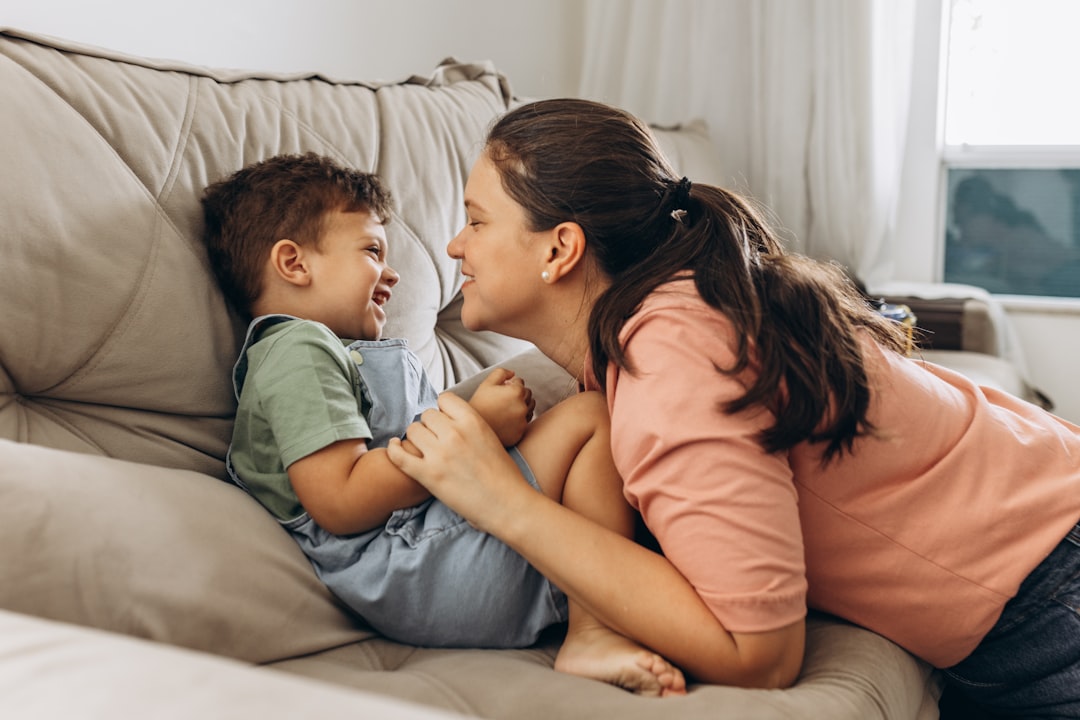
Mirroring is the practice of reflecting your child’s emotions back to them through your face, voice, and body language. Think of it as emotional karaoke — you’re singing back what they’re feeling so they can hear it clearly. This is a core technique in play therapy and is remarkably easy to practice at home.
4. The Regulated Adult
Perhaps the most underrated role. Children co-regulate before they self-regulate — meaning they literally borrow your calm. If you can manage your own stress response during your child’s big moments (even imperfectly), you’re modeling the exact skill you want them to develop. This is why parental mental health isn’t a luxury — it’s part of the child development equation.
Global Examples: What Different Cultures Get Right
One of the most interesting ways to understand parental roles in emotional development is to look across cultures — because no single approach has a monopoly on getting it right.
Denmark’s “Empathy Curriculum”: Danish schools have integrated social-emotional learning into the classroom since the 1990s, but 2026 data from the OECD’s Education at a Glance report shows Denmark consistently ranking in the top three globally for student wellbeing. The key? Parents and teachers use aligned language around emotions — making the home-school emotional vocabulary seamless for kids.
Japan’s “Amae” Framework: The Japanese concept of amae (甘え) describes a healthy emotional dependence between parent and child — where the child is allowed to lean into the parent’s indulgence as a form of security. Far from spoiling, researchers now argue this creates a deep trust scaffold that children draw from as they develop independence.
South Korea’s Evolving Approach: Historically, Korean parenting culture emphasized academic achievement and emotional stoicism. But there’s been a significant cultural shift. Programs like the Seoul Metropolitan Government’s Emotional Parenting Initiative (now in its fourth year in 2026) have trained over 80,000 parents in emotion coaching techniques, showing measurable reductions in childhood behavioral issues across participating schools.
Canada’s Indigenous Parenting Circles: In many First Nations communities, emotional development is understood as a communal responsibility — not just a parent’s job. The concept of the “village raising the child” isn’t metaphorical; it’s structural. Research from the University of British Columbia (2025-2026) found that children in these community-supported models showed exceptional emotional resilience and identity stability.
Realistic Alternatives: What If You Don’t Have It All Figured Out?
Here’s the honest truth most parenting blogs won’t tell you: no one is doing all of this perfectly. You’re going to lose your patience. You’re going to dismiss a feeling when you’re tired. You’re going to cut the sandwich into the wrong shape again. And that’s actually… okay.
Research on “rupture and repair” — a concept from attachment theory — suggests that it’s not the absence of conflict or emotional missteps that builds secure children. It’s the repair afterward. When you lose your cool and then come back and say, “I’m sorry I snapped. I was frustrated, and that wasn’t fair,” you’re teaching something incredibly powerful: relationships can be broken and fixed. Emotions pass. Adults take accountability.
Here are some realistic, low-barrier strategies for parents at different stages:
- For overwhelmed parents: Start with just one emotion word per day. “You look frustrated.” “That made you proud, didn’t it?” Small vocabulary building has outsized impact.
- For parents with limited time: Bedtime is golden. A five-minute emotional check-in — “What was the hardest part of your day? What made you smile?” — creates a daily ritual that compounds over years.
- For parents managing their own mental health: Seek support first. Whether it’s therapy, a support group, or honest conversations with a partner or friend — your regulated nervous system is the single greatest gift to your child’s emotional world.
- For parents unsure about “doing it right”: Read alongside your child. Books like The Whole-Brain Child by Siegel and Bryson, or Korean parenting resources from organizations like the Korean Institute of Child Care and Education (KICCE), offer accessible, evidence-based frameworks without judgment.
- For parents in non-traditional family structures: The data is clear — what matters isn’t the configuration of your family, but the consistency and warmth within it. Single parents, same-sex couples, grandparents as caregivers — all of these can and do produce emotionally thriving children.
A Quick Note on Screen Time and Emotional Development in 2026
It would be irresponsible to discuss early childhood emotional development in 2026 without addressing our digital reality. The American Academy of Pediatrics’ updated 2026 guidelines emphasize not just limits on screen time, but the importance of co-viewing and emotional commentary. Watching a show together and talking about what a character is feeling — “Why do you think she’s crying right now?” — turns passive screen time into an emotional literacy exercise. It’s not about eliminating technology. It’s about staying present within it.
Editor’s Comment : What strikes me most about researching this topic is how the science keeps circling back to something beautifully simple: children need to feel felt. They need adults who are willing to slow down enough to look at them, really look — and say, “I see what’s happening inside you.” In a world that’s moving faster than ever in 2026, that kind of intentional presence might be the most radical parenting act of all. You don’t need to be a perfect parent. You need to be a present one — and that’s something all of us can work toward, one sandwich triangle at a time.
태그: [‘early childhood emotional development’, ‘parenting toddlers 2026′, ’emotion coaching for parents’, ‘child emotional intelligence’, ‘secure attachment parenting’, ‘infant emotional development’, ‘parental role in child development’]
Leave a Reply