Picture this: you’re sitting at the kitchen table, coffee going cold, watching your 18-month-old point furiously at the refrigerator and say something that sounds suspiciously like “more cheese.” Was that a real sentence? A coincidence? A tiny miracle? If you’ve ever found yourself frantically Googling “is my toddler’s speech normal?” at 11 PM, you are absolutely not alone — and you’ve landed in exactly the right place.
Language development in young children is one of the most fascinating — and honestly, most anxiety-inducing — journeys a parent walks alongside their child. The good news? In 2026, we have richer research, better developmental frameworks, and far more nuanced guidance than ever before. Let’s think through this together, stage by stage, so you can celebrate the wins and know when (and whether) to seek support.

Why Language Development Matters More Than You Think
Language isn’t just about talking. It’s the scaffolding for cognitive development, emotional regulation, social bonding, and even early literacy. Research published in the Journal of Child Language (2025) confirms what many early childhood educators have long observed: children who develop robust expressive and receptive language skills by age 3 show measurably stronger executive function and social competence by the time they enter formal schooling. In short, the words your child learns today are literally building the architecture of their thinking brain.
Stage 1: The Pre-Linguistic Phase (0–6 Months)
Before any recognizable words appear, your baby is doing something remarkable — they’re becoming a language detective. During this stage, infants develop joint attention (the ability to share focus on an object or event with another person) and begin to discriminate the sounds of their native language from non-native ones. A landmark MIT study replicated and expanded in 2024 showed that by just 4 months, babies already prefer the phonetic patterns of the language(s) spoken most in their home environment.
- 0–2 months: Reflexive cries, startled responses to sound, brief eye contact during feeding
- 2–4 months: Social smiling, cooing (soft vowel-like sounds), early turn-taking in “conversations”
- 4–6 months: Laughing, squealing, responding to name with head turn, vocal play with pitch variation
Realistic tip: You don’t need fancy flashcards. Narrate your day. “Now we’re putting on your left sock — there it goes!” That running commentary is pure language gold.
Stage 2: Canonical Babbling (6–10 Months)
This is where things get genuinely exciting. Around 6–7 months, most babies shift from random vowel sounds to canonical babbling — repetitive consonant-vowel combinations like “bababa,” “mamama,” or “dadada.” Here’s a fascinating nuance many parents miss: canonical babbling is a universal linguistic milestone across all human cultures and language environments. A baby raised in Tokyo and a baby raised in Nairobi both go through this stage on roughly the same timeline.
What varies, however, is the specific sounds babies practice. Korean-learning infants, for example, have been observed to produce more nasal sounds earlier compared to English-learning infants, reflecting exposure to the phonetic frequencies of their home language.
Stage 3: The “First Word” Era (10–14 Months)
The average age for a first recognizable word is around 12 months — but the range of “typical” is genuinely wide. Some children say their first word at 9 months; others wait until 15 months and then seemingly download a vocabulary overnight. What counts as a “word”? Linguists define it as a consistent sound pattern used intentionally to refer to a specific thing or action. So yes, if your baby reliably says “buh” every time they see the dog, that counts.
- First words are often nouns (mama, dada, ball, cup) but can also be social words (“hi,” “no,” “uh-oh”)
- Most children have 10–20 words by 18 months
- Comprehension (receptive language) almost always runs ahead of production — your child understands far more than they can say
Stage 4: The Vocabulary Explosion (18–24 Months)
Something almost magical happens between 18 and 24 months for many children: the vocabulary explosion (also called the “naming explosion”). Word acquisition, which had been relatively slow and effortful, suddenly accelerates. Some toddlers pick up 5–10 new words per day during this period. Researchers at Carnegie Mellon University’s Language Development Lab noted in their 2025 longitudinal data that children who experienced this burst earlier tended to reach two-word combinations sooner — though they were careful to emphasize that a later burst is not a red flag in isolation.
By 24 months, most developmental frameworks — including the updated American Academy of Pediatrics (AAP) 2026 guidelines — suggest children should have approximately 50+ words and be combining two words meaningfully (“more milk,” “daddy go,” “big dog”).
Stage 5: Grammar Emerges (2–3 Years)
This is the stage where your toddler transitions from a charming telegram-style communicator (“want cookie”) to a surprisingly complex little grammarian. They begin to add verb endings (“running,” “jumped”), plurals (“dogs,” “cats”), and simple prepositions. Sentences grow from two words to three, four, and five words. Strangers should be able to understand roughly 50–75% of what your 2-year-old says, and nearly all of what your 3-year-old says.
A beautiful real-world example: The LanguageREADY program, piloted across early childhood centers in Seoul, South Korea and Vancouver, Canada in 2025, found that bilingual toddlers in this stage showed slightly smaller vocabularies in each individual language compared to monolingual peers — but their total conceptual vocabulary (counting words across both languages) was equivalent or greater. This is crucial context for multilingual families who worry their children are “behind.”
International Perspectives: What Different Cultures Teach Us
One of the most enriching lenses we can apply to language development research in 2026 is cross-cultural comparison. Consider:
- Finland: Finnish children begin formal literacy education at age 7, yet consistently outperform peers internationally. Researchers attribute this partly to rich oral language development in early childhood, where storytelling and conversation are prioritized over worksheets.
- Japan: Japanese parenting culture emphasizes amae (interdependence), which naturally fosters high volumes of sensitive, responsive communication with infants — a known driver of language development.
- United States: The Hart and Risley “30 million word gap” research (now updated and nuanced by 2020s scholarship) highlighted how conversational quantity and quality in early childhood correlate strongly with later vocabulary — reinforcing that everyday talk is the most powerful language tool parents have.
- Kenya (Kikuyu communities): Studies show rich language development in community-based caregiving settings, where children are immersed in multi-generational, story-rich social environments from birth.
Red Flags Worth Knowing (Without Spiraling)
Here’s where I want to be genuinely useful rather than alarmist. Most children develop language on their own unique timeline. But some signs do warrant a conversation with your pediatrician or a speech-language pathologist (SLP):
- No babbling by 12 months
- No gesturing (pointing, waving) by 12 months
- No single words by 16 months
- No two-word phrases by 24 months
- Any loss of previously acquired language skills at any age
- Difficulty understanding simple instructions by 18–24 months
Early intervention — when warranted — is remarkably effective. The earlier speech therapy begins, the better the outcomes. This isn’t about labeling your child; it’s about giving their brain the right support at its most plastic, most receptive stage.
Realistic Alternatives: What If Your Child Isn’t Hitting the “Average”?
Here’s the thing about averages: they describe the middle of a bell curve, not a finish line. If your child is a late talker, the first realistic step isn’t panic — it’s observation and environmental enrichment. Before worrying, ask yourself: Is my child communicating in other ways (gestures, facial expressions, pointing)? Is their comprehension strong? Are they socially engaged?
If you have concerns, a free developmental screening through your pediatrician is always a reasonable starting point. Many regions in 2026 also offer telehealth SLP consultations, making access far easier than even five years ago. For families in rural areas or with limited access to specialists, apps like Talkable (available across North America and parts of Europe) offer research-backed parent coaching for language-delayed toddlers — a genuine game changer for accessibility.
And for the parents of children who are racing ahead? Enrichment looks like more conversation, not more curriculum. Read together. Ask open-ended questions. Let them lead pretend play and narrate it back to them. The brain doesn’t need worksheets at age two — it needs a curious, responsive conversation partner. That’s you.
Simple Daily Habits That Actually Move the Needle
- Serve and return: Respond to every vocalization or gesture your baby makes — this “conversational turn-taking” is proven to build neural connections
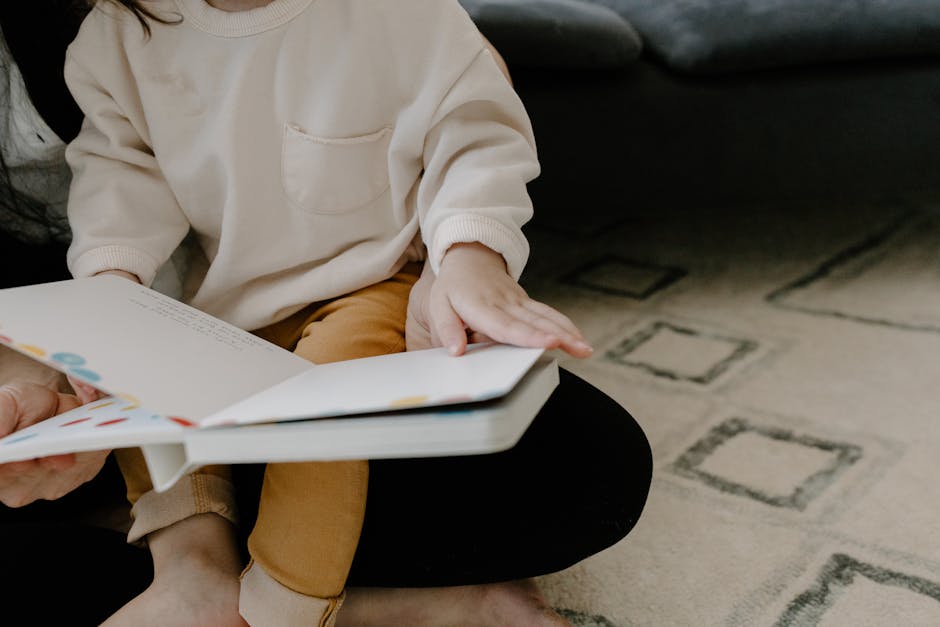
- Read aloud daily: Even 15 minutes of shared book reading dramatically expands vocabulary exposure
- Narrate your world: Running commentary on everyday activities provides context-rich language input
- Limit passive screen time under 2: The AAP’s 2026 updated guidelines still emphasize that video chat (interactive) is fine, but passive media viewing offers minimal language benefit for children under 24 months
- Expand, don’t correct: If your child says “doggy runned,” say “Yes! The doggy ran so fast!” — you’re modeling correct form without shutting down their confidence
Language development is not a race with a winner’s podium. It’s a conversation — literally and figuratively — between your child and their world. And you, showing up curious and present every day, are the single most powerful language resource they have.
Editor’s Comment : What strikes me most about studying language development in 2026 is how consistently the research circles back to the same simple truth: children learn to talk because people talk with them, not at them. In a world increasingly full of screens and schedules, the most radical thing we can do for our children’s language development might just be to put the phone down, look them in the eyes, and say, “Tell me more about that.” Start there. Everything else follows.
태그: [‘toddler language development 2026’, ‘infant speech milestones’, ‘early childhood language stages’, ‘baby language guide’, ‘late talker toddler tips’, ‘speech development activities’, ‘early intervention speech therapy’]
Leave a Reply