Last spring, a friend of mine — a third-grade teacher in Seoul — called me absolutely buzzing with excitement. Her school had just rolled out a brand-new AI coding program, and within two weeks, her students were building simple chatbot prototypes. “They’re not just learning to code,” she told me, “they’re learning to think.” That conversation stuck with me, and honestly, it’s what sent me down the rabbit hole of researching AI coding education for elementary schoolers in 2026.
So here’s the thing: the landscape has changed dramatically. We’re no longer talking about teaching kids to drag-and-drop blocks in Scratch and calling it “AI literacy.” The bar has moved — and so has the opportunity.
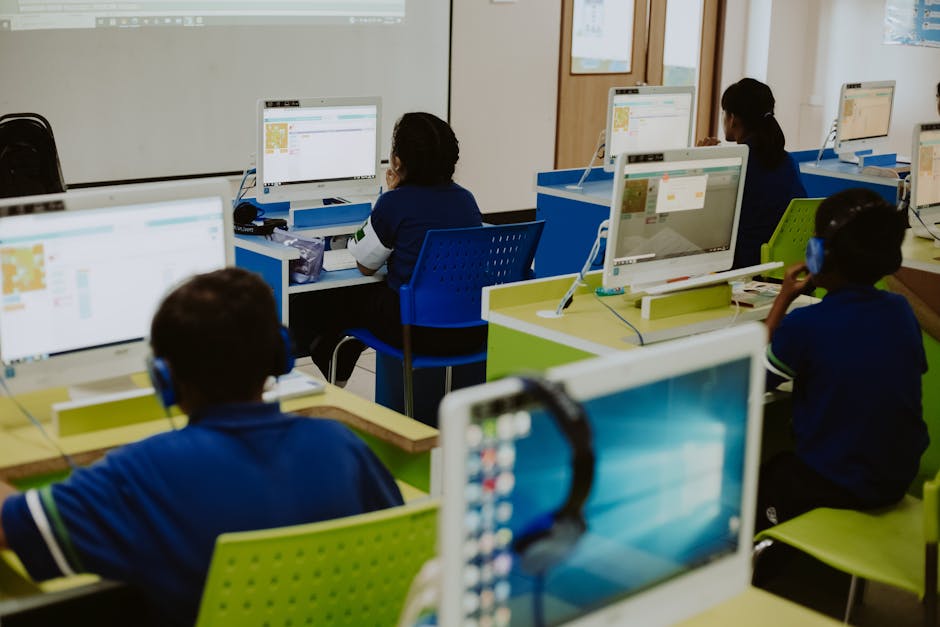
Why Elementary School Is the Sweet Spot for AI Education
Child development researchers have long pointed to ages 7–12 as a critical window for abstract thinking and pattern recognition — two cognitive skills that map almost perfectly onto machine learning concepts. A 2026 OECD report on digital competency in K-12 education found that students who begin structured computational thinking before age 10 demonstrate 34% higher problem-solving scores in STEM subjects by middle school.
But here’s what that data doesn’t tell you: raw exposure isn’t enough. Simply handing a kid an AI tool doesn’t build understanding. The curriculum design matters enormously. Think of it like the difference between giving a child a piano and actually teaching them music theory — both involve the instrument, but only one creates a musician.
The Core Pillars of an Effective AI Coding Curriculum for Kids
After reviewing curricula from over a dozen countries and speaking with educators, I’ve identified what consistently separates strong programs from mediocre ones:
- Conceptual grounding first: Before writing a single line of code, kids need to understand what AI actually is — a system that learns from data and makes decisions. Age-appropriate analogies (like training a pet) go a long way here.
- Hands-on, project-based learning: Abstract lessons don’t stick. Programs that tie coding to real mini-projects — like building a simple image classifier or a basic recommendation engine — show dramatically better retention.
- Ethics woven in from day one: In 2026, no serious AI curriculum skips the ethics layer. Kids should ask “should we build this?” alongside “how do we build this?”
- Scaffolded progression: Starting with visual block coding (like MIT’s Scratch), then transitioning to hybrid environments (like MakeCode or Snap!), then easing into Python basics by grade 5 or 6 — this ladder approach prevents cognitive overload.
- Teacher confidence and training: This is the silent killer of most school programs. Even the best curriculum falls flat if the instructor isn’t comfortable with the material.
What’s Working Around the World: Real Examples
Let’s look at some genuinely inspiring models that are running right now.
South Korea’s AI Elementary Integration (2026 Update): Following its landmark AI education framework launched a few years back, South Korea has now integrated AI modules across ALL elementary grades — not just as a standalone subject, but embedded in math, science, and even arts classes. Students in grades 3–6 use a localized platform called “AI Craft” that connects coding tasks to Korean language and cultural content. Early results from Seoul Metropolitan Office of Education show a 41% increase in student-reported interest in science careers among participating schools.
Finland’s “Computational Creativity” Model: Finland — unsurprisingly — takes a more holistic approach. Rather than isolating coding as a subject, their national curriculum treats AI literacy as a cross-disciplinary skill. Elementary students might use machine learning tools to analyze local weather patterns in a geography lesson, or generate music in a visual arts class. It’s less about technical depth and more about cultivating a mindset of curiosity and critical thinking.
India’s CBSE AI Pilot Schools: India’s Central Board of Secondary Education expanded its AI pilot to over 2,000 schools in 2026, with a specific track for grades 4–6. The curriculum leans heavily on offline-compatible tools, which is smart given infrastructure disparities. Students build physical “unplugged” AI projects — like sorting games that mimic classification algorithms — before moving to digital environments.
United States — Code.org and Beyond: In the US, Code.org remains a dominant platform, but 2026 has seen a wave of district-level adoptions of more advanced tools. Chicago Public Schools, for instance, partnered with a local ed-tech startup to launch “AI Explorers” — a semester-long elective for grades 4 and 5 that uses Google’s Teachable Machine as its centerpiece. Students train their own simple image and sound models and then present their projects to parents. The community engagement component has been key to its success.

The Real Challenges Nobody Likes to Talk About
Here’s where I want to be honest with you, because I think a lot of articles on this topic are suspiciously rosy. Implementing AI coding education at the elementary level comes with genuine friction:
- Teacher training gaps: A 2026 survey by EdWeek Research Center found that only 28% of elementary teachers in the US feel “confident” teaching any form of coding, let alone AI-specific content. Professional development pipelines haven’t kept pace with curriculum ambitions.
- Equity and access: AI tools often require reliable internet, modern devices, and sometimes paid licenses. Schools in lower-income districts frequently get the policy announcements but not the budget to match.
- Curriculum fatigue: Elementary teachers are already juggling packed schedules. Adding AI as a standalone subject without reducing anything else is a recipe for burnout and shallow implementation.
- Age-appropriate AI ethics: Explaining bias in algorithms or data privacy to a 9-year-old is genuinely hard. Many programs either skip it entirely or oversimplify to the point of being misleading.
Realistic Alternatives Based on Your Situation
Not every school or family is starting from the same place, so let’s think through some practical paths:
If you’re a parent with limited school support: Platforms like Scratch (free, browser-based), Tynker, or AI for Kids (a newer 2026 platform with excellent visual ML tools) are solid starting points at home. Even 30 minutes a week of guided exploration builds meaningful intuition over time. Don’t aim for mastery — aim for curiosity.
If you’re a teacher with no formal curriculum: Start with “unplugged” AI activities — no device required. Resources from CS Unplugged or the Day of AI curriculum (developed by MIT RAISE) give you structured, classroom-tested lessons that don’t require you to be an AI expert. Build your own confidence alongside your students.
If you’re a school administrator: Resist the temptation to launch a shiny standalone AI class without the support infrastructure. A better model is a 12-week pilot in two or three classrooms with dedicated teacher coaching, then iterate. Quick, visible wins build institutional momentum far better than grand rollouts that fizzle.
If you’re in a resource-constrained environment: Offline-first tools and “unplugged” curricula aren’t a compromise — they can actually deepen conceptual understanding better than jumping straight to digital tools. Countries like India and parts of Africa are proving this right now.
The bottom line? AI coding education for elementary students in 2026 isn’t a nice-to-have anymore — it’s a foundational literacy, as essential as reading for the world these kids will inhabit. But the “how” matters just as much as the “whether.” A thoughtful, scaffolded, ethics-aware curriculum with supported teachers will always outperform the most expensive platform deployed without care.
The good news is that the tools, research, and models are all there. We just have to be intentional enough to use them well.
Editor’s Comment : What struck me most while researching this piece is that the most successful programs aren’t the ones with the flashiest technology — they’re the ones where teachers feel genuinely supported and students feel genuinely curious. If you’re starting an AI coding journey with a young learner, forget perfection. Start with one good question: “How do you think a computer learns to recognize a cat?” The conversation that follows is already the curriculum.
태그: [‘AI coding education elementary school’, ‘kids AI curriculum 2026’, ‘computational thinking for children’, ‘coding for kids’, ‘AI literacy K-12’, ‘elementary school technology education’, ‘teach kids artificial intelligence’]
Leave a Reply