A friend of mine — let’s call her Soyeon — nearly had a full-on panic attack at Incheon International Airport last spring. She’d done everything “right”: checked Google Maps, read a couple of travel blogs, even watched a YouTube video. And yet she still found herself sprinting through Terminal 1, luggage wheels screaming, because she had no idea that her gate was in the remote Concourse (the part you reach by underground transit). Sound familiar? That’s exactly the kind of thing that inspired this deep-dive.
Whether you’re a first-timer or someone who flew through Incheon years ago and assumes nothing has changed — spoiler: a lot has changed — let’s walk through what actually matters in 2025.
Two Terminals, One Massive Confusion
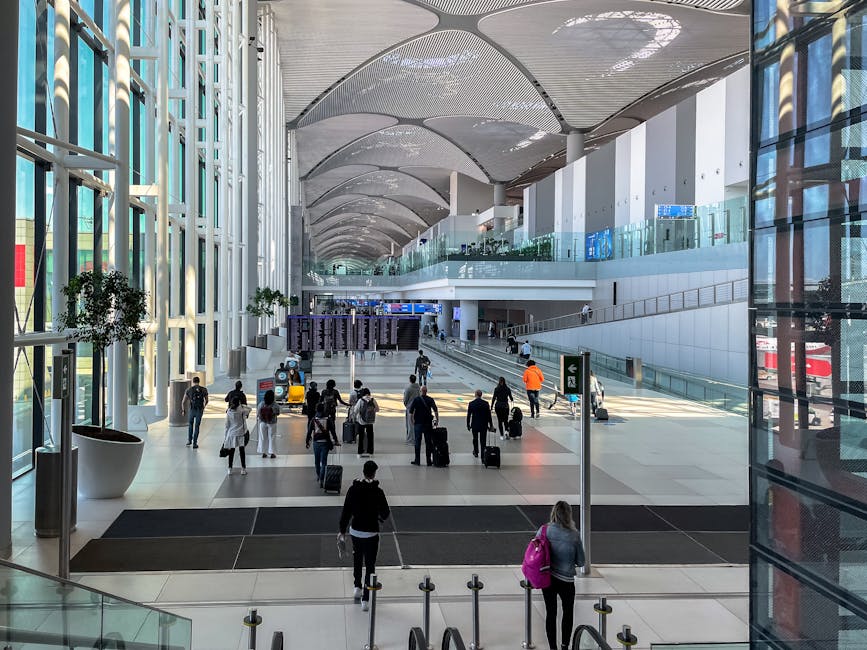
The single biggest source of missed flights at Incheon isn’t traffic or long queues — it’s people showing up at the wrong terminal. Incheon has Terminal 1 (T1) and Terminal 2 (T2), and they are about 15–18 minutes apart by the free Airport Railroad (AREX) connector shuttle. That shuttle runs every 5–7 minutes, but if you’re already cutting it close, those minutes feel like hours.
Here’s a quick breakdown of which airlines use which terminal in 2025:
- Terminal 1: Asiana Airlines, Korean Air cargo ops (some), most international carriers including Cathay Pacific, Singapore Airlines, Emirates, Delta, United, Lufthansa, and budget carriers like Air Arabia and Scoot.
- Terminal 2: Korean Air (main hub), SkyTeam alliance partners — Air France, KLM, China Southern, Czech Airlines, and from 2024 onward, some expanded codeshare operations.
- Always verify: Airline terminal assignments do shift. Check your e-ticket’s terminal code — it’ll say T1 or T2 — and cross-reference on the official Incheon Airport website (airport.kr) rather than third-party apps.
The Remote Concourse Trap Nobody Warns You About
Even within Terminal 1, there’s a layer most first-timers don’t know about: the Concourse (gates 230–270). After you clear immigration and security, you may need to take an underground Automated People Mover (APM) — a small subway-like train — to reach gates in the 230s and 260s. The ride itself is about 4–5 minutes, but factor in waiting time, walking to the platform, and you’re easily looking at 10–12 minutes before you reach your gate.
In 2025, flights to the US West Coast, some Southeast Asian routes, and several charter flights tend to cluster in these remote gates. If your boarding pass says gate 251 and you’re sipping a coffee at the duty-free section near gate 120, you’re in trouble.
Practical rule: If your gate number is 230 or above (in T1), start walking toward the APM at least 25–30 minutes before boarding time.
Getting There: AREX vs. Taxi vs. Limousine Bus — Real Cost Breakdown
This is where a lot of budget travelers make a surprising miscalculation. Let me lay it out clearly:
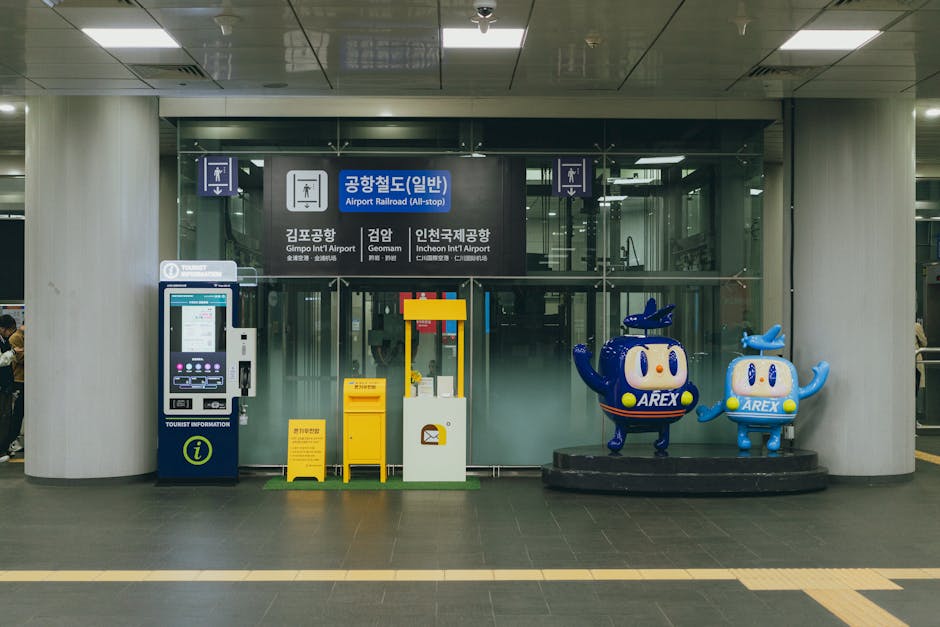
- AREX Express Train (Seoul Station → Incheon Airport T1/T2): ₩9,500–₩11,000 per person, ~43 minutes to T1, ~66 minutes to T2. Runs 5:20 AM to 12:00 AM. No luggage restrictions. Best for solo travelers or pairs.
- AREX All-Stop Train: ~₩4,150, roughly 66–80 minutes depending on stops. Budget option, but you’ll be standing with your bags during rush hour. Not fun.
- Limousine Bus (KAL Limousine, etc.): ₩17,000–₩25,000 depending on your Seoul district. Drops you curbside. Good for groups or if you’re staying outside central Seoul. Traffic is the wildcard — budget 90–120 minutes during morning/evening rush (7–9 AM, 5–8 PM).
- Taxi/Kakao Taxi: From Gangnam, expect ₩65,000–₩90,000 with expressway tolls. At 3 AM with a family? Actually reasonable when split. The Incheon Expressway toll alone is about ₩7,900 one-way.
- Driving yourself + Airport Parking: Short-term parking runs ₩1,200/10 minutes (up to ₩25,000/day for T1 P1 lot). Long-term lots (P3, P4) are ₩9,000/day but require a free shuttle. Good if you’re gone for more than 4–5 days.
Immigration & Security: Realistic Wait Time Data
In 2025, Incheon consistently ranks in the top 3 airports globally for efficiency (Skytrax World Airport Awards still have it at #2 as of the most recent ranking). But “efficient” is relative. Here’s what the data actually looks like:
- Peak hours for departure: 7–10 AM and 10 PM–1 AM. International departures cluster around these windows because of long-haul schedules to Europe and North America.
- Average security wait: 8–15 minutes off-peak, 20–35 minutes during peak. T2 tends to be slightly faster because of lower overall volume.
- Smart Entry / SES (Self Entry Service): Korean nationals and registered foreigners can use automated passport gates, cutting arrival immigration to under 3 minutes typically.
- K-ETA requirement: If you’re entering Korea (not just transiting), many nationalities still need a K-ETA pre-registration. As of early 2025, the K-ETA waiver program for select countries (US, EU, Japan, etc.) has been extended, but verify at k-eta.go.kr — policy updates happen without much fanfare.
Duty-Free, Lounges & The Hidden Perks
Incheon’s duty-free zone is genuinely one of the best in Asia — and I say that not as filler, but because the pricing on Korean cosmetics (Sulwhasoo, Innisfree, COSRX) and Korean spirits runs legitimately 20–35% below Seoul retail. The Lotte and Shilla duty-free pickup counters are post-security, so you can order online in advance and collect on the day.
For lounges — if you’re not flying business or holding a Priority Pass:
- Korean Air Prestige Lounge (T2): Regularly cited as one of the top 5 airline lounges in the world. Bibimbap on request. Access via KE business class or Morning Calm Premium card.
- Plaza Premium Lounge (T1, pre/post security): Accessible via Priority Pass. Decent, not spectacular. Worth it for the showers if you’re on a long layover.
- Capsule Hotels airside: YnTree Hotel within T1 offers sleeping pods from around ₩35,000–₩55,000 for a 4-hour block. A genuine lifesaver on a 7-hour transit.
Transit Layover? Here’s What’s Actually Worth Doing
If you have 5+ hours and you’re not checked through to a final destination requiring baggage retrieval, Incheon offers a free Transit Tour program (run by Korea Tourism Organization). As of 2025, options include a Seoul City Tour and a Korean Culture Experience — both free with your boarding pass at the Transit Tour desk (T1: Level 1, near gates 5–6 area).
For a shorter 2–3 hour layover, the Incheon Airport Sky Garden (Terminal 2, Level 4) and the Cultural Street (T1, Basement Level) both offer a genuine sense of Korean aesthetics without leaving the secure area. No tourist-trap energy — just good design.
If Something Goes Wrong: Practical Recovery Options
Delays, missed connections, lost baggage — Incheon handles these reasonably well, but you need to know where to go:
- Missed connection: Head immediately to the airline’s transfer desk (most have dedicated counters near arrivals, Level 1). Don’t queue at the main check-in — the transfer desk is separate and faster.
- Lost baggage: File the PIR (Property Irregularity Report) before leaving the airport. The counters are in baggage claim. Filing it online after the fact slows the process significantly.
- Airport information: Incheon’s 24-hour helpline is 1577-2600 (Korean/English/Chinese/Japanese). The staff at information desks genuinely speak functional English — not tourist-brochure English, but enough to actually help.
- Medical emergencies: There’s a 24-hour clinic in T1 (Level 1, near gate 5) and a pharmacy both pre and post-security.
Look, no airport guide eliminates all friction — that’s just the nature of international travel. But the difference between a chaotic experience and a smooth one at Incheon usually comes down to three things: knowing your terminal before you leave home, respecting the gate transit time for Concourse gates, and building a 30-minute buffer you absolutely do not touch. Think of that buffer as a non-negotiable item in your carry-on.
If you’re flying out of T2 on Korean Air, arrive with at least 3 hours before departure — more during Chuseok and Lunar New Year (Golden Week equivalents when the airport genuinely transforms). T1 with a budget carrier during off-peak? 2.5 hours is workable, but 3 is still smarter.
And if Soyeon’s story resonated with you — she made her flight, by 4 minutes, shoes half-on. She also now sets three calendar alarms the night before departure. Wisdom, earned at a sprint.
Editor’s note: Incheon is one of those airports that rewards people who do 20 minutes of prep and punishes those who assume it’ll all “just work out.” Bookmark the official airport.kr site, screenshot your terminal assignment, and if you’re transiting — please check whether you need a K-ETA. Safe travels in 2025!
📚 관련된 다른 글도 읽어 보세요
- 옆집 애는 다 하는데 내 아이만 뒤처지나? 2026년 미래 직업 대비 STEM 교육 전략 완전 정복
- AI-Powered Personalized Learning Systems in 2026: The Future of Education Is Already Here
- 옆집 애는 AI가 가르쳐주는데, 우리 애는 아직 학원 뺑뺑이? 2026년 AI 개인 맞춤형 학습 시스템 완전 해부
태그: []
Leave a Reply