Picture this: It’s a Tuesday afternoon in 2026, and your 14-year-old niece tells you she wants to be a ‘prompt engineer’ or a ‘climate data scientist.’ Five years ago, those job titles would have sounded like science fiction. Today, they’re listed on LinkedIn with six-figure salaries attached. That moment — that tiny, jarring conversation over dinner — is exactly why we need to talk seriously about STEM skill-building for the jobs of the near future.
We’re not just talking about learning to code anymore. The landscape has shifted dramatically. STEM competency in 2026 means the intersection of science, technology, engineering, and mathematics with creativity, communication, and ethical reasoning. Let’s think through this together — what’s actually happening in the job market, and how can you (or your kids) realistically prepare?
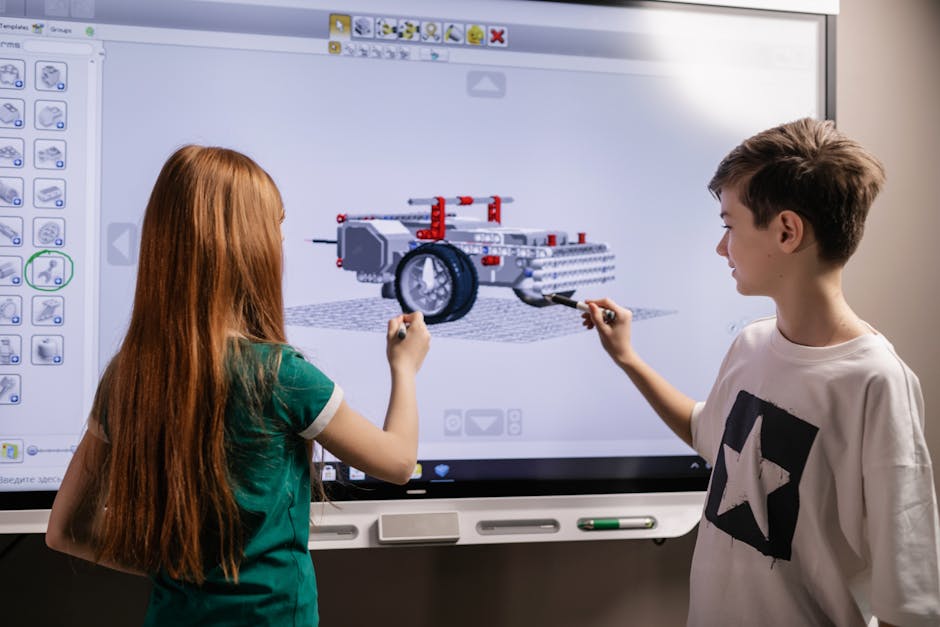
📊 What the Data Is Actually Telling Us About STEM Jobs in 2026
Let’s ground ourselves in real numbers before diving into advice. According to the U.S. Bureau of Labor Statistics’ 2026 Occupational Outlook, STEM occupations are projected to grow at nearly twice the rate of non-STEM occupations over the next decade. More specifically:
- Data Science & AI roles have seen a 38% year-over-year increase in job postings since 2023, with median salaries now hovering around $115,000–$160,000 in North America.
- Green technology engineering (solar, wind, battery storage) has exploded — the clean energy sector added over 400,000 new STEM jobs globally in 2025 alone.
- Biomedical engineering and synthetic biology roles are among the fastest-growing niches, fueled by post-pandemic investment in health infrastructure.
- Cybersecurity specialists remain critically short-staffed, with an estimated global talent gap of 3.5 million positions as of early 2026.
- Robotics process integration engineers — a relatively new hybrid role — are being recruited aggressively by logistics and manufacturing firms as automation accelerates.
Here’s the nuanced part that most career guides miss: it’s not enough to simply be in STEM. The jobs commanding premium salaries and long-term stability are those where STEM skills are layered with domain-specific knowledge — think a nurse who understands health informatics, or a lawyer who can fluently discuss algorithmic bias. This is what we mean by “STEM competency” in the modern sense.
🌍 How Schools and Companies Worldwide Are Already Adapting
The most exciting part of this story is that we don’t have to theorize — we can look at what’s already working around the world.
South Korea’s “AI Convergence Education” Initiative (2025–2028) is a great domestic case study. The government mandated that every middle and high school student receive at least 68 hours annually of AI literacy education, blending computational thinking with ethics and real-world application. Early results from 2025 show a measurable uptick in female students pursuing engineering pathways — up 22% compared to 2022 baselines.
Finland’s “Future Skills Lab” Program takes a different approach. Rather than a structured curriculum, Finnish schools in 2025 introduced project-based STEM electives where students collaborate with actual startups. A 16-year-old in Helsinki might spend a semester helping a biotech startup analyze environmental sensor data. The learning is messy, real, and deeply motivating.
In the United States, companies like Google, Microsoft, and Lockheed Martin have dramatically expanded their apprenticeship pipelines in 2025–2026, recognizing that four-year degrees are no longer the only (or even best) pathway into STEM careers. Google’s Career Certificates program now has over 2 million enrolled learners, and partner employers have collectively hired more than 150,000 certificate holders into STEM-adjacent roles.
Singapore’s SkillsFuture 2026 framework is arguably the most comprehensive government-led STEM upskilling initiative globally. It provides every citizen aged 25 and older with a yearly learning credit specifically earmarked for digital and STEM skills. The uptake rate in 2025 was a staggering 71%, showing that adults — not just students — are taking this seriously.
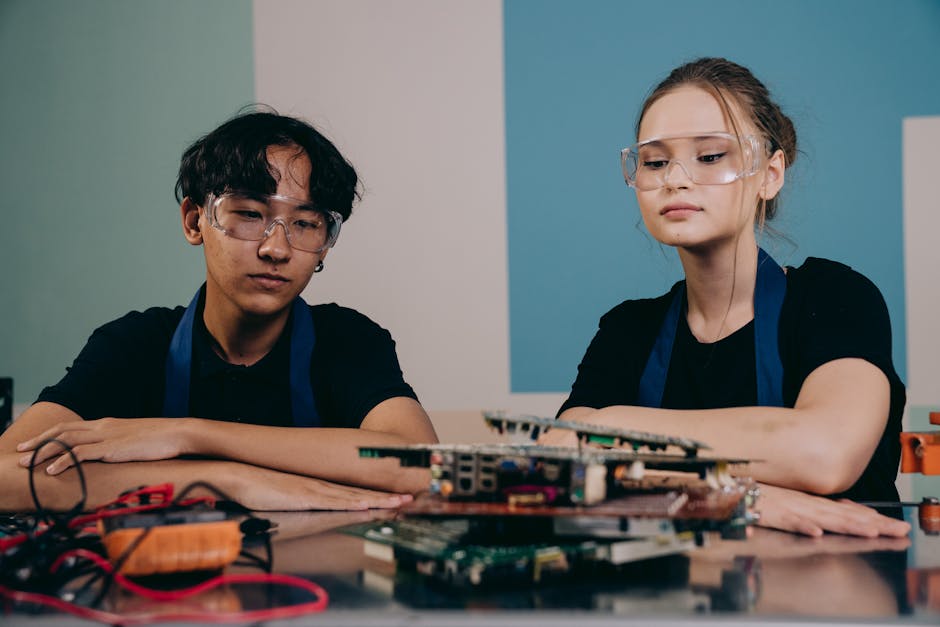
🛠️ Realistic Pathways: What You Can Actually Do Starting This Week
Okay, so we’ve established that STEM skills matter enormously and that the world is pivoting hard toward valuing them. But what does this mean for you, right now, in your specific situation? Let’s think through a few realistic scenarios:
If you’re a student (middle school through university): The single highest-leverage thing you can do is stop treating STEM subjects as isolated disciplines and start connecting them to things you already care about. Love music? Explore audio signal processing or the mathematics of music theory. Into fashion? Look into textile engineering or sustainable materials science. The goal is building a “T-shaped” skillset — deep expertise in one area, but broad enough STEM literacy to collaborate across fields.
If you’re a working professional in a non-STEM field: You don’t need to become a programmer. But you do need to become fluent enough to work alongside people who are. Consider dedicating 3–4 hours per week to structured learning. Platforms like Coursera, edX, and Brilliant.org have significantly improved their curriculum quality in 2025–2026, and many offer micro-credentials that are now recognized by HR departments at major employers.
If you’re a parent: The most impactful thing isn’t enrolling your child in every coding camp available. It’s fostering a mindset of systematic problem-solving and intellectual curiosity at home. Ask questions like “How do you think that works?” and “What would happen if we changed one thing?” This metacognitive habit is the root of STEM thinking.
- ✅ Khan Academy’s free STEM curriculum — still one of the best starting points, now with improved AI tutoring features in 2026
- ✅ MIT OpenCourseWare — free university-level content, great for self-directed adult learners
- ✅ Scratch & Python via Code.org — ideal entry points for kids aged 8–14
- ✅ Local makerspaces and STEM clubs — hands-on, community-based learning that beats screen time for retention
- ✅ Science Olympiad / FIRST Robotics (for students) — competitive, fun, and genuinely impressive on college applications
- ✅ LinkedIn Learning STEM Paths — structured for career changers, often reimbursed by employers
⚠️ The Honest Caveats Nobody Talks About
Let’s be real for a moment. Not every person needs to become a data scientist, and the relentless pressure to “learn to code or fall behind” is both exhausting and overstated. Here’s the more nuanced truth:
STEM skills exist on a spectrum. At one end, you have research scientists and machine learning engineers who live and breathe mathematics. At the other end, you have professionals in healthcare, education, policy, and the arts who simply need enough data literacy and technological fluency to do their jobs better. Most people need to aim for somewhere in the middle — and that’s absolutely achievable without upending your life or your career.
Also worth acknowledging: the gender and socioeconomic gaps in STEM access remain real. Programs like Girls Who Code (now operating in 42 countries as of 2026) and Code.org’s equity initiatives are doing important work, but systemic change is slow. If you’re in a position of influence — as a teacher, manager, or community leader — actively creating pathways for underrepresented groups in STEM isn’t just the ethical thing to do; it’s smart strategy for building the diverse, innovative teams that outperform homogeneous ones.
Editor’s Comment : What strikes me most about the STEM conversation in 2026 is how it’s finally moving away from the binary “tech bro culture vs. everyone else” framing. The most exciting development isn’t any single technology — it’s the growing recognition that STEM competency is a civic skill, like reading or writing, that helps people participate more fully in a world increasingly shaped by algorithms, data, and engineered systems. You don’t have to love math to benefit from understanding how it governs your daily life. Start small, stay curious, and remember that every expert was once a complete beginner who simply refused to stop asking questions.
태그: [‘STEM skills 2026’, ‘future career preparation’, ‘STEM education trends’, ‘career upskilling’, ‘data science careers’, ‘STEM for students’, ‘workforce of the future’]
Leave a Reply