So a friend of mine — let’s call her Jiyeon — showed up at Incheon Airport Terminal 1 last spring with a Korean Air ticket in hand, fully confident, rolling her suitcase past the check-in counters… only to realize her flight was departing from Terminal 2, a solid 18-minute shuttle ride away. She made it, barely, but her heart rate probably didn’t recover for a week. The worst part? She’d Googled “Incheon Airport” and just assumed Terminal 1 was the one. It’s an easy mistake — but in 2025, with more airlines shifting terminals and passenger volumes bouncing back hard post-pandemic, it’s a mistake that’s getting more expensive.
Let me walk you through everything I’ve dug up so you don’t end up sprinting through a moving walkway with a carry-on that weighs as much as a golden retriever.
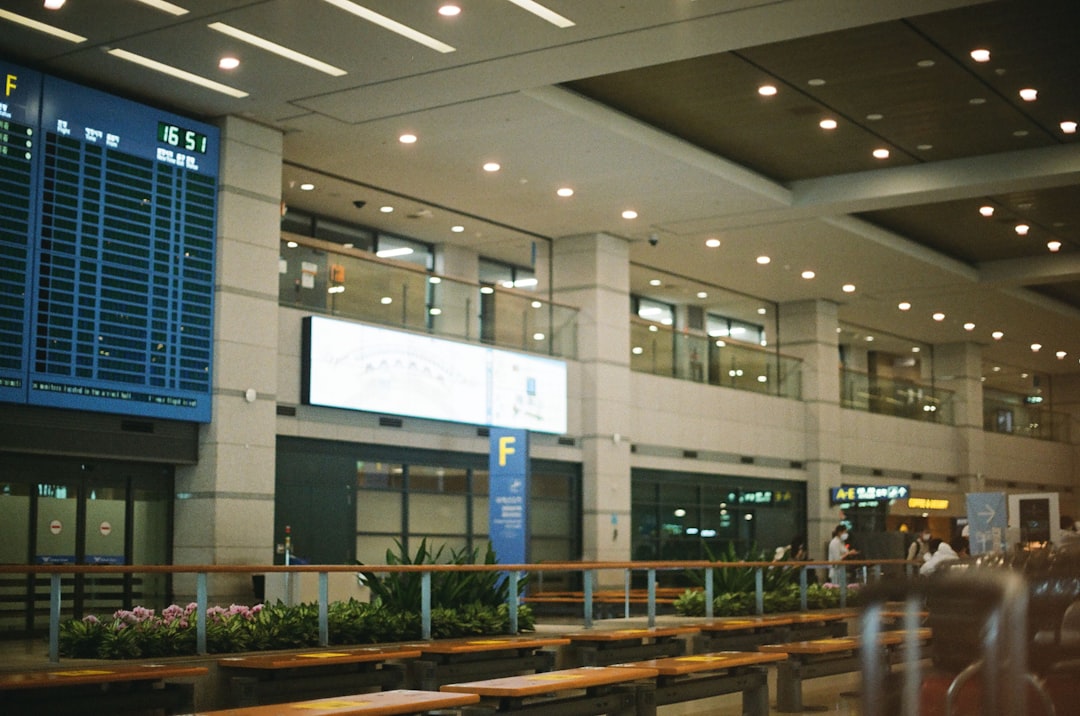
Terminal 1 vs Terminal 2: The Core Difference You Need to Know First
Incheon International Airport (IATA: ICN) officially opened Terminal 2 in January 2018, and in 2025 the split between the two terminals is very much alive and operationally significant. They are not connected by a walking path — you need the Airport Railroad (AREX) or the free inter-terminal shuttle bus, and that journey takes between 15 and 18 minutes under normal conditions. During peak hours or with luggage, budget 25 minutes minimum.
Here’s the critical airline breakdown as of 2025:
- Terminal 2 airlines: Korean Air (KE), Delta Air Lines (DL), Air France (AF), KLM Royal Dutch Airlines (KL), Garuda Indonesia (GA), Xiamen Air (MF), China Southern (CZ) — all SkyTeam core members plus select partners
- Terminal 1 airlines: Asiana Airlines (OZ), Jeju Air (7C), Jin Air (LJ), T’way Air (TW), Air Seoul (RS), Singapore Airlines (SQ), Cathay Pacific (CX), Japan Airlines (JL), United Airlines (UA), Lufthansa (LH), Emirates (EK), and the vast majority of international carriers
- Low-cost carrier concentration: Almost all Korean LCCs (budget carriers) operate from Terminal 1, specifically the Concourse building — accessed via the underground connector
If you’re flying with an alliance other than SkyTeam — think Star Alliance (Lufthansa, ANA, Singapore Airlines) or Oneworld (Cathay, JAL, British Airways) — you’re at Terminal 1, almost without exception. Bookmark that.
Getting Between Terminals: Don’t Just Wing It
The free shuttle bus runs every 5–7 minutes during peak hours (5:30 AM to 11:00 PM), and every 10–15 minutes during late night/early morning hours. It stops at both terminals and the Cargo Terminal in between. The AREX (Airport Railroad Express) also connects both terminals — it’s faster at about 6 minutes, but costs ₩900 (~$0.65 USD) for the inter-terminal hop, which feels absurd given the shuttle is free. Still, if every minute counts, take the train.
Pro tip that almost nobody mentions: if you’re checking in at Terminal 1 for a Terminal 2 flight (which can happen when you’re connecting domestically), the inter-terminal transfer time officially required by most airlines is at least 1 hour and 20 minutes. Build that into your itinerary or you’ll be the next Jiyeon.
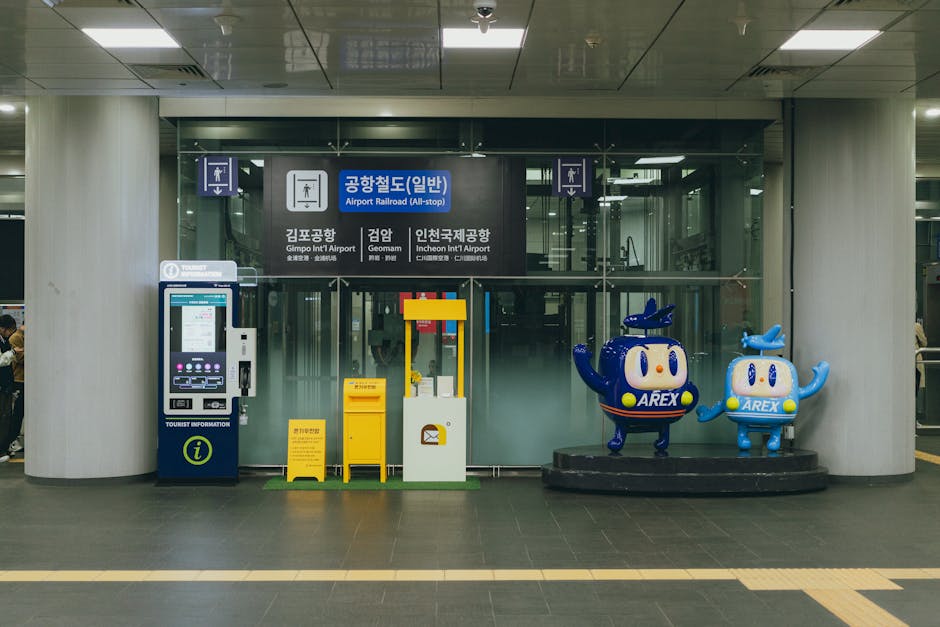
Ground Transportation in 2025: AREX, Taxis, and the KTX Direct Link
Here’s where things get genuinely exciting if you’re coming from Seoul. The AREX Express Train (not the all-stop commuter version) runs nonstop from Seoul Station to the airport in approximately 43 minutes and costs ₩11,000 (~$8 USD) one way as of 2025. The all-stop version takes about 66 minutes but costs only ₩4,150 (~$3 USD) — the price difference is real, but so is the time savings during rush hour.
Key AREX logistics:
- First train from Seoul Station: approximately 05:20 AM
- Last train to Seoul Station: approximately 22:50 PM (from Terminal 1) — double-check the real-time schedule at arex.or.kr because schedules adjust seasonally
- City check-in at Seoul Station: You can check your bags and get your boarding pass at Seoul Station before boarding — a genuinely underused service that eliminates airport queue stress entirely
- Express vs. commuter cost comparison: ₩11,000 vs ₩4,150 — for a family of four, that’s ₩27,400 (~$20) in savings just by taking the slower train
Taxis from central Seoul run approximately ₩65,000–₩85,000 depending on traffic (Kakao Taxi or regular deluxe), while Kakao Black (premium) hits ₩100,000+. During late-night hours with the late-night surcharge, budget up to ₩90,000 from Gangnam. Honestly? For solo travelers, AREX wins on almost every metric. For groups of 3–4 with heavy luggage, a taxi or Kakao becomes competitive on a per-person basis.
Lounge Access and Hidden Gems Most Travelers Skip
Both terminals have their own lounge ecosystems, but the quality gap is real. Terminal 2 — anchored by Korean Air’s flagship Prestige Lounge — is widely regarded as one of the best airline lounges in Asia as of 2025, with private shower suites, à la carte Korean dining, and sleep pods. Terminal 1’s Korean Air lounge is solid but distinctly secondary.
For non-premium travelers, third-party lounge options worth knowing:
- Sky Hub Lounge (T1): Accessible via Priority Pass, Dragon Pass, and some credit card memberships — decent food spread, showers available, consistently rated 3.8/5 on LoungeBuddy
- Matina Lounge (T1 & T2): Korean domestic lounge chain with solid bibimbap and surprisingly fast Wi-Fi (tested at 180 Mbps in early 2025)
- Korean Air Lounge T2: Business class, First Class, or Million Miler — the à la carte doenjang jjigae alone is worth status chasing
One thing that surprises a lot of first-timers: Incheon has a transit hotel (inside the secure zone at Terminal 1) called the Incheon Airport Hotel, operated by the airport authority. Rooms run approximately ₩50,000–₩80,000 for 6-hour blocks. If you have a long overnight connection, this is dramatically cheaper and more comfortable than a landside hotel, because you don’t clear immigration twice.
Duty-Free, Dining, and the Real Price Comparison
Incheon’s duty-free market is vast — 52,000 square meters of retail across both terminals — but the pricing reality in 2025 is more nuanced than the “always cheaper at duty-free” myth suggests. For perfumes and cosmetics (SKII, Sulwhasoo, Lancôme), airport duty-free consistently beats online Korean retailers by 10–20%. For electronics, the gap has narrowed significantly; domestic Korean e-commerce (Coupang, 11st) often matches or beats duty-free pricing on Samsung and LG products.
Where Incheon genuinely shines is Korean food in the non-secure zone: the food court on Level B1 at Terminal 1 has gukbap (Korean rice soup), kalguksu, and bibimbap at prices ranging from ₩9,000–₩14,000 — cheaper than most Seoul restaurants. After security, prices predictably jump, but the Korean BBQ restaurant near Gate 28 in Terminal 1 has cultish devotion among frequent flyers for good reason.
Practical 2025 Checklist Before You Leave for the Airport
- ✅ Confirm your terminal (T1 or T2) on your e-ticket — it will say explicitly; don’t rely on the airline name alone
- ✅ Check if your airline has moved terminals — Korean Air codeshares on non-KE metal sometimes depart from T1
- ✅ If using AREX, check the schedule the night before at arex.or.kr — occasional maintenance closures happen
- ✅ Seoul Station City Check-in closes at 19:00 for flights departing after 23:00 — plan accordingly
- ✅ Budget at least 3 hours before international departure if checking bags; 2 hours is the hard minimum and leaves zero buffer
- ✅ Download the Incheon Airport app (iOS/Android) — real-time gate changes, lounge maps, and shopping navigation are genuinely useful
- ✅ Pocket Wi-Fi rental counters are in the arrivals hall, Level 1, in both terminals — prices in 2025 run ₩8,000–₩11,000/day; pre-booking online saves 20–30%
One last thought before you zip up that carry-on: Incheon is genuinely one of the most well-run airports in the world — it’s ranked in the global top 3 by Skytrax consistently — but its size and the two-terminal split catch people off guard every single day. The travelers who breeze through are the ones who spent 10 minutes confirming their terminal, their train schedule, and their lounge access before leaving home. That’s really it. The airport itself will take care of the rest.
📚 관련된 다른 글도 읽어 보세요
- Why I Almost Gave Up on Staking — A Real 2025 Guide to Crypto Staking Rewards
- 2026년 가성비 쩌는 싱글몰트 위스키 Top3 — 10만원대에서 진짜 명품 맛 나는 거 골라봤습니다
- 비교해보니 진짜 차이 났다 — 2026년 기준 슬랙 vs 팀즈 vs 노션, 실무에서 살아남는 협업툴 선택법
태그: []
Leave a Reply