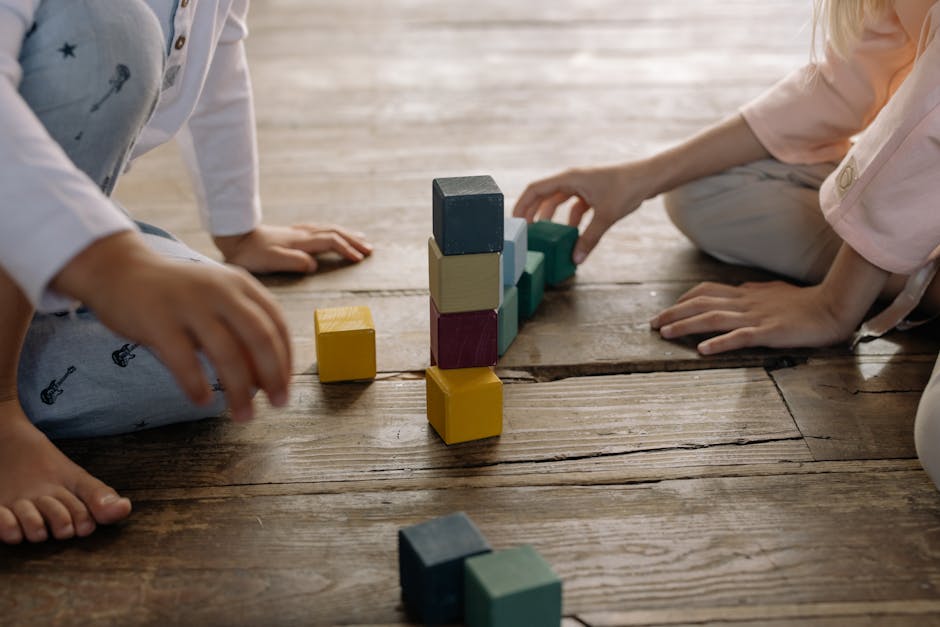
Picture this: a room full of two-year-olds, blocks scattered across a colorful mat, and one little girl carefully handing a blue cube to the boy next to her — unprompted, unrehearsed. Her caregiver watches, a little stunned. That tiny gesture? It’s not just cute. It’s the brain doing some of its most sophisticated social wiring. If you’ve ever wondered whether structured play really makes a difference for your young child’s social skills, or whether it’s just organized chaos with snacks — let’s think through this together.
What Does “Social Development Through Play” Actually Mean?
Before we dive into the data, let’s get on the same page. Socio-emotional development in infants and toddlers (roughly ages 0–6) refers to how children learn to recognize emotions, regulate their own feelings, cooperate, empathize, and communicate with others. Play-based learning — sometimes called play pedagogy in academic circles — uses structured and unstructured play as the primary vehicle for teaching these skills. It’s not babysitting with toys; it’s intentional design.
The Science Behind the Fun: What the Data Says in 2026
The evidence has been building steadily, and by 2026, the consensus among developmental psychologists is pretty compelling. Here’s what current research is telling us:
- Mirror neuron activation: Studies from the Center for Developmental Cognitive Neuroscience (updated findings, early 2026) confirm that cooperative play in children under age 5 activates mirror neuron systems more reliably than passive instruction — essentially, watching a peer share a toy teaches empathy faster than being told to share.
- Language acceleration: Children engaged in peer play environments for as few as 5–7 hours per week show vocabulary gains 30–40% faster than those in primarily adult-led instruction settings, according to a longitudinal study spanning 12 countries published in the Journal of Child Development (2025–2026 cohort data).
- Conflict resolution skills: Even toddler arguments over toys — the infamous “mine!” phase — are now understood to be critical rehearsals. Research from Seoul National University’s Child Development Lab (2026) shows children who experience and resolve peer conflicts in guided play settings develop significantly better emotional regulation by age 7.
- Attachment and trust formation: Play that involves a trusted adult (parent or educator) acting as a play partner rather than a director builds what researchers call “secure base exploration” — the child feels safe enough to take social risks with others.
- Reduced anxiety markers: A 2026 meta-analysis from the OECD’s Early Childhood Education Task Force found that children in play-rich early education environments showed 22% lower cortisol stress markers during social interactions by kindergarten age compared to peers in drill-and-practice settings.
Global Examples That Are Getting It Right
Let’s look at some real-world models that are worth knowing about, because the theory gets much more interesting when you see it in action.
🇫🇮 Finland’s Varhaiskasvatussuunnitelma (VASU) Framework: Finland remains a benchmark case. Their early childhood curriculum, VASU, explicitly prioritizes child-led play as the dominant mode of learning from birth through age 6. Social competency — including turn-taking, listening, and collaborative problem-solving — is assessed through observation of play rather than structured tests. By age 8, Finnish children consistently outperform OECD averages in peer cooperation metrics.
🇰🇷 South Korea’s Nuri Curriculum (누리과정) Evolution: South Korea’s Nuri Curriculum, which covers ages 3–5, underwent significant revision in 2020 and has been refined further through 2025–2026 with a heavier emphasis on cooperative play zones (협동 놀이 구역) in public kindergartens. The latest government education ministry data from 2026 shows classrooms implementing structured cooperative play blocks for a minimum of 90 minutes daily report measurably higher peer relationship quality scores at age 6 — a finding that’s shifting national policy conversations.
🇳🇿 New Zealand’s Te Whāriki Approach: One of the most holistic frameworks globally, Te Whāriki weaves cultural identity, relationships, and play into a single curriculum strand. The “Belonging” and “Contribution” strands specifically target social development through communal storytelling play and multi-age group interactions — something Western urban education systems are now actively borrowing from.
🇸🇬 Singapore’s I Am Confident, Curious, and Creative (I3C) Initiative: Launched as a 2025–2026 pilot across 40 childcare centers, Singapore’s I3C program focuses on reducing structured academic drilling in the under-4 cohort and replacing it with adult-facilitated social play. Early results? Children in the pilot showed 18% improvement in peer interaction frequency and a notable drop in separation anxiety rates.
But What Does This Look Like at Home?
Here’s where I want to be really honest with you, because not every family has access to a play-based preschool or a curriculum-driven daycare. And that’s okay — the principles are absolutely replicable at home. Let’s think through some realistic alternatives:
- Parallel play first, together play later: For children under 2, don’t stress if they seem to play “alongside” rather than “with” another child. Parallel play is developmentally appropriate and is actually the social rehearsal stage. Simply being near other children is enough early on.
- Rotate play partners: If your child is primarily at home, regular playdates with 1–2 consistent peers (not large groups) are far more effective than occasional big gatherings. Familiarity builds the social safety needed to practice cooperation.
- Use “sportscasting”: This is a technique borrowed from RIE (Resources for Infant Educarers) philosophy — narrate what you observe during play without intervening. “I see you both want the red car. I wonder what you’ll do.” This supports children’s own conflict resolution rather than adults solving it for them.
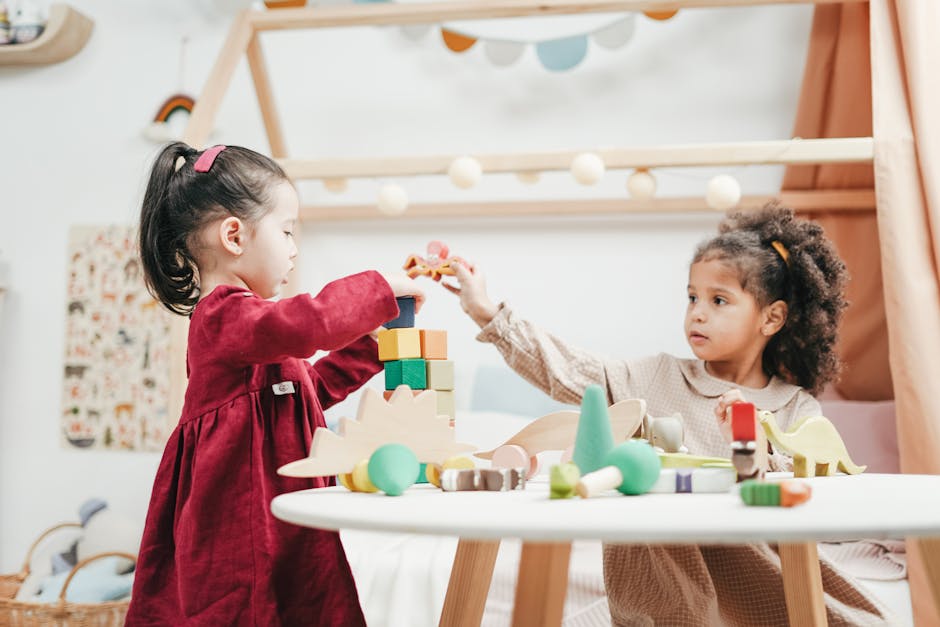
- Play with purpose, but don’t over-engineer: Open-ended toys (blocks, clay, sand, simple dolls) create more social negotiation opportunities than single-function electronic toys. The ambiguity forces children to communicate.
- Community programs on a budget: Public library story-play sessions, community center toddler gyms, and neighborhood park meetups are genuinely effective social play environments — and free. Don’t underestimate them in favor of expensive structured programs.
A Realistic Reality Check: What Play Can’t Fix Alone
I’d be doing you a disservice if I made this sound like play is a magic fix for every developmental concern. Children with speech delays, sensory processing differences, or developmental conditions like autism spectrum disorder (ASD) benefit enormously from play-based social learning — but often need additional, specialized support layered in. Play is the foundation, not the entire house. If you’re noticing consistent struggles with social engagement even in comfortable, familiar play environments, a conversation with a developmental pediatrician or child psychologist is always the smart move — and the earlier, the better.
Editor’s Comment : What strikes me most every time I research this topic is how counterintuitive it feels in a world obsessed with early academic achievement — that the single most powerful thing you can do for your young child’s future social intelligence is simply let them play, thoughtfully. Not more flashcards, not earlier reading drills. Play. The data in 2026 is clearer than ever on this, and yet the pressure many parents feel to “accelerate” their toddlers academically remains real and persistent. If I could offer one reframe: social competency — the ability to cooperate, empathize, negotiate, and connect — is increasingly recognized as a stronger long-term predictor of life outcomes than early academic metrics. So the next time your two-year-old is “just playing,” know that their brain is working incredibly hard. Your job is mostly to protect that time.
태그: [‘play-based learning’, ‘toddler social development’, ‘early childhood education 2026’, ‘infant social skills’, ‘cooperative play’, ‘preschool social learning’, ‘child development research’]
Leave a Reply