Picture this: you’re at a playdate in early 2026, and your neighbor’s 18-month-old is confidently pointing at things and saying “dog!” “ball!” “more juice!” — while your own toddler mostly communicates through enthusiastic grunting and a surprisingly expressive range of facial expressions. Sound familiar? Before you spiral into a late-night Google rabbit hole, let’s take a breath and actually think this through together.
Language development in young children is one of the most misunderstood areas of early parenting — partly because every child genuinely is different, and partly because we’re often comparing our kids to highlight reels rather than reality. In 2026, with more accessible pediatric research and a growing awareness of neurodiversity, we have better tools than ever to understand what’s typical, what’s a variation of normal, and when to seek a little extra support.
So let’s walk through the actual stages, the science behind them, and — most importantly — what you can realistically do to nurture your child’s communication journey.
🧠 The Science Behind Early Language: It’s More Than Just Words
Before we hit the milestones, it helps to understand why language develops the way it does. Language acquisition involves two intertwined systems:
- Receptive language — what a child understands (this always develops faster than expressive language)
- Expressive language — what a child can actually say or communicate outwardly
According to the American Speech-Language-Hearing Association (ASHA) and updated 2025–2026 clinical guidelines, children’s brains undergo a remarkable period of synaptic pruning between ages 1 and 3 — essentially, the brain is aggressively organizing itself, cutting weak connections and strengthening the ones it uses most. This is why early, rich language exposure matters so enormously during this window.
📅 Stage-by-Stage Breakdown: Birth to Age 5
Here’s a realistic, research-backed look at what most children are doing at each stage. Remember: these are averages, not deadlines.
- 0–3 Months: Cooing, crying with distinct tones, startling at sounds. Your baby is already tuning into the rhythm of your voice.
- 4–6 Months: Babbling begins — those delightful “babababa” and “mamama” strings. This is pre-language, but it’s cognitively significant.
- 7–12 Months: Babbling becomes more varied. Most babies say their first real word somewhere between 10–14 months. “Mama,” “dada,” and object names are common first words.
- 12–18 Months: Vocabulary typically grows to 10–50 words. Children begin pointing (a huge communicative milestone), waving, and understanding simple commands like “come here.”
- 18–24 Months: The famous vocabulary explosion — many kids add several new words per week. Two-word combinations (“more milk,” “daddy go”) start appearing around 18–21 months.
- 2–3 Years: Sentences of 3–4 words. Strangers should be able to understand about 75% of what a 3-year-old says. Grammar instincts start kicking in — often hilariously (“I goed to the park!”).
- 3–4 Years: Complex sentences, storytelling, asking “why” questions incessantly (prepare yourself). Most children can be understood by strangers nearly 100% of the time.
- 4–5 Years: Near-adult sentence structure. Children can retell stories, follow multi-step instructions, and engage in back-and-forth conversation.
🌍 What Research and Real Families Around the World Show Us in 2026
One of the most compelling shifts in our understanding of toddler language development comes from cross-cultural research. A landmark longitudinal study published in the Journal of Child Language (updated analysis, 2025) tracked children across South Korea, Finland, Brazil, and Canada — and found that while timing of milestones varied by up to 3–4 months across cultures, the sequence remained remarkably consistent.
In South Korea, for instance, where the concept of 눈치 (nunchi) — reading a room without words — is culturally embedded, children often showed slightly delayed expressive language but highly advanced receptive and social-pragmatic language skills. Korean speech-language pathologists have noted this cultural nuance and updated their 2026 screening protocols accordingly, separating expressive and receptive benchmarks more explicitly.
In Scandinavia, early childhood programs like Finland’s neuvola system provide routine language screenings at 18 months and 2.5 years — not to alarm parents, but to catch subtle delays early when intervention is most effective. In 2026, several U.S. states including California and Massachusetts have started piloting similar universal early language screening programs, moving away from a “wait and see” default approach.
Meanwhile, bilingual and multilingual households — increasingly the norm globally — have their own unique picture. Children learning two languages simultaneously may have smaller individual vocabularies in each language but a combined vocabulary that meets or exceeds monolingual peers. This is completely normal and not a red flag.

🚩 Signs Worth Paying Attention To (Without Panicking)
There’s a difference between natural variation and genuine developmental concerns. Here are some signals that warrant a conversation with your pediatrician or a speech-language pathologist (SLP):
- No babbling by 12 months
- No single words by 16 months
- No two-word phrases by 24 months
- Loss of previously acquired language skills at any age (this is always worth prompt attention)
- Not responding to their name consistently by 12 months
- Significant difficulty being understood by familiar adults at age 3
It’s worth knowing that early intervention — ideally before age 3 — is consistently shown to produce far better outcomes than waiting. The 2026 update to the CDC’s “Learn the Signs. Act Early.” campaign emphasizes that seeking evaluation is not overreacting — it’s good parenting.
💡 Realistic Things You Can Actually Do Every Day
Here’s where I want to be genuinely practical rather than giving you a Pinterest-worthy list of crafts you’ll never do. The research is clear: the quality of language interaction matters more than flashcards or apps.
- Serve and return conversations: When your baby babbles, respond as if they said something meaningful. This back-and-forth is neurologically foundational.
- Narrate your day: “Now we’re washing your hands. The water is warm, right?” You don’t need a script — just talk.
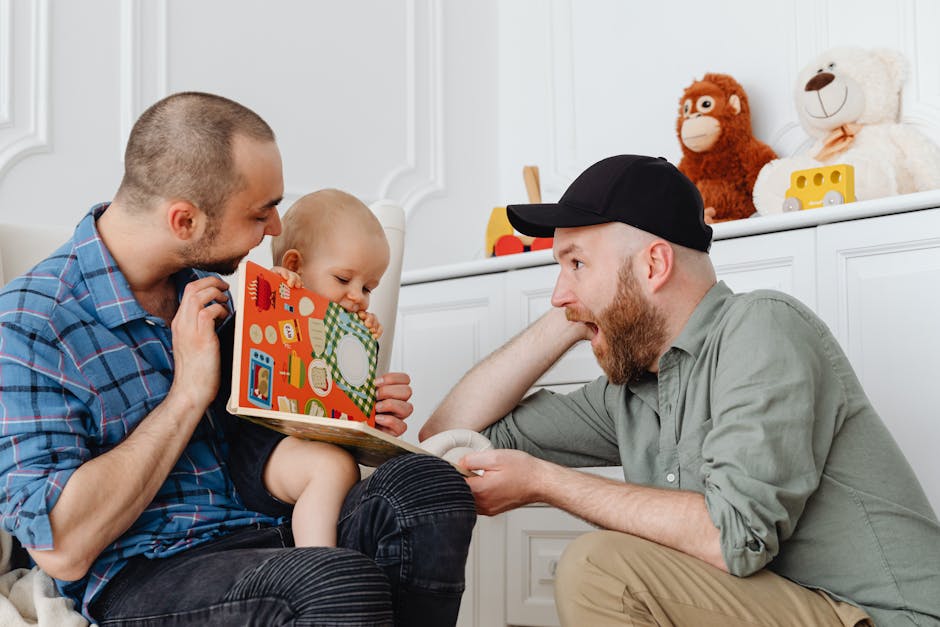
- Read together, but don’t just read: Point at pictures, ask “what’s that?”, let your child turn the pages, pause and wonder aloud. Interactive reading beats passive reading every time.
- Limit background TV/audio: Background noise (especially adult speech on TV) has been shown to disrupt language processing in toddlers. Dedicated, focused interaction time is what builds neural pathways.
- Follow their lead: If your toddler is fascinated by trucks right now, talk about trucks. Children learn language fastest when it’s attached to things they care about.
- Embrace silence and waiting: Give your child processing time. Resist filling every pause — that pause is where language learning is happening.
📱 A Word on Screen Time and Language in 2026
In 2026, the conversation around screens and toddler language has matured considerably. The current consensus (American Academy of Pediatrics, updated 2025 guidelines) is nuanced: passive, solo screen time before age 2 shows limited language benefit and potential disruption to sleep and attention. However, interactive video chatting with grandparents or caregivers does support language development — because it involves real, responsive human interaction.
For ages 2–5, high-quality, slow-paced programming (think current equivalents of classic educational shows) used in limited doses with parental co-viewing and discussion can be a legitimate supplementary tool. The keyword is together.
🔄 Realistic Alternatives: When One Approach Isn’t Working
Sometimes parents try all the “right” things and their child still seems to be lagging. Here’s what I’d genuinely suggest exploring:
- Request an SLP evaluation early: You don’t need a pediatrician’s referral in most U.S. states and many countries. Early intervention programs are often free or low-cost for children under 3.
- Explore augmentative communication tools: For children with significant expressive delays, tools like simple picture boards or AAC (Augmentative and Alternative Communication) apps don’t replace speech — they build it by reducing communication frustration.
- Reconsider the environment: Childcare settings vary enormously in language richness. A setting with trained caregivers who use “serve and return” interaction can make a measurable difference.
- Check hearing: This sounds basic, but a significant number of language delays are rooted in undetected mild hearing loss. A simple audiological screening can rule this out quickly.
The journey of watching a child find their voice — literally — is one of the most remarkable things a parent gets to witness. Some kids are early talkers who narrate everything by age 2. Others are quietly absorbing everything and suddenly unleash full sentences at 2.5. Both are real, both are valid.
What matters most isn’t hitting a milestone on a specific date — it’s building a relationship where your child feels heard, understood, and safe to try. That’s the foundation everything else is built on.
Editor’s Comment : If there’s one thing I want you to take from this piece, it’s that curiosity is a better parenting tool than anxiety. Watch your child, talk with them (not just at them), and trust your instincts enough to ask for help when something feels off. In 2026, the resources are better than they’ve ever been — use them without shame.
태그: [‘toddler language development 2026’, ‘early childhood speech milestones’, ‘language development stages toddlers’, ‘speech delay signs children’, ‘bilingual toddler language’, ‘early intervention speech therapy’, ‘child communication development’]
Leave a Reply