Picture this: It’s a Monday morning in March 2026, and eight-year-old Emma refuses to get out of bed — again. She complains of a stomachache, clings to her mother’s sleeve, and bursts into tears at the thought of going to school. Her parents are exhausted, confused, and honestly a little heartbroken. Is she just being dramatic? Is something seriously wrong? The truth, as most child psychologists will tell you, usually sits somewhere in between — and the answer almost always starts with understanding what anxiety actually looks like in children.
Childhood anxiety isn’t a new phenomenon, but it’s getting harder to ignore. Let’s think through this together, step by step.
📊 What the Numbers Are Telling Us in 2026
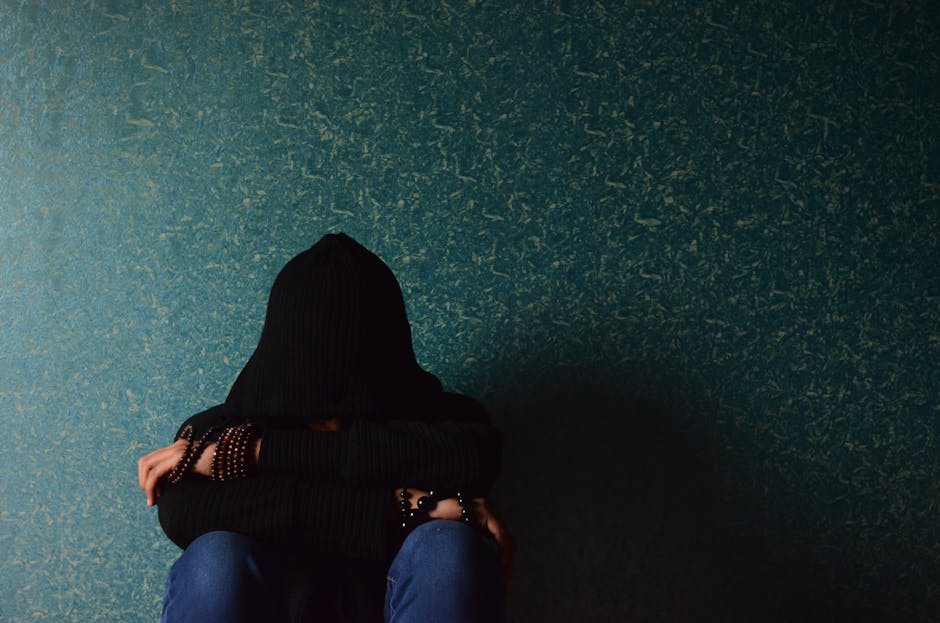
According to the World Health Organization’s 2026 global mental health update, anxiety disorders now affect approximately 1 in 5 children between the ages of 5 and 17 worldwide. In South Korea, the National Mental Health Survey (2026 edition) reports a 34% increase in anxiety-related referrals among elementary school children compared to five years ago — a trend mirrored in the United States, the UK, and Australia.
What’s driving this? Researchers point to a convergence of factors:
- Post-pandemic social recalibration: Children who spent critical developmental years in reduced social environments are still catching up on emotional regulation skills.
- Digital overstimulation: Average screen time for children aged 6–12 has climbed to nearly 5.2 hours per day globally (Common Sense Media, 2026), correlating with heightened anxiety sensitivity.
- Academic pressure: Competitive schooling cultures — especially in East Asian countries — continue to create chronic low-grade stress from very early ages.
- Family instability: Economic uncertainty in the post-inflationary climate of 2025–2026 has increased household stress, which children absorb more readily than many parents realize.
🔍 Recognizing the Symptoms: It’s Not Always What You Think
Here’s where many parents get tripped up — childhood anxiety rarely looks like an adult having a panic attack. Kids don’t always say “I feel anxious.” Instead, they show it through behavior and physical complaints. Watch for these signs:
- Physical symptoms: Frequent headaches, stomachaches, nausea, or muscle tension with no clear medical cause
- Sleep disturbances: Difficulty falling asleep, nightmares, or insisting on sleeping with parents beyond a typical developmental stage
- Avoidance behavior: Refusing school, social events, or activities they previously enjoyed
- Excessive reassurance-seeking: Repeatedly asking “Are you sure it’ll be okay?” or “What if something bad happens?”
- Irritability and meltdowns: Anxiety often disguises itself as anger, especially in boys
- Perfectionism or fear of mistakes: Erasing homework repeatedly, crying over small errors
- Clinginess or separation difficulty: Particularly in younger children (ages 4–8)
A key distinction worth making here: some anxiety is developmentally normal. Fear of the dark at age 5 or nervousness before a school presentation at age 10 is healthy. It becomes a concern when it’s persistent, disproportionate, and interfering with daily life.
🌍 Real-World Examples: How Different Countries Are Responding
Let’s look at what’s actually being done around the world — because the approaches vary widely and there’s a lot we can learn from comparing them.
South Korea (2026): Following a landmark government initiative called the Child Mental Health Care Act passed in late 2024, Korean elementary schools are now required to have at least one certified school counselor per 300 students. The Ministry of Education has also introduced a “Emotional Growth Hour” (정서성장시간) — a weekly 40-minute session where children engage in art therapy, mindfulness activities, or group discussion facilitated by trained teachers. Early results from the 2025–2026 school year show a 22% reduction in anxiety-related school refusal cases in participating schools.
United Kingdom: The NHS’s CAMHS (Child and Adolescent Mental Health Services) expanded its “Early Help” tier in 2025, offering low-threshold anxiety support groups for children aged 5–11 without requiring a formal clinical referral. A particularly effective program, Cool Kids (originally developed in Australia), has been rolled out across 600+ UK primary schools, teaching children cognitive-behavioral techniques through storytelling and role-play.
United States: Several states — including California, Colorado, and New York — have passed mental health education mandates requiring anxiety literacy to be embedded into health curricula from Grade 1. Organizations like the Child Mind Institute report that schools using Coping Cat, a CBT-based anxiety program for children, see measurable improvement in 60–70% of participating kids within 16 weeks.
Japan: Interestingly, Japan has taken a more community-based approach. “Kodomo Shokudo” (children’s cafeterias) — originally food support programs — have evolved into informal community mental health hubs where children can talk openly with trusted adults in a non-clinical setting. This low-stigma model is being studied internationally as a culturally adaptive mental health tool.
🛠️ Practical Coping Strategies: What Actually Works
Now, let’s get to the part that matters most for you as a parent or caregiver. Research-backed strategies aren’t always complicated — in fact, the most effective ones are often surprisingly simple when applied consistently.
- Validate first, solve second: Before jumping into “it’ll be fine!” mode, try saying “That sounds really hard. Tell me more about what’s worrying you.” Validation reduces the emotional intensity and builds trust.
- Teach the “worry brain” concept: Explain to children (even young ones) that their brain has a “worry alarm” that sometimes goes off even when there’s no real danger. This externalizes anxiety and helps kids feel less broken or weird.
- Breathing techniques — but make them fun: “Balloon breathing” (breathe in to inflate an imaginary balloon, breathe out slowly to deflate it) or “5-finger breathing” (trace each finger with a breath) are effective and child-friendly. Practice when calm, not just during anxiety episodes.
- Gradual exposure, not avoidance: This is crucial. Allowing a child to avoid anxiety triggers temporarily relieves distress but reinforces anxiety long-term. Work with them to take small, manageable steps toward the feared situation — always at their pace but with gentle encouragement.
- Predictable routines: Anxiety thrives in uncertainty. Consistent meal times, bedtime rituals, and school morning routines are genuinely therapeutic for anxious children.
- Limit anxious parent modeling: Children are emotional mirrors. If you catastrophize, ruminate out loud, or over-protect, they learn that the world is dangerous. This one takes honest self-reflection.
- Screen time boundaries with intention: It’s not just about reducing screen time — it’s about what replaces it. Unstructured outdoor play and physical activity are among the most evidence-backed anxiety reducers for children.
🏥 When to Seek Professional Help
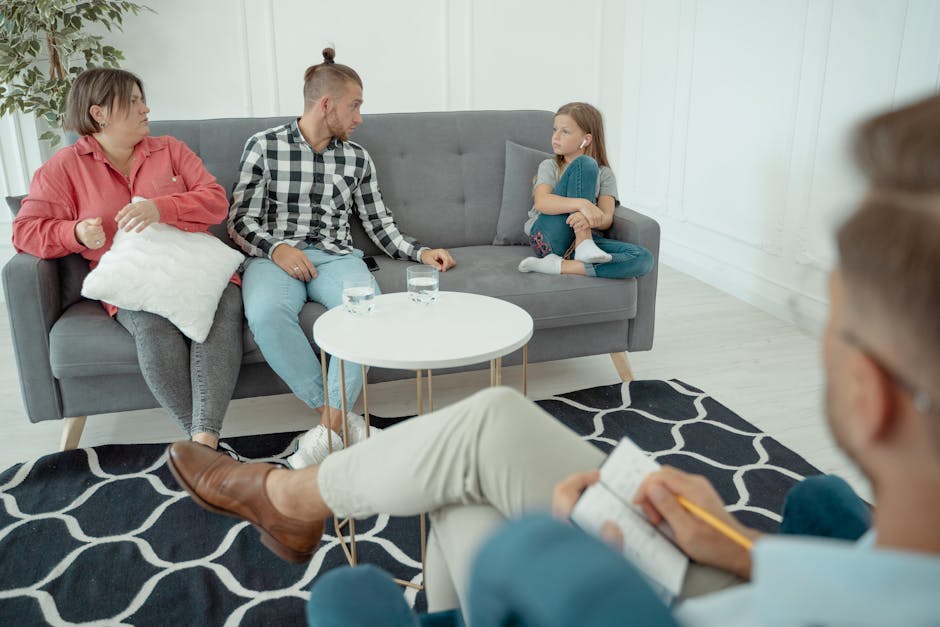
If your child’s anxiety has lasted more than 4–6 weeks, is significantly impacting school attendance or friendships, or involves panic attacks, selective mutism, or extreme physical symptoms — it’s time to consult a professional. Start with your pediatrician, who can rule out medical causes and refer to a child psychologist or psychiatrist.
Cognitive Behavioral Therapy (CBT) remains the gold-standard treatment for childhood anxiety disorders, with response rates of 60–80% in clinical studies. For younger children (under 7), play therapy and parent-child interaction therapy (PCIT) are also highly effective. Medication (typically SSRIs) is occasionally considered for moderate-to-severe cases but is almost always used alongside therapy, not as a standalone solution.
The good news? Childhood anxiety, when addressed early, has excellent outcomes. Most children who receive appropriate support see significant improvement — and develop resilience skills that serve them well into adulthood.
Editor’s Comment : What strikes me most when researching childhood anxiety is how often it goes unrecognized simply because adults expect it to look a certain way. The stomachache that keeps your child home from school, the meltdown over a misplaced pencil, the child who always needs to know the plan — these aren’t bad behavior or weak character. They’re often a nervous system doing its best to cope with a world that feels overwhelming. The most powerful thing any parent can do isn’t finding the perfect therapy program or the right app — it’s slowing down, getting curious, and letting your child know that their feelings make sense. That alone shifts something. Start there, and build from it.
태그: [‘childhood anxiety symptoms’, ‘child mental health 2026’, ‘anxiety coping strategies for kids’, ‘signs of anxiety in children’, ‘child psychology treatment’, ‘parenting anxious children’, ‘CBT for children’]
Leave a Reply