Picture this: It’s 3 a.m., and a tiny human is screaming at full volume. You’ve fed them, changed them, rocked them — and yet, there you are, bleary-eyed, wondering if you’re doing anything right. Sound familiar? Here’s the thing most parenting books don’t tell you upfront — those exhausting, repetitive moments of showing up? That’s exactly where infant attachment (영아 애착 형성) is being built, one sleepless night at a time.
Attachment theory, first introduced by British psychiatrist John Bowlby in the 1950s and later expanded by Mary Ainsworth’s landmark Strange Situation studies, tells us that the emotional bond formed between a caregiver and an infant during the first 18 months of life shapes nearly every dimension of that child’s future — from emotional regulation to academic performance to adult relationship quality. Let’s think through this together, because understanding why it matters makes it so much easier to know how to do it well.
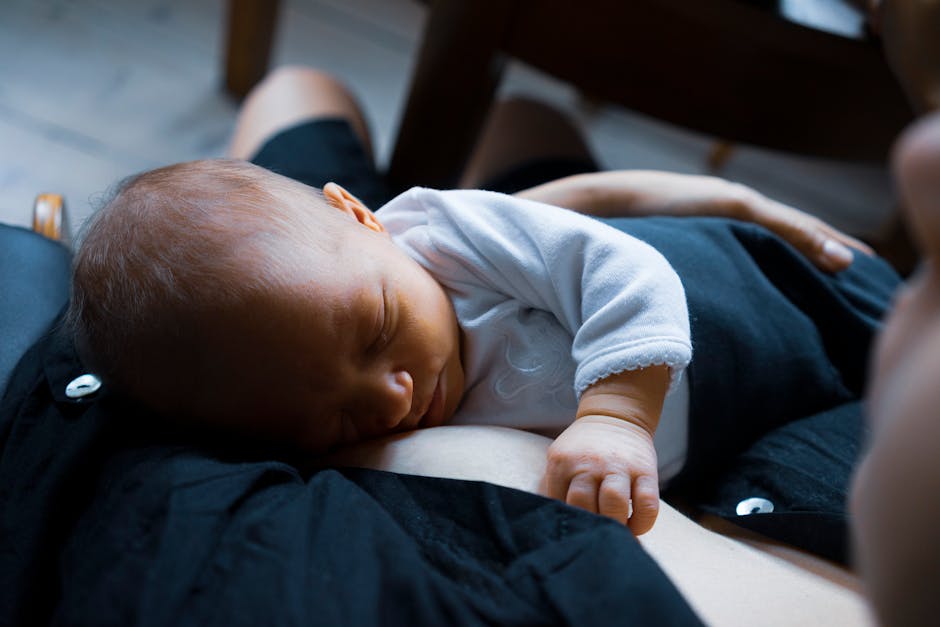
What the Research Actually Says About Infant Attachment
Let’s ground ourselves in data before diving into methods. According to a 2026 longitudinal meta-analysis published in the Journal of Child Psychology and Psychiatry, approximately 62% of infants globally develop a secure attachment style, while the remaining 38% fall into insecure categories — anxious-ambivalent, avoidant, or disorganized. These numbers haven’t shifted dramatically in decades, which tells us something important: secure attachment isn’t automatic. It requires intentional, consistent caregiving.
The Korean Institute of Child Development (한국아동발달연구원) released updated 2026 guidelines noting that Korean urban infants, particularly those in dual-income households, face specific challenges due to early childcare enrollment (sometimes as young as 3 months). Their data shows that responsive caregiving quality during brief interactions matters more than total time spent together — a genuinely hopeful finding for working parents.
The Four Pillars of Secure Attachment Formation
Thinking through the neuroscience and behavioral research, infant attachment builds on four core pillars. Let’s walk through each one:
- Sensitivity & Responsiveness: This is the big one. Responding consistently to your baby’s cues — hunger, discomfort, boredom, overstimulation — teaches their developing brain that the world is predictable and safe. You don’t need to respond instantly every time; research suggests that getting it right about 30% of the time is actually sufficient for secure attachment to develop. Yes, you read that correctly — perfect parenting is neither required nor beneficial.
- Serve-and-Return Interactions: Harvard’s Center on the Developing Child coined this term to describe the back-and-forth exchanges between infant and caregiver. Baby makes a sound → caregiver responds → baby reacts → caregiver responds again. These micro-conversations, repeated thousands of times, literally wire neural pathways in the prefrontal cortex. Even talking to your baby while folding laundry counts.
- Physical Touch & Co-Regulation: Skin-to-skin contact (kangaroo care) remains one of the most evidence-backed methods for attachment, particularly in the neonatal period. A 2025 WHO updated report confirmed that even fathers and non-birthing partners engaging in skin-to-skin contact within the first 72 hours meaningfully improves long-term attachment security. Touch reduces cortisol (stress hormone) in infants and synchronizes heart rate variability between caregiver and child.
- Consistent Presence & Predictability: Routines aren’t just about sleep schedules — they’re neurological anchors. Bedtime rituals, feeding cues, and even the familiar smell of a caregiver create what psychologists call a “secure base,” allowing infants to feel safe enough to explore their environment confidently.
Real-World Examples: How Different Cultures Approach Infant Attachment
It’s genuinely fascinating to look at how attachment manifests across cultures — because the methods differ wildly, yet the underlying principle of responsive availability stays constant.
South Korea (국내 사례): The practice of 포대기 (podaegi), a traditional Korean baby-carrying cloth, is experiencing a modern revival in 2026. Urban Seoul parents are blending this centuries-old babywearing tradition with contemporary responsive parenting frameworks. Studies from Seoul National University’s Pediatric Developmental Lab show that babywearing for 3+ hours daily correlates with lower infant cortisol levels and more synchronous caregiver-infant behavioral states — essentially, the baby cries less and the parent feels more confident.
Scandinavia: Norway and Denmark continue to lead globally in parental leave policy, with both parents receiving up to 12 months of paid leave in 2026. Research from the University of Oslo demonstrates that extended paternal involvement in the first year produces measurably more secure attachment in toddlers, suggesting that attachment is not exclusively maternal — a critical point for modern, non-traditional family structures.
Uganda (Ganda Culture): Mary Ainsworth’s original cross-cultural work began in Uganda, where she observed that Ganda mothers practiced constant physical proximity and immediate breastfeeding responses. Interestingly, Ganda infants showed higher rates of secure attachment than her later American samples — offering early evidence that our Western tendency toward “scheduled” caregiving may work against the infant’s neurobiological attachment needs.

Practical Daily Strategies: Making It Manageable
Here’s where I want to be genuinely realistic with you. If you’re a sleep-deprived parent reading this at midnight, the last thing you need is a 47-step program. Let’s keep it actionable:
- Mirror their expressions during eye contact — babies as young as 42 hours old imitate facial expressions, and mirroring builds felt-sense connection.
- Narrate your actions (“Now I’m going to pick you up, here we go!”) — this isn’t silly, it’s language scaffolding and predictability-building simultaneously.
- Respond to distress before the cry escalates — learning your baby’s pre-cry cues (lip quivering, gaze aversion, arching) is a skill that develops over weeks, not days. Be patient with yourself.
- Practice “repair” after ruptures — if you lost your patience, soothed your baby late, or had a disconnected day, the relationship repair itself (coming back, being warm again) teaches resilience and is part of healthy attachment.
- Involve secondary caregivers intentionally — fathers, grandparents, or childcare providers can become attachment figures too. Consistency in their responsiveness matters just as much.
Realistic Alternatives for Challenging Circumstances
Not every family has the luxury of an at-home parent or extended leave. Let’s think through some realistic adaptations:
For working parents using daycare: Choose caregiving environments with low staff turnover and high caregiver-to-infant ratios (ideally 1:3 or better). Consistency of secondary attachment figures matters enormously. Brief but highly attuned transition rituals (a specific goodbye phrase or gesture) actually strengthen, not weaken, the primary attachment bond.
For parents with postpartum depression or anxiety (affecting roughly 1 in 5 new parents in 2026 per the American Psychological Association’s latest data): Seeking treatment is itself an attachment intervention. A regulated caregiver is far more available to an infant than an untreated, dysregulated one. Telehealth perinatal mental health services have expanded dramatically and are genuinely accessible now.
For adoptive or foster parents: Attachment formation is absolutely possible beyond early infancy, though it may require more conscious effort and longer timelines. Therapeutic approaches like the Circle of Security program and Dyadic Developmental Psychotherapy (DDP) are specifically designed for this context and show strong outcomes.
Editor’s Comment : What I find most quietly revolutionary about attachment science is this — it reframes parenting from performance to presence. You don’t need the perfect nursery, the right gadget, or a flawless feeding schedule. What your infant’s developing brain is quite literally hungry for is you, showing up, imperfectly but repeatedly. In a world that keeps selling us optimization, that’s a beautifully humble truth worth holding onto.
태그: [‘infant attachment’, ‘secure attachment development’, ‘baby bonding tips 2026’, ‘responsive parenting’, ‘attachment theory newborn’, ‘infant brain development’, ‘parenting mental health’]
📚 관련된 다른 글도 읽어 보세요
- Why Is My Baby Not Talking Yet? Causes of Infant Language Delay & Real Solutions That Work in 2026
- How Play-Based Learning Supercharges Social Development in Toddlers and Infants (2026 Research-Backed Guide)
- How Sibling Relationships Shape Child Psychological Development: What Every Parent Should Know in 2026
Leave a Reply