A friend of mine — sharp guy, reads every financial newsletter you can imagine — spent the better part of last year convinced that a weak dollar cycle was going to hand him easy profits on EUR/USD longs. He had the thesis, he had the conviction, and he had a brokerage account that quietly bled 18% over six months. Sound familiar? That story is what got me thinking seriously about what actually works in forex trading versus what makes for compelling content on finance Twitter.
So let’s dig in together — not from a place of “here are the rules,” but from someone who’s watched enough setups succeed and fail to have real opinions about the craft.
The Uncomfortable Math Behind Retail Forex Participation
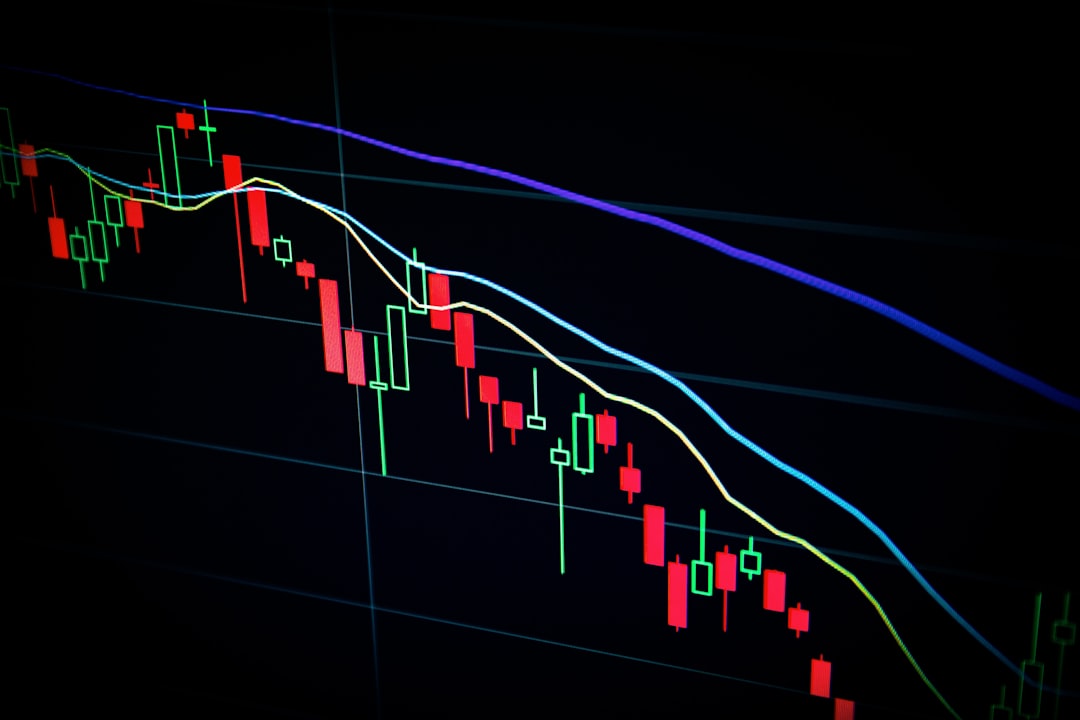
Before we talk strategy, let’s ground ourselves in some data that most forex educators conveniently skip. According to BIS Triennial Survey data (the most recent comprehensive global snapshot), daily forex turnover exceeds $7.5 trillion. Sounds like opportunity, right? The flip side: studies consistently show that somewhere between 70–80% of retail forex accounts lose money on a rolling 12-month basis. ESMA (European Securities and Markets Authority) mandates that brokers disclose this figure, and if you check any regulated EU broker’s footer right now, you’ll see numbers like “74% of retail investor accounts lose money” staring back at you.
The reason isn’t that retail traders are dumb — it’s that they’re playing against institutional desks with better data, tighter spreads, and zero emotional attachment to a position. Understanding this asymmetry is the starting point of a real strategy, not a reason to quit.
The Core Problem: Macro Calls vs. Price Action Reality
Here’s where my friend went wrong, and where most new forex traders go wrong: they confuse being right about the story with being right about the trade. He was probably correct that dollar weakness was a structural theme in parts of 2024. But EUR/USD doesn’t care about your narrative during a three-week risk-off squeeze that takes the pair 180 pips against you, triggering your stop loss, before eventually going your direction.
This is what traders call being right on direction, wrong on timing and position sizing — and it’s more lethal than just being wrong, because it teaches you the wrong lesson (“I was right, I just got unlucky”).
Instead, consider building around these more durable anchors:
- Session-based liquidity windows: The London-New York overlap (roughly 13:00–17:00 UTC) accounts for the highest daily volume and tightest spreads on majors like EUR/USD, GBP/USD, and USD/JPY. Trading outside these windows on major pairs means wider spreads and choppier price action.
- Higher timeframe structure first: Before placing any intraday trade, mark the weekly and daily swing highs/lows. A trade that looks clean on the 15-minute chart but is running into a 6-month supply zone on the weekly is a low-probability bet — the data on mean reversion at key structural levels is compelling.
- ATR-based stop placement: Using a fixed pip stop (like “always 20 pips”) ignores volatility. The Average True Range (ATR) on EUR/USD on a standard day in 2025 fluctuates between 55–90 pips. A 20-pip stop on a 1-hour chart during the London open isn’t a risk management tool — it’s a donation.
- Correlated pair monitoring: USD/CHF and EUR/USD have a historically strong negative correlation (often -0.85 to -0.95). If both are moving in the same direction simultaneously, something unusual is happening with one of the crosses — that’s a signal to pause, not double down.
- Risk per trade discipline: The standard advice of risking no more than 1–2% of account equity per trade sounds boring until you do the math. A 10-trade losing streak at 2% risk leaves you with ~82% of your capital. The same streak at 5% risk leaves you with ~60%. The asymmetry of drawdown recovery makes this non-negotiable.
What Research and Professional Traders Actually Show Us
Let’s bring in some external reference points. FXCM’s historical trader data (published in their “Traits of Successful Traders” series) found that traders who maintained a reward-to-risk ratio above 1:1 were profitable significantly more often than those who didn’t — even if their win rate was below 50%. That’s a counterintuitive but important finding: you don’t need to be right most of the time, you need your wins to be bigger than your losses.
On the institutional side, research from Citadel Securities and Deutsche Bank FX desks (discussed in academic papers on market microstructure) consistently shows that informed order flow — large institutional orders — tends to cluster around round numbers and key technical levels. This is why EUR/USD at 1.1000 or USD/JPY at 150.00 tends to act as a magnet and then a battleground. Retail traders who ignore these levels are trading blind to where the biggest players are positioning.
For practical learning resources, BabyPips.com remains one of the most honest free educational platforms for beginners — their School of Pipsology walks through everything from pip math to candlestick patterns without selling you a signal service. For more advanced reading, “Trading in the Zone” by Mark Douglas is still arguably the most useful book written on the psychology side of trading, even decades after publication.
Where Most Strategies Break Down in Live Trading
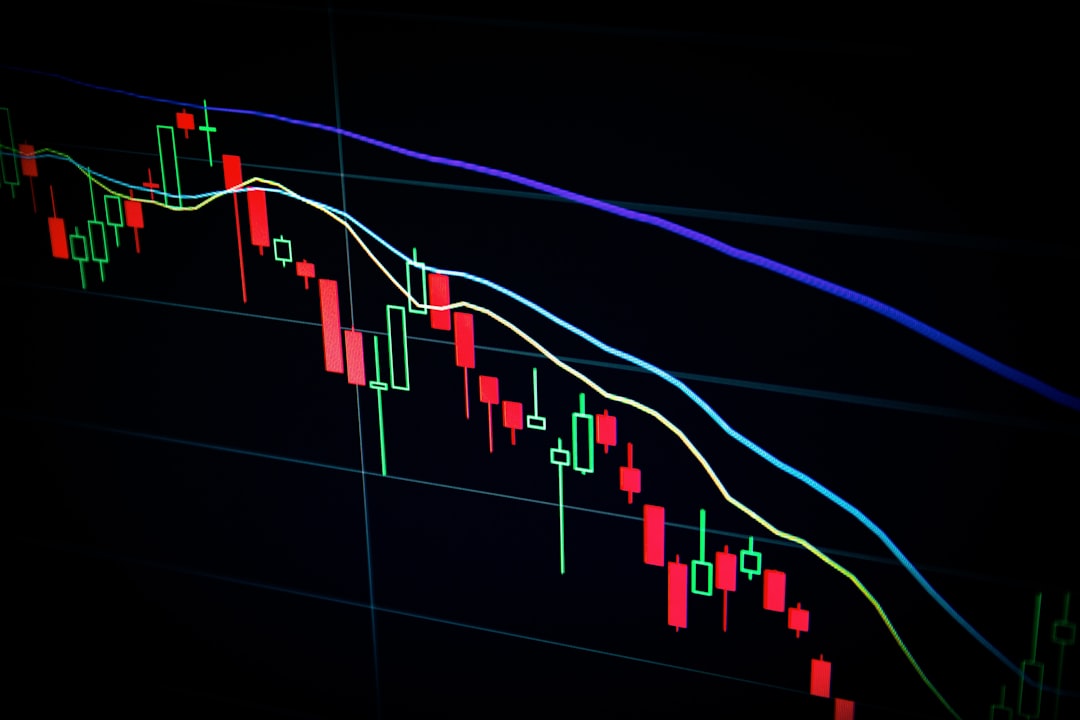
Here’s something nobody wants to say plainly: a strategy that backtests beautifully can collapse in live conditions for reasons that have nothing to do with the logic of the setup. Slippage during news events (NFP, FOMC, ECB rate decisions) can turn a 1:2 risk-reward trade into a 1:0.8 trade just based on execution. If you’re trading a strategy that depends on precise entry and exit at specific prices, you need to account for this.
Specific failure modes to watch for:
- News event slippage: During high-impact news (check the Forex Factory economic calendar religiously), spreads on EUR/USD can spike from 0.1 pips to 5–10 pips in seconds. Stops placed too close to entry get hunted by spread alone.
- Overnight swap costs: Holding GBP/JPY or exotic pairs like USD/TRY overnight carries significant swap charges. A multi-day position that looks profitable on paper can be eroded by carry costs you didn’t account for.
- Correlation overexposure: Being long EUR/USD, GBP/USD, and AUD/USD simultaneously feels like three separate trades — it’s essentially one leveraged dollar-short trade. If the dollar rips, all three positions move against you at once.
A More Realistic Framework for 2025 Conditions
Given where we are in 2025 — with central bank policy divergence still a dominant theme, USD volatility driven by ongoing trade policy uncertainty, and the JPY carry trade still being unwound in fits and starts — here’s a conditional approach that makes more sense than chasing a single macro narrative:
If your situation is: new to forex with under $5,000 in capital → focus exclusively on 2–3 major pairs (EUR/USD, USD/JPY, GBP/USD), trade only during high-liquidity sessions, and use a demo account for at least 3 months of consistent profitability before going live. The cost of tuition in live markets is real money.
If your situation is: intermediate trader with a defined edge but inconsistent results → the problem is almost certainly position sizing and emotional execution, not the strategy itself. Consider recording every trade with a written rationale before entry, then reviewing the logic (not just the outcome) weekly.
If your situation is: experienced trader looking to scale → the constraint is usually risk-adjusted return consistency, not finding “better” setups. Reducing position size during drawdown periods and increasing during equity highs (anti-martingale approach) has strong empirical support.
Comment from the field: The market doesn’t reward being right — it rewards being right and being sized correctly for when you’re wrong. The traders I’ve seen last more than five years in this game aren’t the ones with the cleverest macro calls. They’re the ones who got ruthlessly boring about risk management and let their edge compound quietly over time. That’s less exciting than calling a 500-pip move on a hunch, but it’s what actually builds an account.
📚 관련된 다른 글도 읽어 보세요
- Why I Stopped Relying on Word of Mouth — Real Divorce Attorney Research Guide for 2025
- Why I Almost Missed My Flight Trusting Google Maps — Real 2025 Airport Transfer Guide for Incheon
- 남들 다 사는 그 와인 냉장고, 2026년 기준 진짜 사도 되는 건지 따져봤습니다
태그: forex trading strategy, currency trading 2025, forex risk management, EUR/USD analysis, retail forex trading, technical analysis forex, trading psychology
Leave a Reply